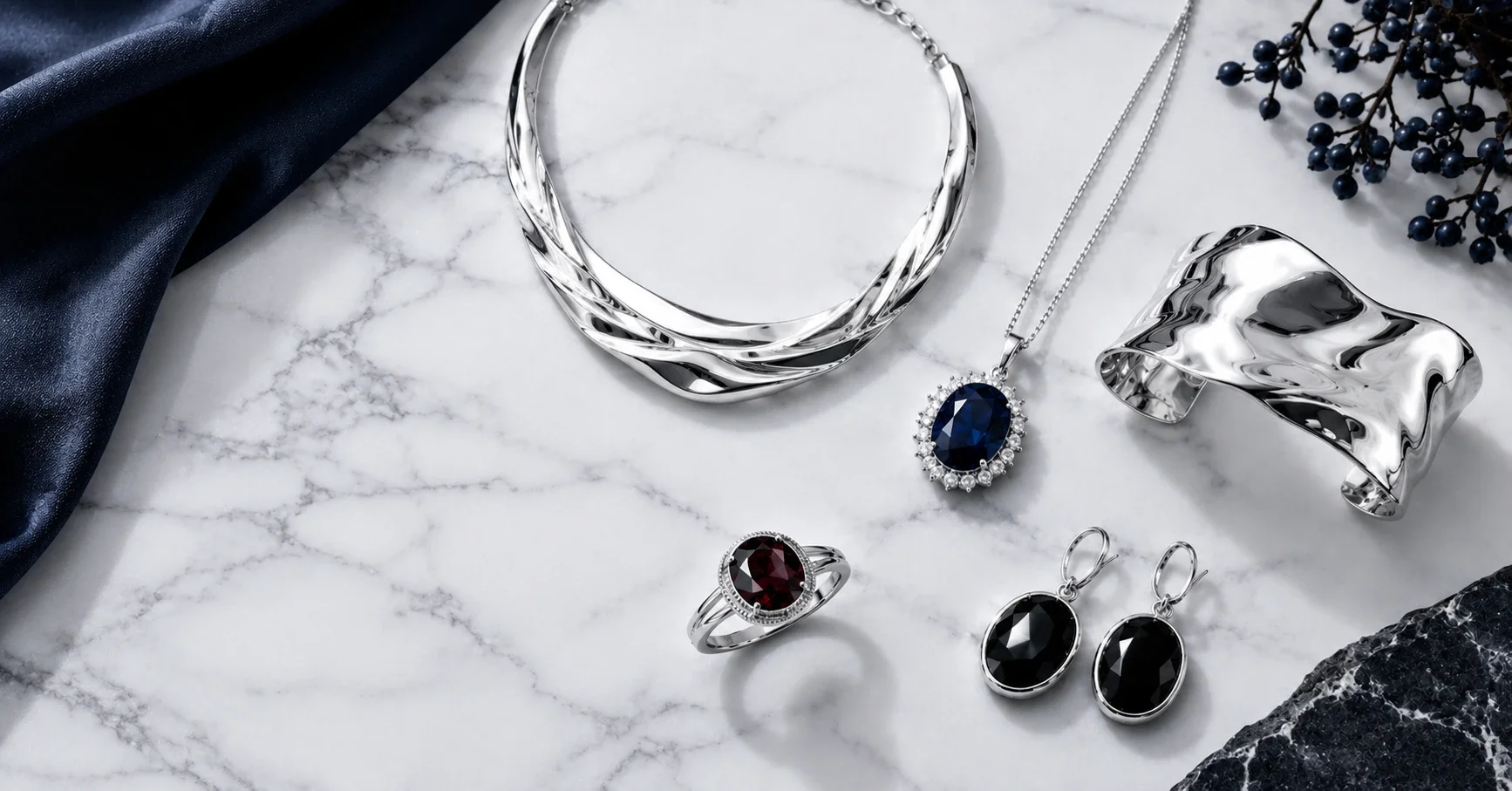
Winter jewellery is the most dramatic in the system — and the most specific. The combination of cool metals and vivid or deep gemstones that characterises Winter jewellery looks overstatement on other seasons and exactly right on Winter. The Winter face can absorb a large blue sapphire, a deep amethyst pendant, or a dramatic diamond statement piece without the jewellery appearing to overwhelm. The colouring is strong enough to wear jewellery as armour.
This guide covers metals, gemstones, and specific recommendations for all three Winter sub-seasons — True Winter, Bright Winter, and Dark Winter.
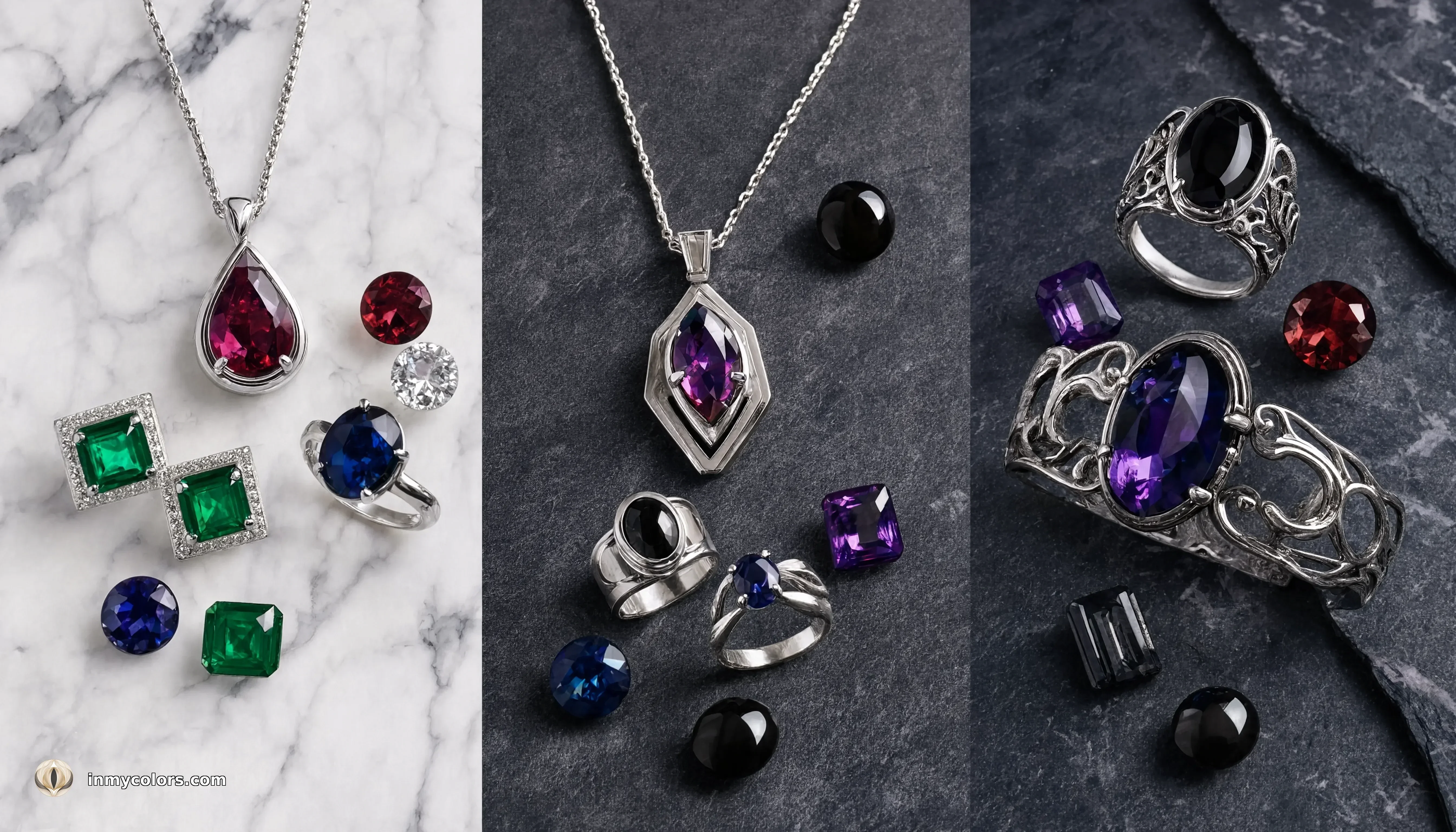
The Winter Metal: Silver, White Gold, and Platinum
All three Winter sub-seasons wear cool metals. Silver, white gold, and platinum are the primary options. The finish varies by sub-season and occasion, but the temperature is always cool.
True Winter: Polished silver and white gold. The crispness of highly polished cool metal suits True Winter's crisp, clear colouring. Clean settings with precise lines.
Bright Winter: White gold and platinum in graphic, high-polish settings. Bright Winter can also carry yellow gold in certain contexts — specifically when the gold is used as a graphic element in a high-contrast piece rather than as a warm, glowing finish. This is the one Winter sub-season where yellow gold occasionally works, because Bright Winter's high chroma colouring is vivid enough to bridge the temperature gap. Use with considered restraint.
Dark Winter: Silver, white gold, and platinum. Dark Winter can also use very high-contrast metal pairings — black metal alongside silver, for instance — given the depth of the colouring.
What Winter seasons universally avoid: Warm antique gold (Autumn), rose gold (Spring), copper (Autumn), and warm-textured metals. The warm quality of these metals conflicts with Winter's cool undertone in the most visible way in the jewellery category.
Gemstone Principles for Winter
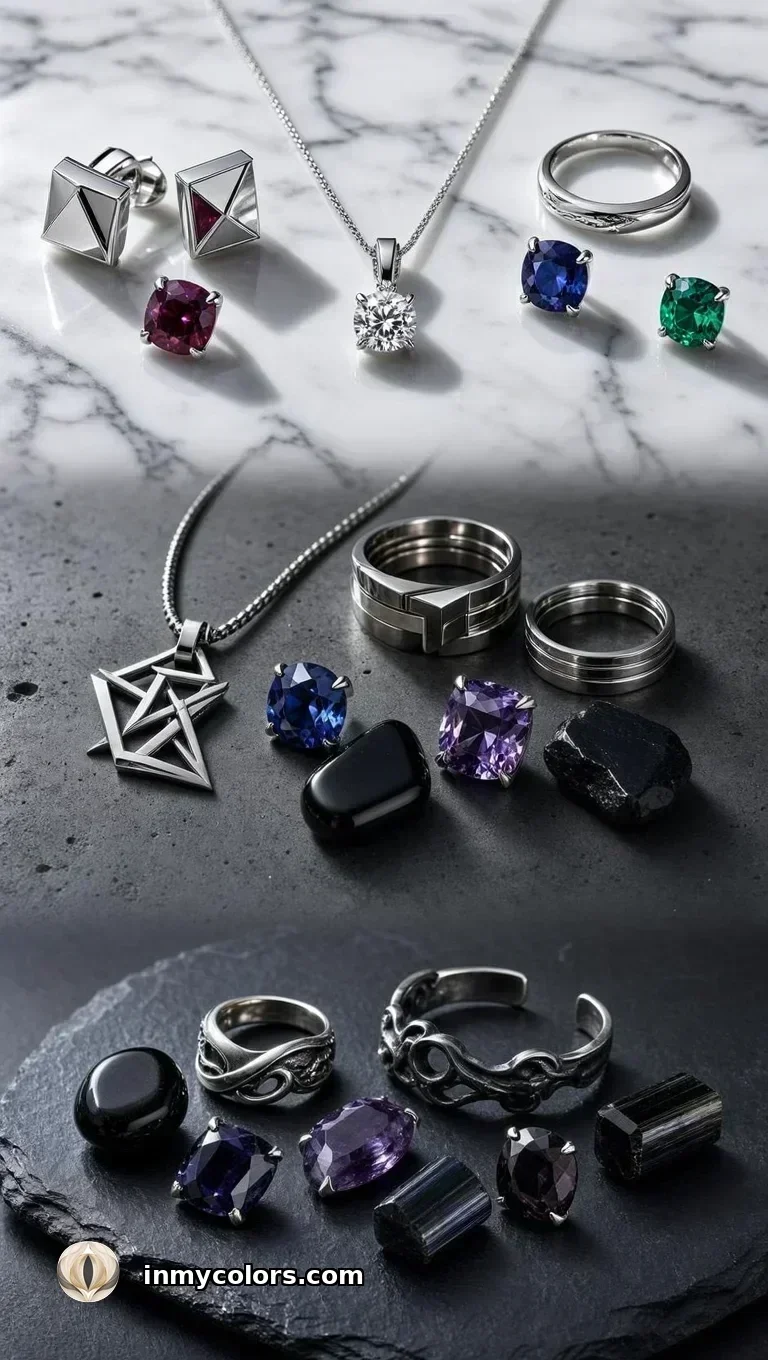
Winter gemstones are cool and clear — or cool and deep. The combination of cool temperature and high saturation (vivid or dark) is the defining characteristic. This is the opposite of Summer (cool and muted) and Autumn (warm and muted). Spring is warm and clear; Winter is cool and clear.
The stones to avoid: anything warm in hue (amber, warm topaz, coral, warm carnelian, tiger's eye, citrine) and anything muted or dusty (the grey-softened stones that suit Summer). Winter's stones should be unmistakeably cool in hue and vivid or deep in saturation.
True Winter Jewellery
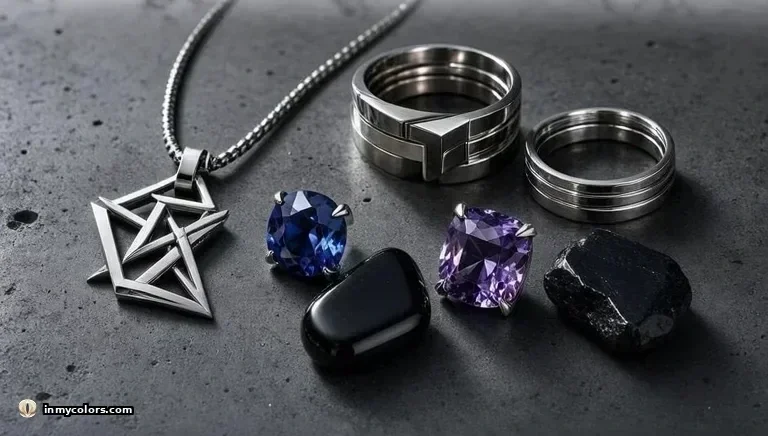
True Winter has crisp, high-contrast colouring — dark hair, cool skin, clear eyes — and the jewellery should reflect that clarity.
Metals: Polished white gold and silver. Clean prong settings that let the stone speak clearly.
Gemstones: Diamond — the clearest, most vivid, most cool-temperature gemstone. Blue sapphire — vivid, cool, deeply saturated. This is True Winter's stone above all others. Ruby — a cool red ruby (some rubies pull warm; the bluish-red, cooler versions are on-season for True Winter). Cool emerald — an emerald that pulls distinctly cool green rather than warm yellow-green. Amethyst — cool violet at vivid saturation. Clear, bright aquamarine.
Style notes: True Winter jewellery is precise. Clean lines, clear settings, vivid stones. No warm texture, no organic form, no earthy quality. The look is architectural rather than natural.
Bright Winter Jewellery
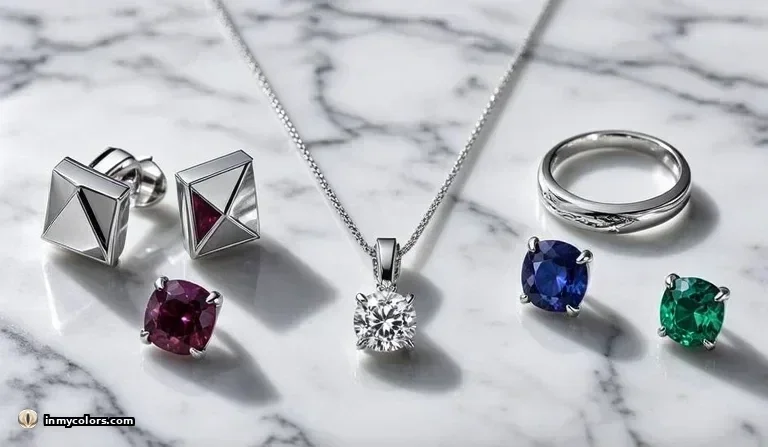
Bright Winter has the highest chroma colouring in the Winter family — electric, vivid, high-contrast. The jewellery can go significantly more vivid than True Winter.
Metals: White gold and platinum, with the possibility of yellow gold in high-contrast pieces. Bright Winter is the sub-season most likely to successfully wear mixed-metal pieces where the contrast between metals is itself the graphic element.
Gemstones: Vivid amethyst — as saturated as possible, deeply electric violet. Electric blue sapphire — the most vivid, saturated sapphire in the range. Vivid emerald. Vivid cool tourmaline — the electric pink (rubellite) or green (green tourmaline) at maximum saturation. Tanzanite — the deep blue-violet of tanzanite is uniquely suited to Bright Winter.
Scale: Bright Winter can carry the largest, most dramatic jewellery pieces. The statement necklace, the cocktail ring, the dramatic drop earring — Bright Winter's vivid colouring absorbs statement pieces in a way even True Winter struggles with.
Dark Winter Jewellery
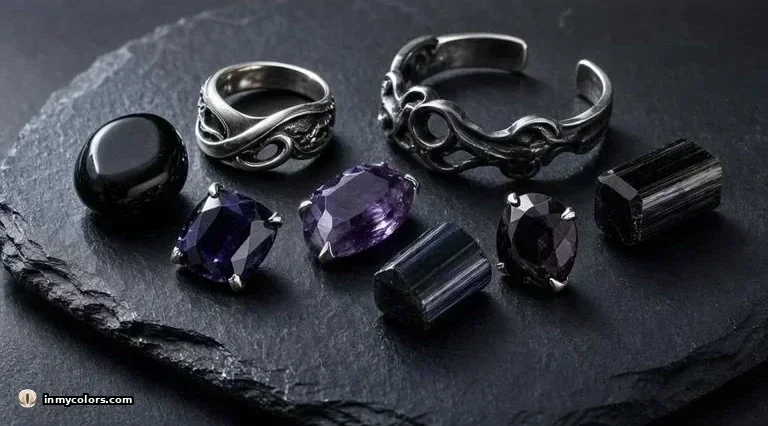
Dark Winter has the most depth of the three sub-seasons — very deep, cool-undertoned complexion, dark features. Jewellery should honour that depth with cool stones at the deep end of the spectrum.
Metals: Silver, white gold, platinum. Very dramatic combinations — silver and black metal, high-contrast settings that use the darkness of the setting to increase the stone's apparent depth.
Gemstones: Deep blue sapphire — the darkest, most inky sapphire. Dark amethyst — deeply saturated, approaching deep purple-black. Very deep garnet — but specifically cool-toned garnet (some garnets pull cool; pyrope with a slight blue undertone works for Dark Winter where warm almandine belongs to Autumn). Onyx — the cool, graphic quality of onyx is on-season for Dark Winter. Deep teal tourmaline.
Scale: Dark Winter can carry the largest, most dramatic pieces in the system alongside Bright Winter. The difference is depth versus vividness — Dark Winter's statement piece goes deeper, while Bright Winter's goes more vivid.
The Winter Statement Piece
The statement piece — a large, dramatic, single impressive jewellery item — belongs most naturally to Winter. Other seasons wear statement jewellery; Winter was built for it.
The reason is architectural. Winter colouring is high-contrast, cool, and precise. A large blue sapphire pendant on a white gold chain worn by a True Winter reads as armour — intentional, precise, completely correct. The same piece on a Soft Summer would overpower the delicate colouring. On a True Autumn, the cool stone would fight the warm complexion.
Winter can therefore invest in statement jewellery with more confidence than other seasons. The bold choice is not too much. It is frequently exactly right.
What Winter Should Not Buy: Warm Metals and Earthy Stones
The two most common Winter jewellery mistakes:
Warm antique gold: This is extremely popular in the jewellery market — aged, textured, organic warm gold in chunky settings. It is Autumn jewellery. On Winter skin, the warm metal fights the cool undertone and the aged quality undercuts Winter's precision.
Amber, tiger's eye, and earthy stones: These are deeply on-season for Autumn and completely wrong for Winter. The warm, earthen quality of these stones is the opposite of the cool, vivid quality that Winter needs. Yet they are widely available, often marketed as "natural" and "organic," and regularly purchased by Winters who are attracted to the idea of statement jewellery without knowing the temperature rules.
The test for any Winter jewellery purchase: is this cool in hue and vivid or deep in saturation? If the answer is yes, it is likely correct. If the answer involves words like "warm," "earthy," "antique," or "organic," it is almost certainly wrong.
The Diamond Question for Winter
Diamonds are widely considered the universally correct choice for jewellery — colourless, "neutral," supposedly flattering to everyone. They are most flattering on Winter. The reasons are straightforward: diamonds are cool in the way they reflect light, their clarity and precision match Winter's clear colouring, and the graphic quality of a diamond in a white metal setting is entirely on-season.
Importantly, this means a diamond in a yellow gold setting is less ideal for Winter than the same stone in white gold or platinum. The setting temperature matters as much as the stone itself.
Find Your Season
The gap between True Winter's classic blue sapphire in white gold and Bright Winter's electric amethyst cocktail ring is significant even within the same family. Dark Winter's deep inky stones and high-drama scale differ again. Getting the sub-season right tells you where on the cool-vivid-deep spectrum your best jewellery choices live. Find your season at inmycolors.com.