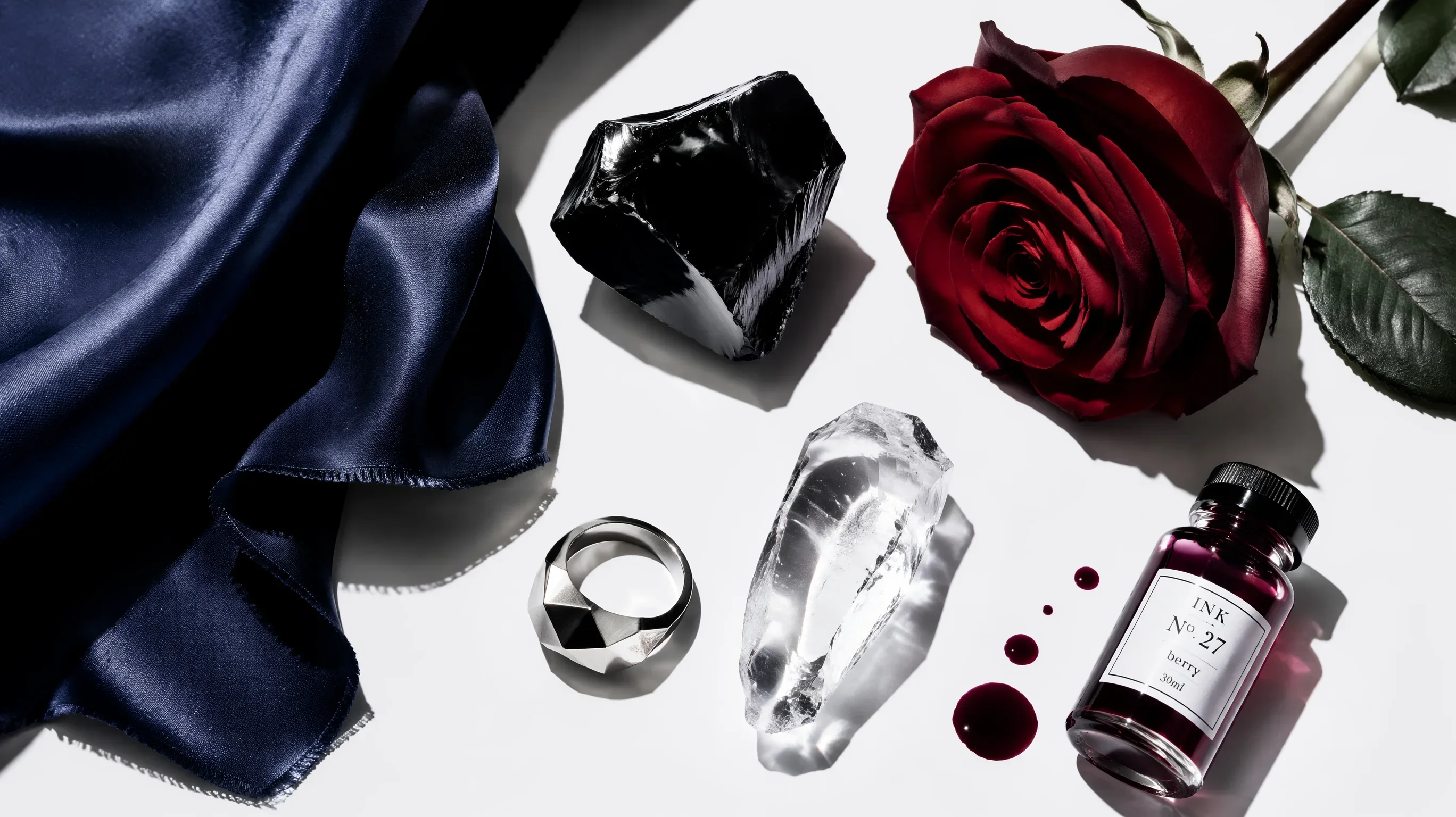
Of all twelve seasons in colour analysis, True Winter is the one that looks exactly as you'd imagine: cool, dramatic, and unmistakably striking. This is the archetypal Winter — the season that gave rise to the "Winter" archetype in the first place. If your colouring is characterised by a cool undertone, deep or clear features, and a natural high contrast between skin, hair, and eyes, True Winter may be the key that unlocks why certain colours make you look powerful and others make you disappear.
What Makes a True Winter
True Winter sits at the heart of the Winter family in the 12-season system, flanked by Bright Winter on the vivid end and Dark Winter on the deepest end. What distinguishes True Winter from its siblings is its position across all three colour axes: cool temperature, moderate-to-deep value, and high chroma. The colouring is not the absolute darkest (that is Dark Winter), not the most vivid (that is Bright Winter), but definitively cool and definitively clear.
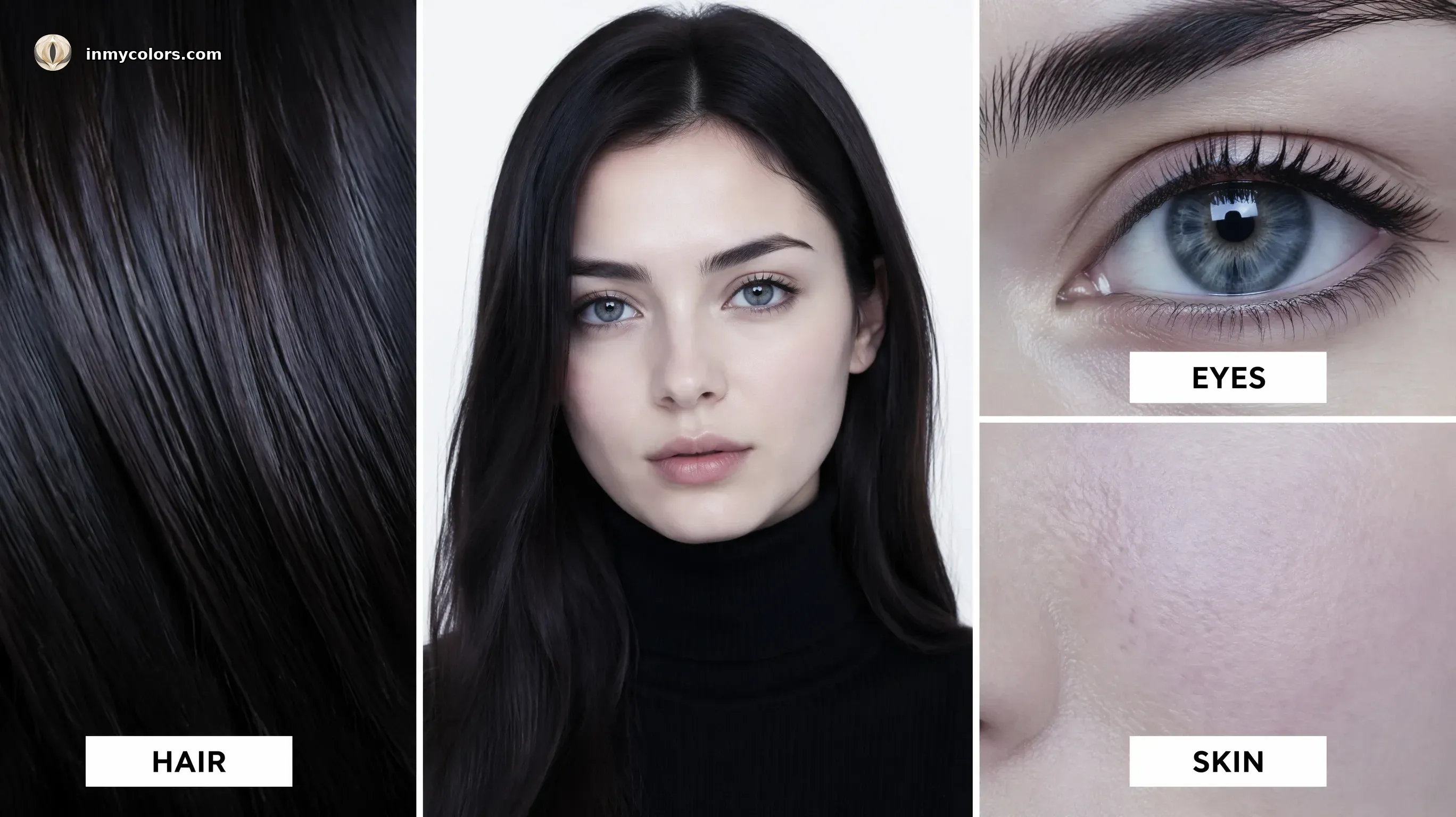
Skin. True Winter skin carries a cool undertone across all depths. It ranges from porcelain-fair to medium neutral-cool to neutral-deep — but whatever the depth, it is never warm. A classic tell is the blue-veining visible at the wrist, running visibly blue-purple rather than greenish, confirming a cool undertone.
Hair. True Winter hair is dark and cool: very dark brown, cool dark brown, near-black — colours with no visible warmth in natural light. The hair adds to the natural contrast of the colouring, sitting several shades darker than the face without being the absolute midnight-deep of Dark Winter.
Eyes. True Winter eyes are cool and often striking — cool dark brown, dark grey, vivid cool blue, grey-blue, or near-black. Even in the darker eye colours, there is a clarity and depth that reads distinctively against cool skin.
Overall impression. The word most often used for True Winter colouring is dramatic. The natural contrast is high, the temperature consistently cool, and the chroma clear rather than muted. This is the season that looks most at home in midnight navy or cool jewel tones.
The True Winter Colour Palette
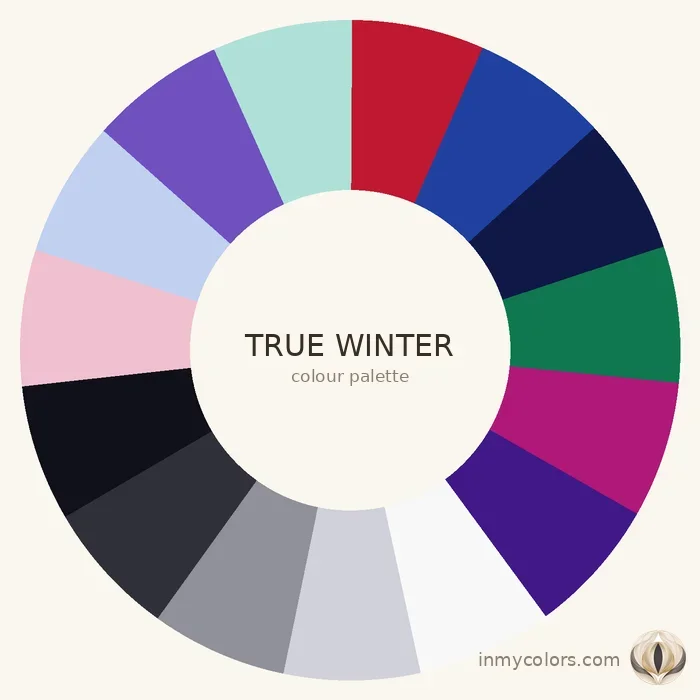
The True Winter palette is built on cool, clear, and high-contrast. The best colours for this season have no warmth, no dustiness, and enough depth or vibrancy to complement the season's natural contrast.
Foundation neutrals replace warm defaults with cool ones: cool grey-white, mid cool grey, near-black charcoal, and cool black. True white (bright, cool white — not cream or ivory) is a True Winter's most powerful neutral.
Core colours are where the season's character comes through. True red (cool, no orange), cobalt, deep navy, cool emerald, fuchsia, and cool plum all perform strongly. The icy versions of colours — pale, cool, and clear — are a Winter signature.
Accent colours — icy pink, icy blue, cool blue-violet, and pale cool aqua — provide contrast without warmth. These work as blouse or scarf colours against deep neutrals.
What to avoid. Warm tones are universally poor choices: warm orange, warm gold, warm peach, warm camel, and warm olive all pull against the cool undertone. Equally problematic are muted or dusty versions of otherwise right-direction colours — a dusty rose rather than a vivid cool rose will flatten True Winter skin.
True Winter in the Wardrobe
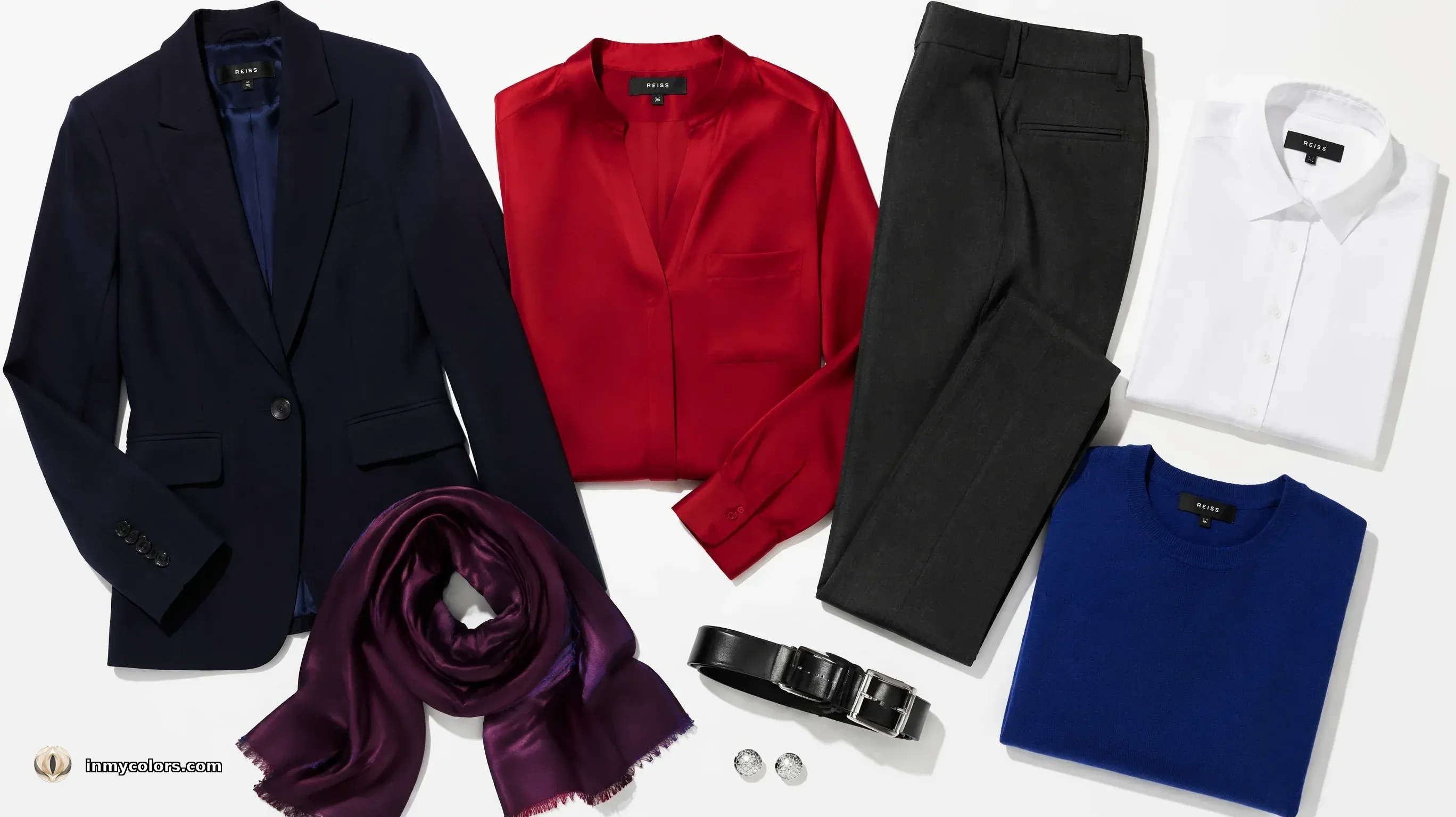
The True Winter wardrobe functions best when it commits to its strengths: contrast and coolness. A monochromatic navy outfit reads elegantly put-together on this season. A white blouse against black tailored trousers is not a boring combination — it is close to the optimal formula.
Statement pieces work particularly well. A cobalt coat, a cool red blazer, a vivid fuchsia dress — each of these will look intentional and powerful rather than loud. The high chroma of the palette calls for clean, tailored silhouettes that hold the colour rather than competing with it.
Fabrics with a slight sheen — silk, satin, fine wool with lustre — reflect the silver and cool quality of the palette. Matte earthy textures in warm tones will work against the season.
For professional environments, the True Winter wardrobe is essentially unmatched: navy, charcoal, cool black, crisp white, and accent colour in cobalt or cool red are versatile, authoritative, and consistently flattering.
Metals. Silver is the True Winter metal — cool platinum reads as an extension of the season's natural colouring. Gold — especially warm yellow gold — works against the cool undertone.
True Winter Makeup
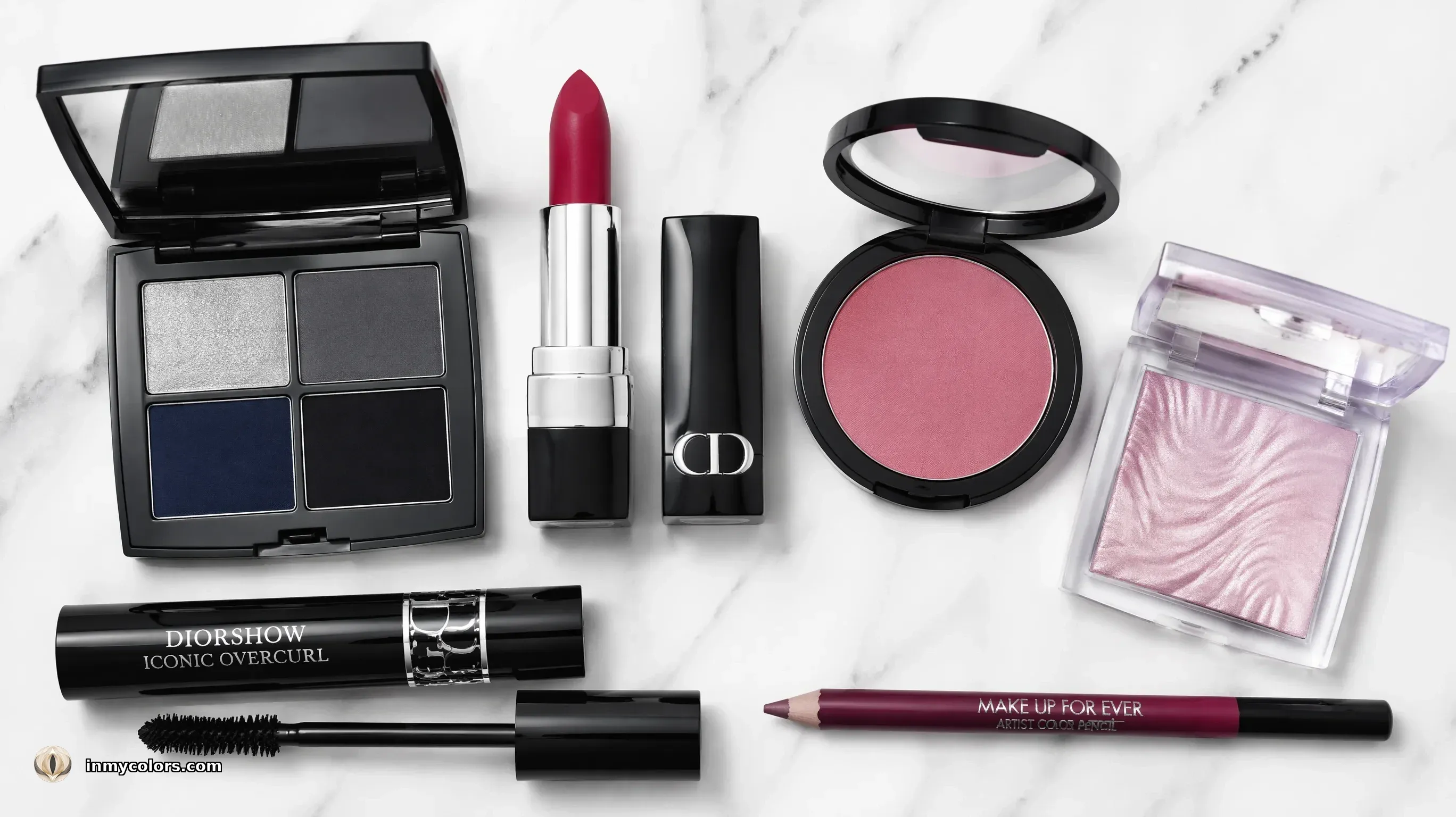
Makeup for True Winter should be cool and clear, echoing the palette principles.
Foundation. A cool or neutral-cool undertone match is essential. A foundation that pulls even slightly warm or peach will visibly clash with the skin. Look for shades described as "porcelain cool," "neutral cool," or "beige cool" depending on depth.
Blush. Cool rose, cool pink, and berry are the True Winter blush family. A soft cool rose for everyday; a deeper berry for evening. Peachy blush or warm coral immediately imparts an orange cast that fights the undertone.
Lips. This is where True Winter can be bold. Cool red is the season's most iconic lip colour. Berry, fuchsia, deep cool burgundy, and cool nude-pink also work. Warm nudes with an orange or peachy base tend to make True Winter lips look washed out.
Eyes. Charcoal, cool dark brown, and navy are the workhorses. Silver liner adds a cool precision that suits the season. Black mascara rather than brown. Eyeshadow in cool plum, cool blue, or cool green for colour looks. Avoid warm brown, bronzer on the lid, peachy highlight, or warm gold shadow.
True Winter Hair
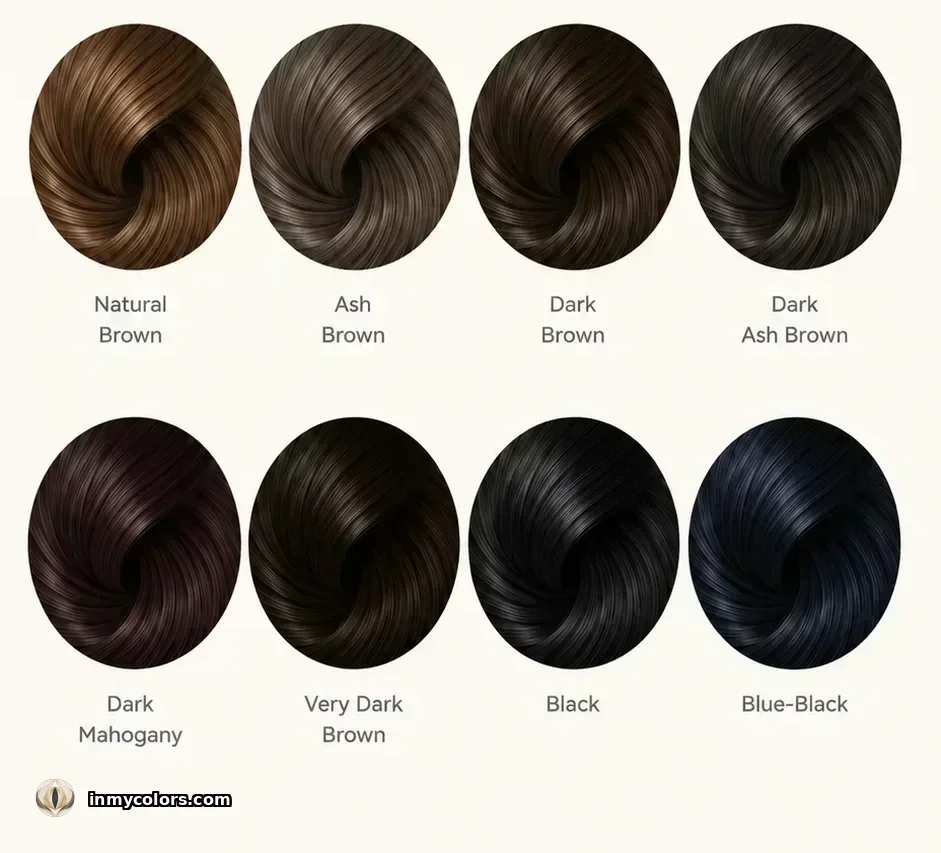
True Winter hair is at its strongest when it maintains the season's cool, dark character. Cool dark brown to near-black is the natural range, and it is strong. The contrast it creates with the skin — particularly at lighter depths — is one of True Winter's most striking assets.
If dyeing, move toward cool black or blue-black rather than warming up. Softening the hair with warm highlights is one of the most common and most costly mistakes for this season — it removes the natural contrast that makes True Winter colouring work.
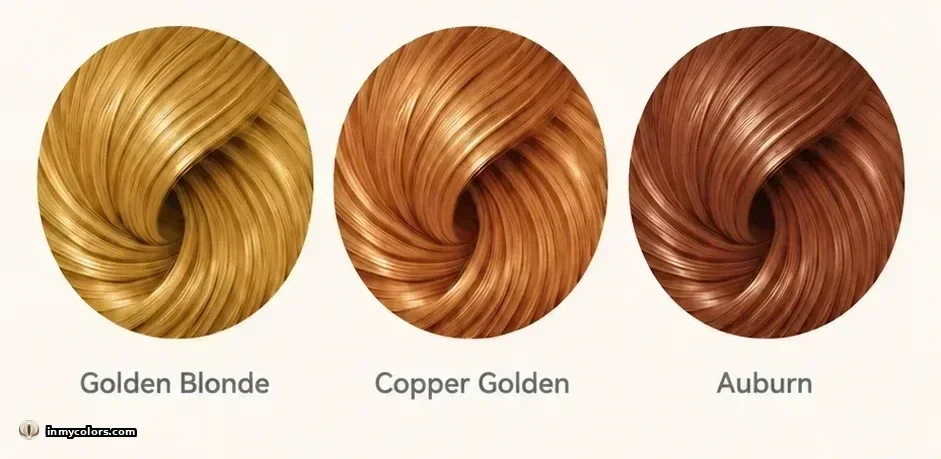
Caramel, warm brown, auburn, and golden blonde all introduce warmth into the hair and work against the season's foundation. Even "natural-looking" warm highlights will sit at odds with cool skin.
True Winter Celebrities
A note on celebrity examples: these assignments are educated guesses — celebrity photos are professionally edited, lighting varies, and makeup is always applied. These names are commonly cited examples, not verified classifications. Use them as a rough visual reference, not a confirmation of your own season. The only reliable way to find your season is an objective analysis of your actual colouring — not a comparison to someone else's. Find yours at inmycolors.com.
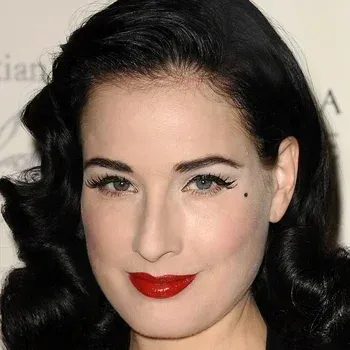
Dita Von Teese has built an entire aesthetic around True Winter colouring — near-black hair, porcelain-white cool skin, cool grey-green eyes, and a signature cool true red lip. Her iconic look is almost diagrammatic of what True Winter looks like at its most dramatic. No season wears this combination more naturally.

Courteney Cox demonstrates True Winter at the fair end: dark cool brown hair, porcelain-fair cool skin, and vivid blue eyes that create a striking natural contrast. At her most luminous in midnight navy, cool true red, and crisp white.

Jennifer Connelly shows True Winter at a very high-contrast expression: near-black dark hair, fair cool skin, and striking vivid green eyes. Her colouring has the cool precision and dramatic contrast that define this season at its most intense.

Liv Tyler is a classic True Winter reference: dark near-black hair, fair cool-pink skin, and vivid blue eyes — a high-contrast combination that reads as definitively cool and dramatic. At her most luminous in the deep cool colours and crisp contrasts that are the season's natural language.
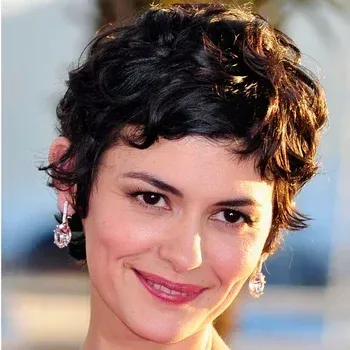
Audrey Tautou demonstrates True Winter with near-black dark hair, fair cool skin, and vivid dark brown eyes — a high-contrast profile with the cool clarity and depth that characterise this season.

Karina (aespa) brings True Winter into a contemporary context: very fair porcelain-cool skin, near-black hair, and dark vivid eyes — a high-contrast, cool-toned combination that is textbook True Winter. The season's characteristic cool jewel tones and sharp contrasts consistently appear in her most powerful styling choices.

Hilary Rhoda demonstrates True Winter through a model's lens: dark cool brown hair, fair cool skin, and vivid cool grey-green eyes — a high-contrast, definitively cool profile that reads most powerfully in deep cool colours and sharp contrasts.
Common Misclassifications
True Winter vs. Dark Winter. Dark Winter sits deeper and can carry even more intense, darker colours — near-black, deep teal, deep plum. True Winter is moderate in value. Can you carry very deep, very dark colours and look radiant, or do you look better in the slightly brighter, clearer version?
True Winter vs. Bright Winter. Bright Winter has more chroma — its colours are more vivid, and it can carry neons and electrics that feel slightly too sharp for True Winter. Bright Winter also has a Spring quality at the border: some of its most vivid cool colours have a clarity that edges into Spring's territory.
True Winter vs. True Summer. Both are definitively cool seasons, but they sit at opposite ends of the chroma axis. True Summer is muted — its palette is dusty, soft, and deliberately low in saturation. True Winter is vivid and clear. Colours that look elegant on True Summer (dusty rose, muted mauve) will look faded and flat on True Winter. Colours that look striking on True Winter (vivid fuchsia, cool red, cobalt) will look harsh on True Summer.
Getting Your Season
True Winter colouring is among the easiest to identify once you know what to look for — but it is also frequently misidentified, particularly by those with medium-depth or neutral-cool skin who have been told they are "not dark enough" to be a Winter. Value (how light or dark your colouring is) does not determine your season; temperature and chroma do. A fair-skinned person with a cool undertone, clear dark eyes, and no warmth visible anywhere in their colouring may well be a True Winter.
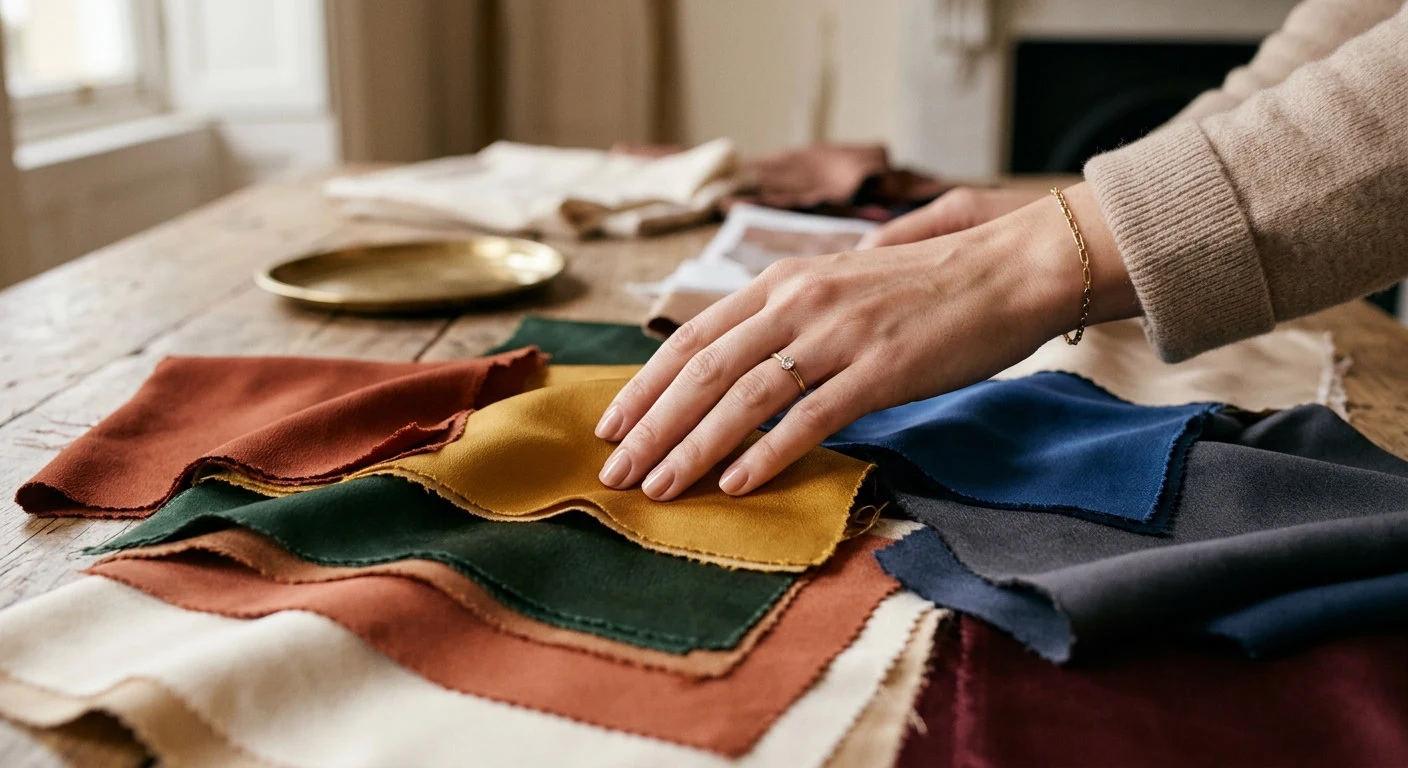
The best diagnostic is draping: holding colours against the face in natural light and watching for the difference between what illuminates the skin and what dulls it. True red and cobalt illuminating, warm coral and camel dulling, is a strong True Winter signal.
Find your season at inmycolors.com.