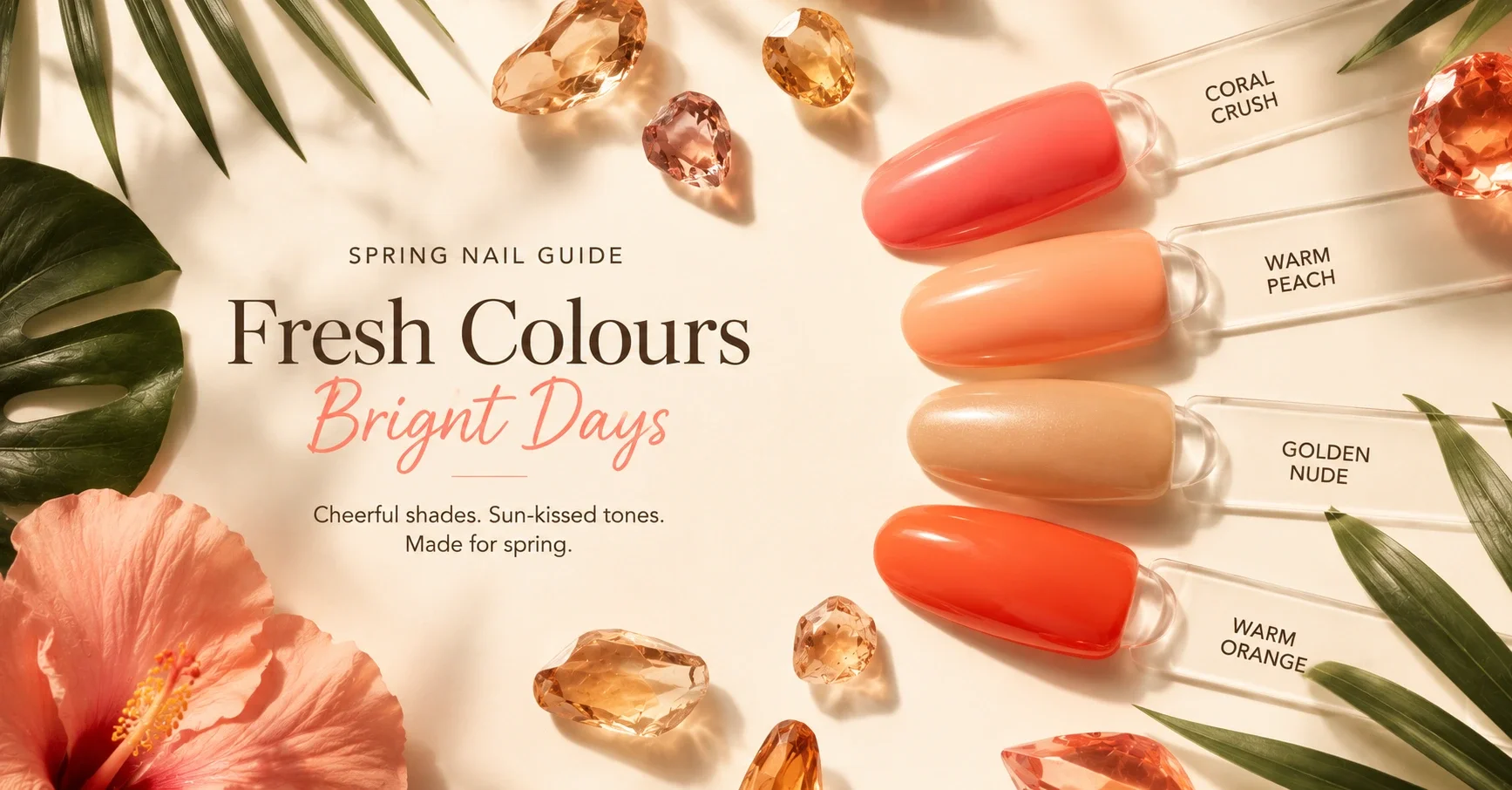
Nail colour is one of the easiest places to get your season's palette on your body — and one of the easiest places to accidentally buy the wrong thing. For Spring seasons, the rules are precise: every nail shade should be warm, clear, and fresh. The same logic that governs Spring clothing and makeup extends all the way to the tips of your fingers.
This guide covers nail colour principles for all three Spring sub-seasons — True Spring, Light Spring, and Bright Spring — with specific shades, finish guidance, French manicure direction, and a clear list of what to avoid.
The Spring Nail Principle: Warm, Clear, Fresh
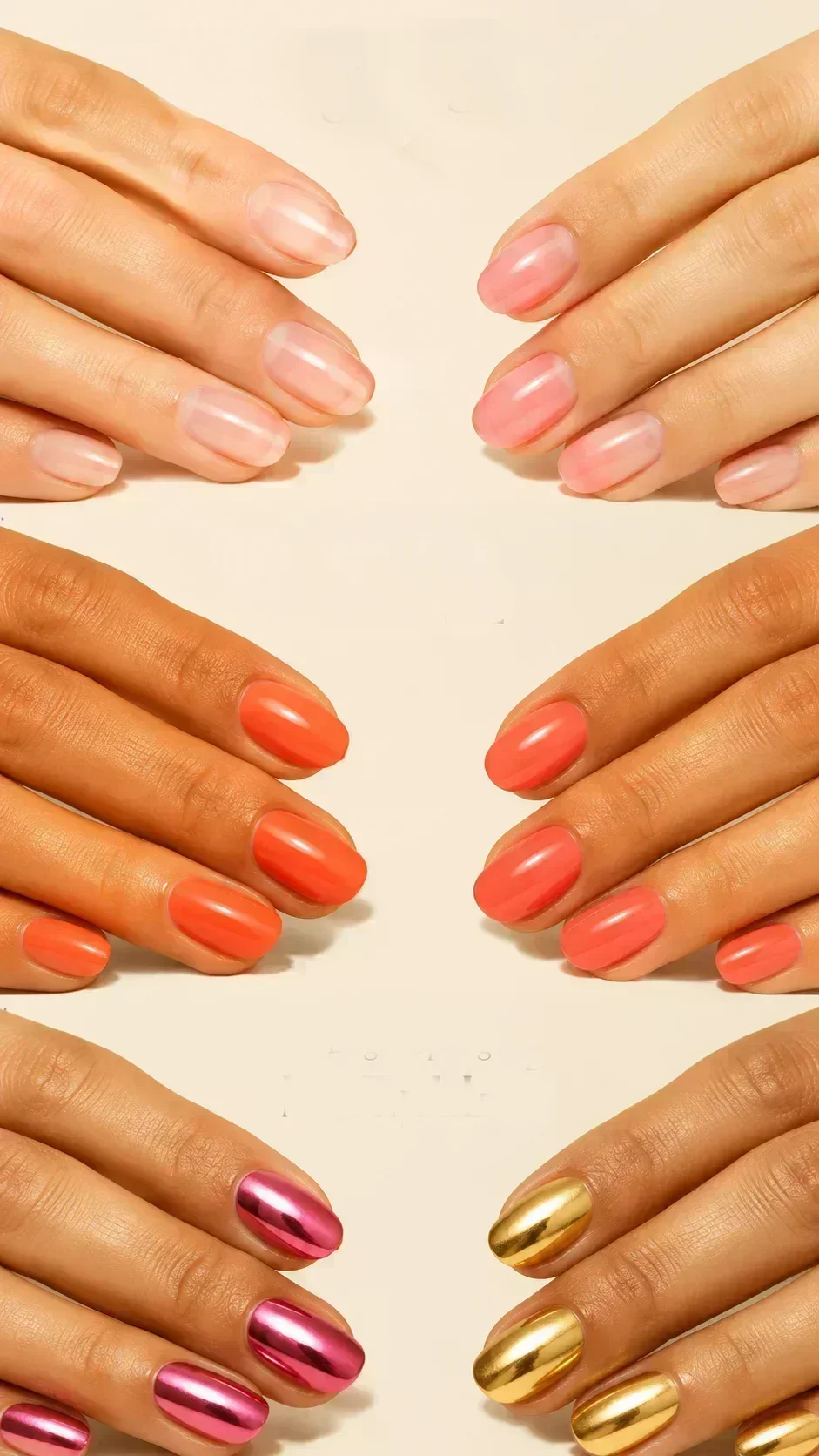
Three words define Spring nails: warm, clear, fresh. Warm means the shade pulls toward peach, coral, gold, or warm pink — never toward grey, slate, or cool. Clear means the shade has no grey softening it — no dusty quality, no muted finish, no smoky overlay. Fresh means the overall effect is alive and bright, not heavy or deep.
This combination rules out a large portion of what is on the nail wall at any given time. Most mainstream "nude" shades pull cool or grey-beige. Most "neutral" offerings skew mauve or pink-cool. Most dramatic shades go dark and cool — burgundy, plum, navy, slate grey. Springs should walk past all of these without stopping.
What remains — and it is not a small category — is the warm, clear, fresh end of the spectrum: corals, peaches, warm oranges, golden nudes, clear warm pinks, and vivid warm turquoise.
True Spring Nail Colours
True Spring has a warm, medium-depth complexion with golden undertones. Nails should match that warmth and stay in the clear, medium-depth range.
Core shades: Warm coral is the True Spring signature nail shade. It sits at the intersection of orange and pink, pulls warm in every light, and looks completely natural against True Spring skin. Fresh peach is the lighter, more wearable alternative. Golden orange — a warm, clear orange that avoids the trendier blue-toned neon orange — is a bolder True Spring choice. Warm nude in the peachy-golden register works for an understated everyday look.
Statement shades: For seasons and occasions that call for more intensity, True Spring can push toward a vivid warm coral or warm terracotta. These are bolder but still unmistakeably on-season.
What to avoid: Warm shades that have been dusted or muted (these belong to Soft Autumn), any cool-toned shade regardless of depth, and very dark shades (deep burgundy, plum, near-black) which add contrast that True Spring's colouring does not need.
Light Spring Nail Colours
Light Spring has the palest, most delicate colouring of the three Spring sub-seasons. Nail colours should be correspondingly light and delicate — warm, clear, but at the lightest possible intensity.
Core shades: Palest peach is the Light Spring nail — so light it is almost a tinted nude, with a definite warm peach quality. Soft apricot offers slightly more colour while remaining in the delicate range. Delicate warm pink — a pink that pulls toward peach rather than toward cool — is a classic Light Spring choice. Warm nude, as light as possible, is the everyday option.
Statement shades: Light Spring's "statement" nail is still subtle by most standards — a clearer, slightly more saturated peach or warm pink, worn when a touch more colour is wanted.
What to avoid: Even more than True Spring, Light Spring should avoid deep shades of any kind. Deep coral, warm red, vivid orange — all of these overpower the delicate contrast of Light Spring's colouring. Cool shades are equally wrong.
Bright Spring Nail Colours
Bright Spring has the highest contrast and highest chroma of the three Spring sub-seasons, with warm undertones and a vivid, electric quality to the colouring. Nail colours can go significantly more vivid for Bright Spring.
Core shades: Vivid coral — not soft coral, but saturated, vivid, almost electric coral. Bright warm orange — the kind that reads as vivid and fun rather than terracotta. Warm turquoise — a turquoise that pulls green-warm rather than blue-cool, giving Bright Spring one of the most unusual and flattering nail shades in the entire system. Vivid warm pink — not fuchsia (which pulls cool), but warm vivid pink.
Statement shades: Bright Spring can push further than any other Spring sub-season — toward vivid warm red, electric warm orange, vivid warm yellow-green. The key is always that the shade must pull warm and remain vivid rather than dusty.
What to avoid: The same prohibitions as the other Springs apply — cool shades are wrong — but the additional caveat for Bright Spring is dusty and muted warm shades, which will look flat against the vivid colouring.
Finish Guide for Spring Seasons
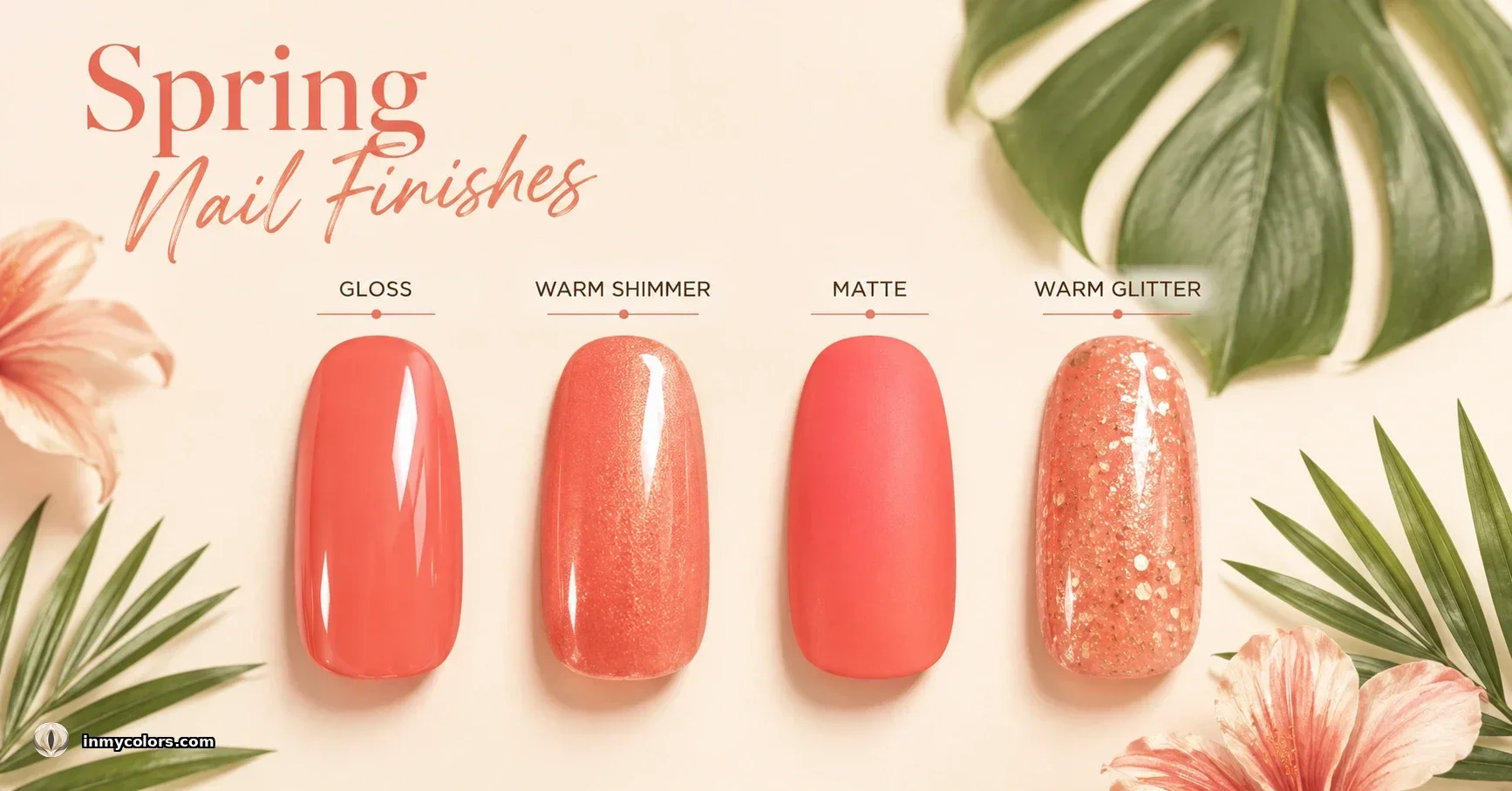
Gloss: The recommended finish for all three Spring sub-seasons. The shiny, fresh quality of a gloss finish reinforces Spring's inherent freshness and clarity. A glossy coral nail looks alive; a matte coral nail loses some of that quality.
Shimmer: Soft warm shimmer is a beautiful Spring option — warm champagne shimmer, golden peach shimmer, coral with gold microflake. The shimmer should be warm in tone.
Matte: Generally not recommended for Spring seasons. A matte finish removes the freshness that is central to Spring's nail aesthetic and pushes the overall effect toward heavier, earthier territory that belongs to Autumn. If matte is strongly preferred, keep the underlying shade very vivid to compensate.
Glitter: Can work for Bright Spring in warm gold or warm holographic. Use with some restraint for True and Light Spring.
French Manicure for Spring Seasons
The classic French manicure — stark white tip on a pale pink base — is actually a cool-toned construct that does not suit Springs particularly well. The stark white reads cool and slightly clinical against warm Spring skin.
The Spring French: Use a warm ivory or warm nude base instead of the stark pink, and a soft nude tip instead of the stark white. The effect is a warmer, more organic version of the French that looks like healthy, warm skin rather than a graphic contrast. For Light Spring, make the base and tip extremely close in value. For Bright Spring, a slightly more visible tip contrast is appropriate.
What to avoid: Cool pink bases and stark white tips — the standard offering at most nail bars. Ask specifically for warm ivory or warm nude if booking a salon French manicure.
The Warm Tone Rule in Practice
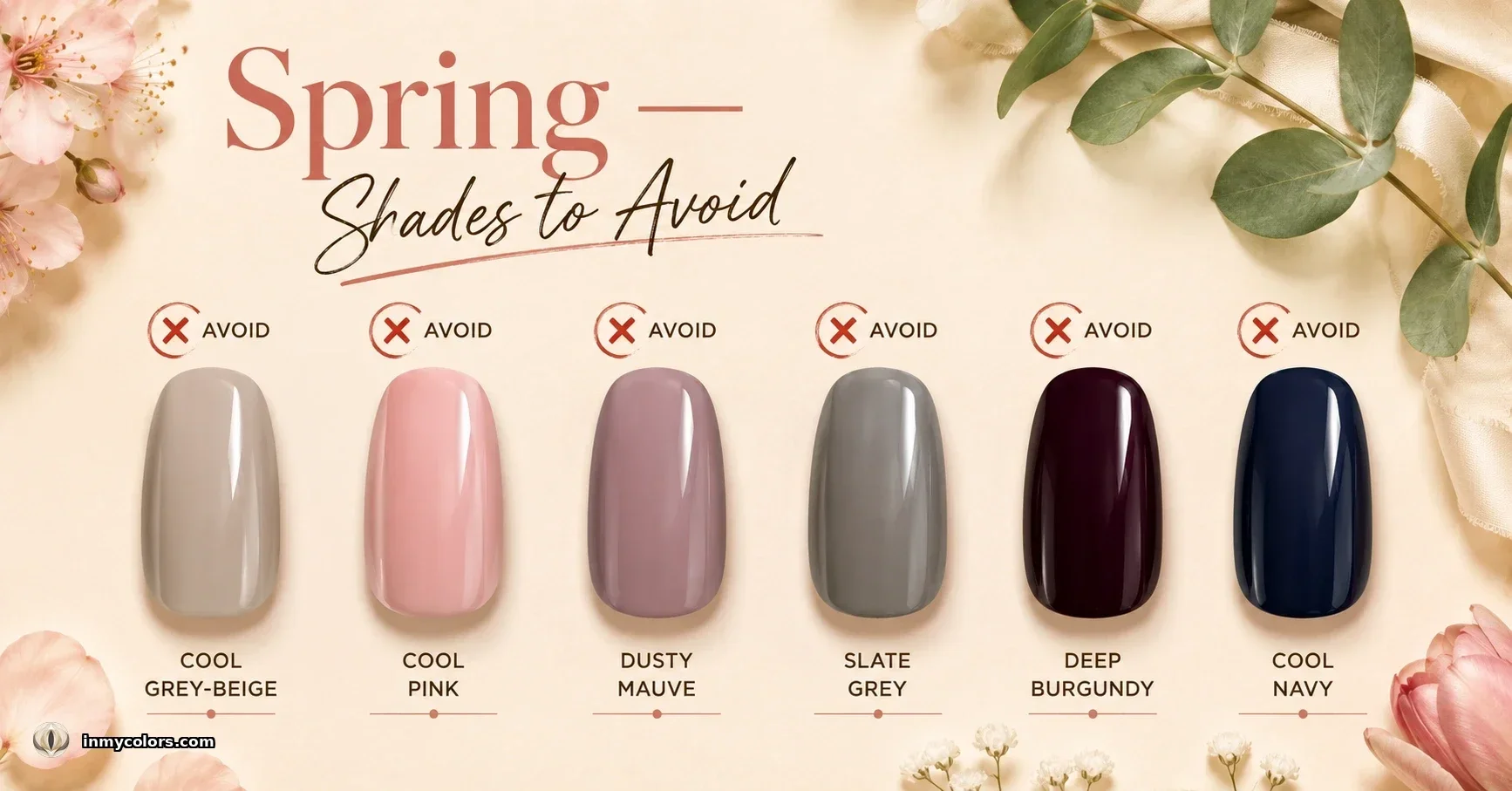
The most common Spring nail mistake is buying shades described as "neutral" or "natural" that are actually cool. At the nail wall, the cooler shades tend to dominate the neutral and nude categories — grey-beige, mauve, cool pink, cool rose. Springs should apply the same test they use for makeup: does this shade pull warm, clear, and fresh?
A useful shortcut: if a shade sits in the same row as grey, slate, cool mauve, and cool berry, it is probably in the wrong temperature register for Spring. Spring's territory is the coral-peach-warm orange-warm pink row — distinct, identifiable, and reliably flattering.
Find Your Season
The difference between Light Spring's palest apricot and Bright Spring's electric coral is enormous, even though both are Spring shades. Getting the sub-season right means knowing exactly how vivid and how light your ideal nail shades should be. Find your season at inmycolors.com.