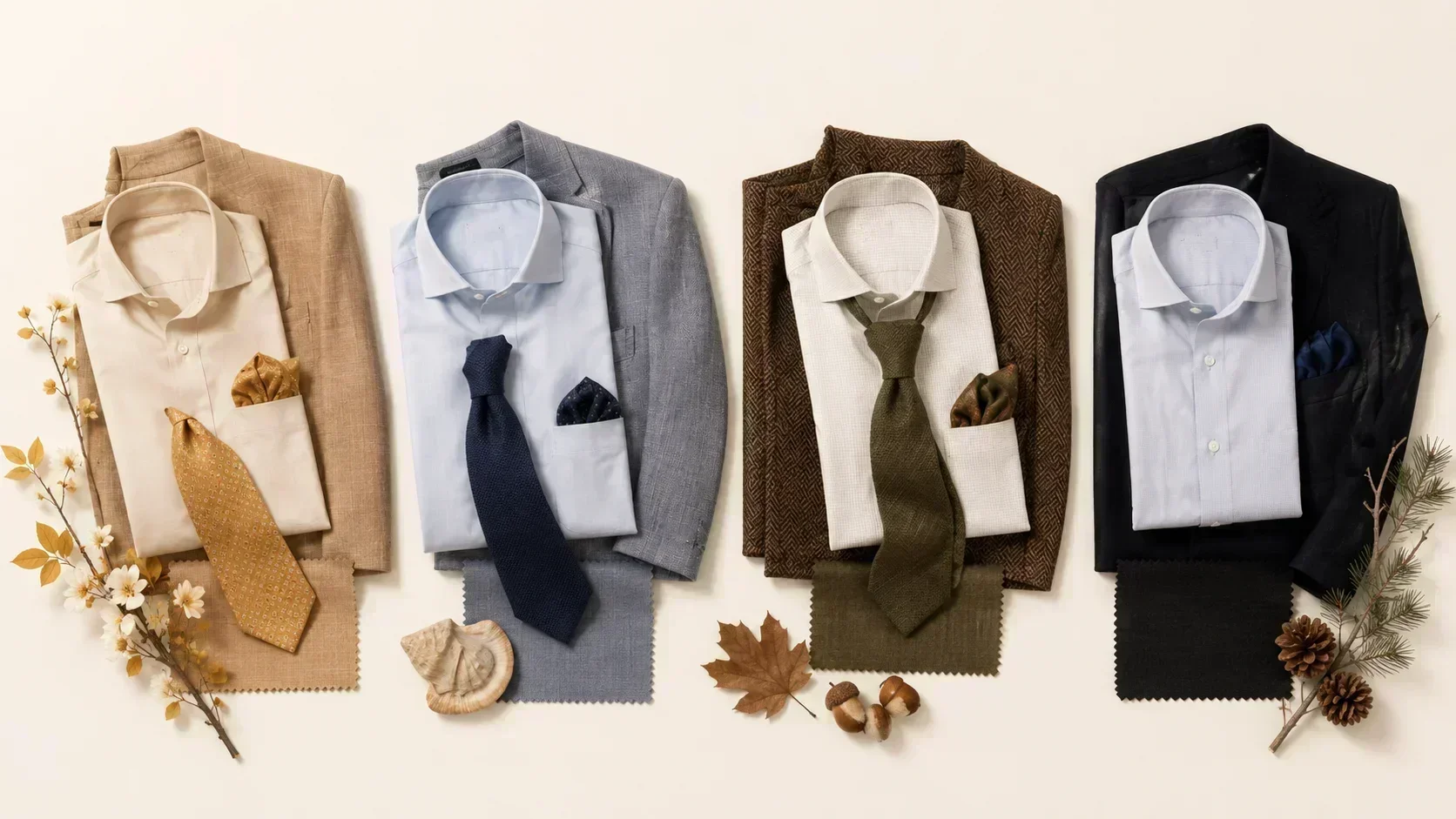
Personal colour analysis has a gender problem — not in its underlying system, which applies equally to everyone, but in how it has been communicated, marketed, and perceived.
Since Carole Jackson's 1980 bestseller Color Me Beautiful, the practical guidance has been presented almost entirely in the context of women's fashion. The seasonal colour theory itself contains no gender assumption. The three axes that determine your season — colour temperature, value, and chroma — apply to every human being with the same precision. The season a man receives from an accurate analysis is as valid, as useful, and as actionable as the season a woman receives.
The reason fewer men have heard of personal colour analysis is not that it doesn't apply to them. It is that no one bothered to write the men's version clearly.
This is the men's version.
You Have a Season
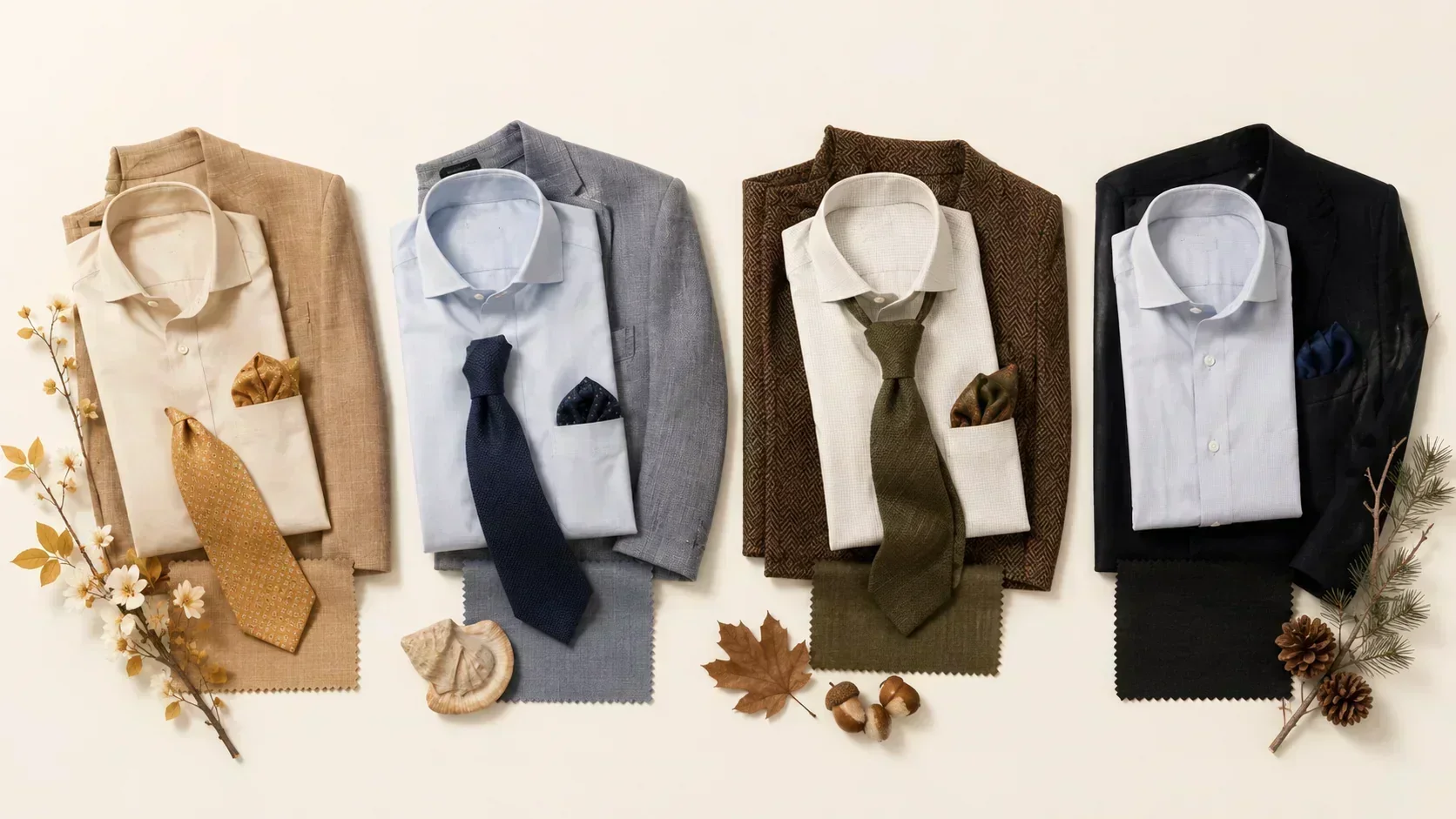
Men's colouring varies across the same three axes as women's: warm or cool undertone, light or deep value, clear or muted chroma. These three axes produce the same 12 seasons. A man can be a True Autumn. He can be a Bright Winter. He can be a Light Summer or a True Spring. The season classification is derived from the same measurements — skin tone, iris colour, hair temperature — and the output is equally applicable.
The practical implication is also the same: wearing colours in the wrong temperature, wrong depth, or wrong chroma level produces the same visual result regardless of gender. The skin looks slightly flat. The face looks less alert. Something seems slightly off without being diagnosable. Right-season colours produce harmonious, high-contrast, alert impressions.
The difference is that men's fashion offers a narrower colour palette by convention — and the season system helps navigate that narrower palette with more precision, not less.
The Male Palette Problem
The conventional wisdom for men's dressing — navy, grey, white, black, with occasional brown — is a four-colour system built for cool-season men. Navy and cool grey are perfectly calibrated for Summer and Winter men. They are active colour errors for Spring and Autumn men.
A True Autumn man in a standard navy suit and white shirt looks subtly strained — the cool temperature fights his warm undertone, the cool white shirt further emphasises the temperature conflict, and the overall impression is slightly flat rather than alert and assured. He is dressed correctly by conventional standards and incorrectly by colour standards.
The True Autumn man in a dark warm brown suit — not a fashion-forward choice, simply a seasonally correct choice — looks entirely different. The warm depth harmonises with his undertone. The skin looks alive. The overall impression is grounded, assured, and natural rather than slightly uncomfortable.
This is not a subjective aesthetic preference. It is the same mechanism that operates on every person in every colour context. The conventional male colour palette is simply not calibrated for half of the men it is applied to.
How to Read Your Season: A Quick Reference
Men's season identification follows the same visual logic as women's, with particular attention to the three clearest indicators:
Skin undertone. Hold a warm gold and a cool silver metallic object near your face in natural light. The one that makes your skin look more alive, less grey, more luminous — that is your temperature. Warm = Spring or Autumn family. Cool = Summer or Winter family.
Hair temperature. Natural hair colour (before any grey) has temperature. Golden brown, auburn, copper, warm black = warm. Ash brown, cool black, blue-black, platinum = cool. Warm hair almost always indicates Spring or Autumn. Cool hair almost always indicates Summer or Winter.
Contrast level and depth. Light skin and light hair with no strong contrast = lighter season (Light Spring or Light Summer). Very dark colouring (dark hair, olive or dark skin) = deeper season (Deep Autumn or True/Deep Winter). Medium depth = the middle seasons of each family.
The combination of temperature + depth places you within the 12 seasons with reasonable accuracy. For precision — particularly if you're at a boundary (medium warmth, medium depth, or mid-chroma) — a full analysis using all three axes is more reliable than visual estimation.
The Suit Question
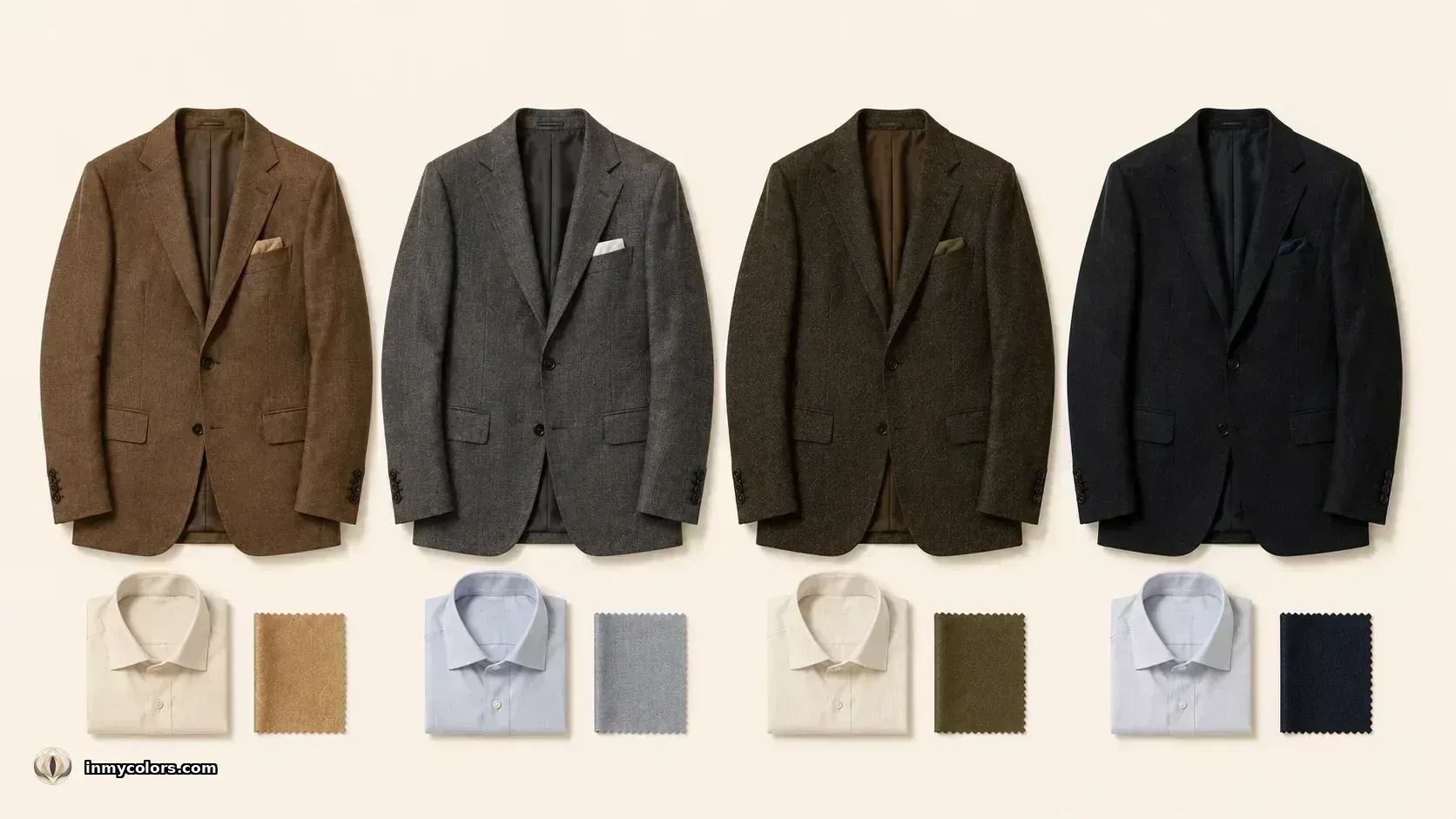
The suit is the most structurally important colour decision most men make, because it will be worn frequently, photographed often, and used as the foundation of the most high-stakes visual impressions a man creates professionally and socially.
Getting the suit colour right matters disproportionately.
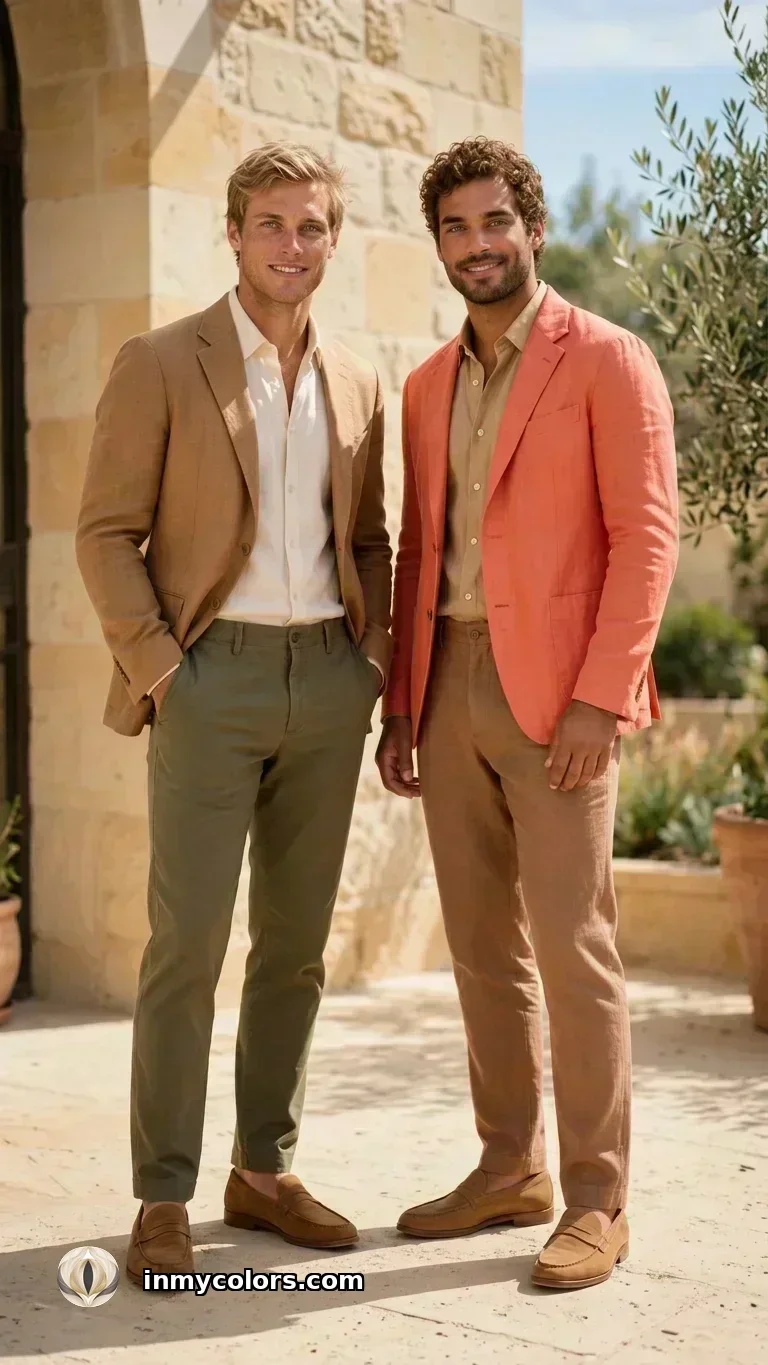
Spring men (Light Spring, True Spring, Bright Spring). Warm undertone, clear chroma, light to medium depth. The navy suit is not wrong — but warm navy-teal or warm dark teal-green suits it better. Medium warm brown is an excellent suit choice. Camel can work as a warmer-weather option. Avoid cold grey and stark black — both fight the warm undertone. The best shirt colours: warm white or ivory (not stark white), warm pale yellow, peach, or warm light blue.
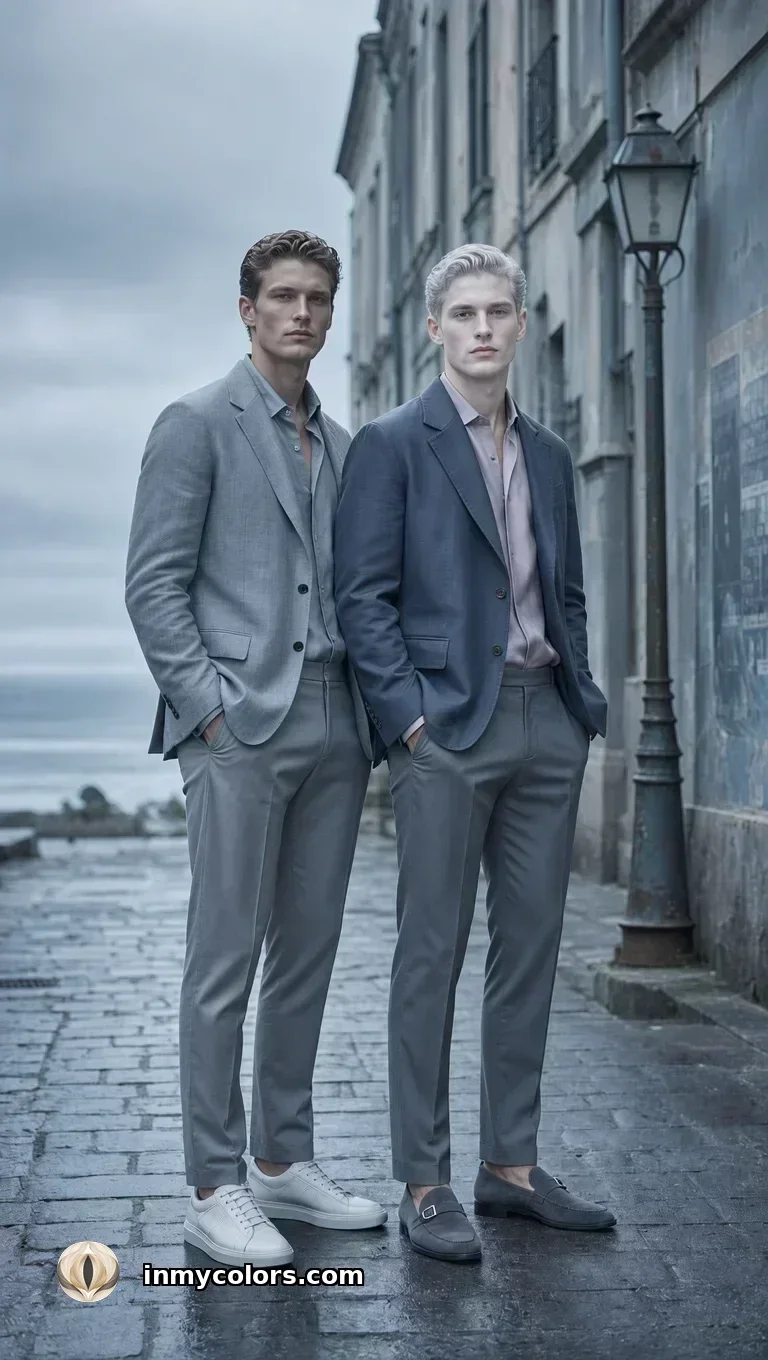
Summer men (Light Summer, True Summer, Soft Summer). Cool undertone, muted chroma, light to medium depth. This is the season for which the conventional male palette was designed. Cool grey (light, medium, dark) is ideal. Soft navy is excellent. Avoid warm brown and camel entirely. Black is usable but slightly harsh for lighter Summers — cool charcoal is a better fit. Best shirt colours: cool white or soft white, pale cool blue, soft cool pink (light blue-pink, not warm pink).
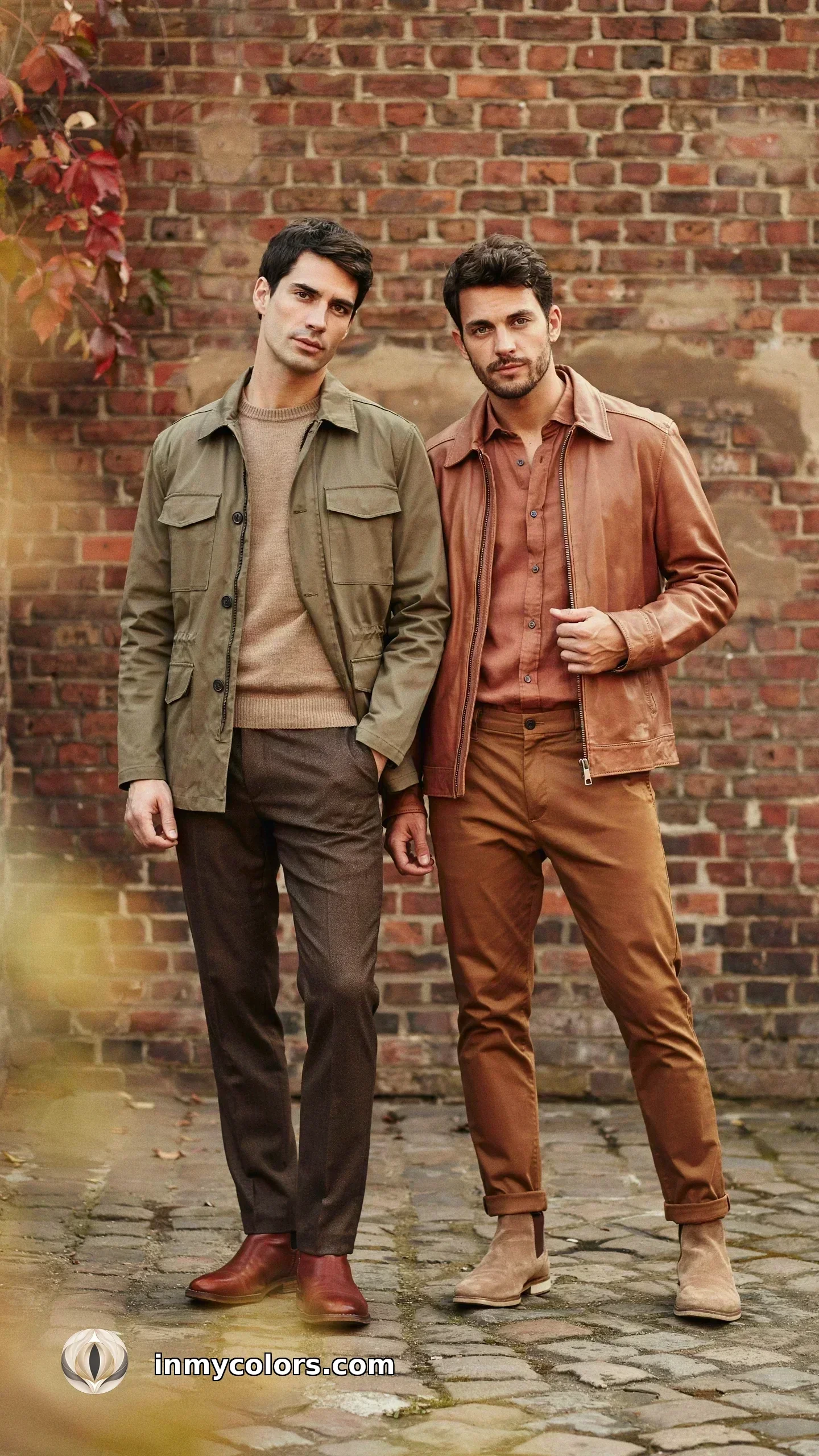
Autumn men (Soft Autumn, True Autumn, Deep Autumn). Warm undertone, muted chroma, medium to deep depth. The neglected season in men's suiting. Dark warm brown is the ideal power suit — grounded, authoritative, and entirely in season. Dark warm olive is equally strong. Warm dark charcoal (charcoal with a slight warm cast) is the closest to conventional without fighting the undertone. Avoid cool grey and cold navy. Best shirt colours: warm ivory, warm cream, warm khaki, warm beige, warm pale olive.
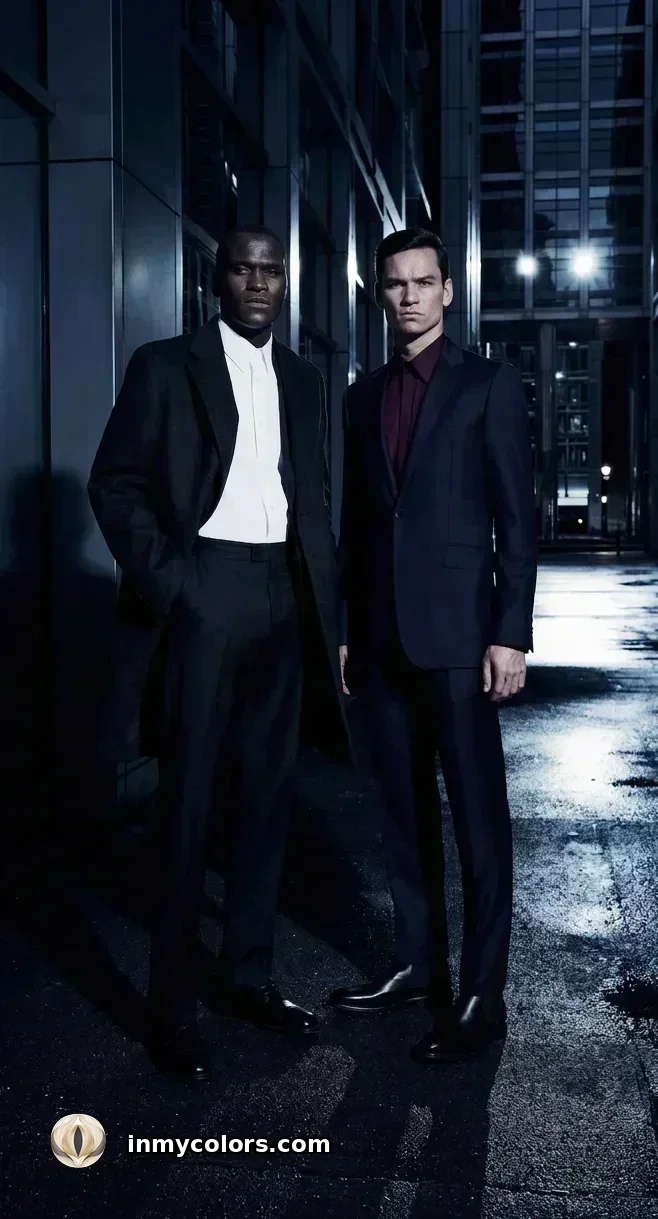
Winter men (True Winter, Bright Winter, Deep Winter). Cool undertone, clear chroma, medium to deep depth. The conventional male palette was purpose-built for this season. Navy is ideal. Black is ideal. Cool dark charcoal is ideal. These are the Winters' colours — not compromises but precise matches. Avoid warm brown entirely. White shirt works best for Winter men because the cool, crisp contrast is entirely in season. Deep plum, burgundy, and cool dark teal are strong accent options.
The Shirt
Men's shirts represent more colour variety than suits in most wardrobes, and they sit closer to the face — making temperature accuracy more important.
The white shirt is the canonical starting point, but "white" is not a single colour. Stark optical white is a cool colour — it works for Summers and Winters; it fights Springs and Autumns. Warm white or ivory — a white with a very slight warm cast — is the Spring and Autumn version of the white shirt. The difference in the shirt is subtle; the difference in the face is not.
Beyond white, the season filter applies directly:
Spring shirts: warm ivory, peach, warm coral, warm pale blue, warm pale yellow, warm khaki. Not: stark white, cool blue-grey, cool lavender.
Summer shirts: soft white, pale cool blue, soft cool lavender, pale cool pink, cool pale grey. Not: warm yellow, warm peach, warm khaki.
Autumn shirts: warm ivory, warm cream, warm khaki, warm olive, warm burgundy, warm rust (subtle). Not: stark white, cool blue, cool grey.
Winter shirts: stark white, cool pale blue, pale cool grey, pale cool lavender. Not: warm cream, warm peach, warm khaki.
Ties, Pocket Squares, and Accessories
The closer an accessory is to the face, the more its temperature matters. A tie knot sits directly below the chin, adjacent to the face — making tie colour one of the highest-impact decisions in formal dress.
The temperature rule applies: warm-season men choose warm ties; cool-season men choose cool ties. But the pattern and scale of the tie matters for chroma.
Spring men: warm peacock blue, coral, warm teal, golden yellow, warm burgundy with warm cast.
Summer men: muted mauve, soft sage, cool dusty blue, soft burgundy, cool rose.
Autumn men: warm rust, deep olive, cognac, warm dark teal, earthy burgundy.
Winter men: cool deep burgundy, navy, cool teal, deep plum, charcoal. Bold graphic patterns work for Winters as they support the high-contrast season.
Watches: gold-toned metals harmonise with Spring and Autumn. Silver-toned metals harmonise with Summer and Winter. Rose gold sits closest to a warm-cool boundary and works reasonably across Spring and some Autumn.
Casualwear and the Season
The suit discussion is the most high-stakes application of the season for men, but the daily casualwear application is where the season provides the most cumulative benefit — because it guides the decisions made most frequently.
The season filter on casualwear works exactly as it does on suiting: temperature first.
T-shirts near the face: the season applies. A True Autumn man in a stark white T-shirt has introduced a cool, high-contrast element that fights his undertone. A warm ivory or cream version of the same T-shirt serves him better. The difference reads in photographs and in person.
Knitwear: texture doesn't change temperature. A warm-season man in a cool grey merino jumper is still wearing the wrong temperature — the texture is pleasant, the temperature is still fighting.
Denim: both temperature and depth matter. Warm-wash golden-brown denim (Raw denim, heritage washes) harmonises with warm seasons. Cooler blue-grey washes harmonise with cool seasons. Heavily faded light denim suits lighter-value seasons better than deep seasons, where the contrast can look washed-out.
Grooming: Beard and Hair
The same temperature principle applies to grooming choices.
Beard colour for warm-season men (Spring, Autumn): stay warm. If colouring the beard (grey coverage, shaping), warm-toned products match the undertone. Avoid ash products that grey down the beard to a cool tone.
Beard colour for cool-season men (Summer, Winter): cooler tones or natural grey. Autumn men sometimes grow warm beards that are out of season — the beard provides visible warmth that may fight the cool skin. Natural grey coverage in cool-season men should use cool-ash products.
Hair product finish: matte finishes suit muted-chroma seasons (Soft Autumn, Soft Summer, True Summer). High-shine finishes suit vivid-chroma seasons (Bright Spring, Bright Winter, True Winter). The finish of the hair affects the overall chroma impression.
The Barber Conversation
Most men's grooming conversations happen with a barber who has no knowledge of seasonal colour analysis — and doesn't need to. But the man who knows his season can guide that conversation with a single relevant instruction:
Warm seasons: "Keep the tone warm — no ash tones, stay golden."
Cool seasons: "Keep the tone cool or natural — no warm-brown tones."
This single instruction, applied to any hair colouring or beard treatment, prevents the single most common grooming error: a temperature-correct man in a temperature-correct wardrobe undermined by a haircut product in the wrong temperature.
Starting Simply
If none of this is immediately actionable and the twelve-season system feels complex: start with one question.
When you look at yourself in natural light wearing a cool grey shirt versus a warm camel or ivory shirt — which makes your face look more alive?
The answer tells you your temperature. That single piece of information — warm or cool — will correctly guide 80% of the wardrobe decisions you make for the rest of your life.
The remaining 20% — depth, chroma, the specific season within your family — is refinement. The temperature is the foundation. And the temperature applies to you with the same reliability that it applies to everyone else.
You have a season. Use it.
Men's colour analysis draws on the foundational seasonal colour system as documented in Carole Jackson, Color Me Beautiful (1980) and subsequent development by the Colour Me Beautiful system. Men's fashion application draws on Alan Flusser, Dressing the Man (2002) and Bernhard Roetzel, Gentleman: A Timeless Fashion (2004). Undertone identification methodology consistent with the In My Colors 12-season Gaussian classification system.