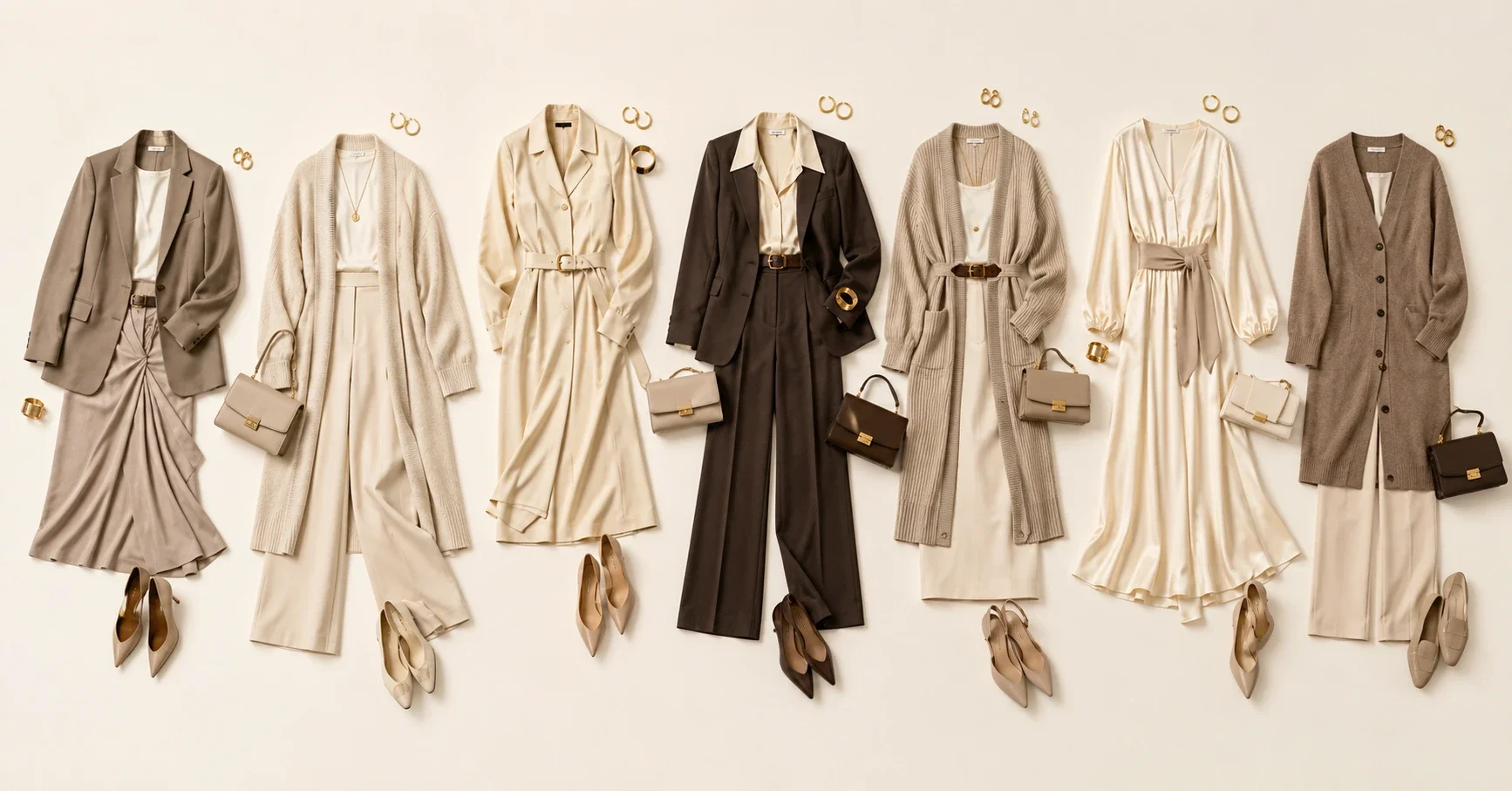
There is a single principle that underlies all body shape dressing advice, regardless of which silhouette guide you follow or which system you use:
The eye should travel the length of the body without stopping.
When the eye encounters an unexpected interruption — a horizontal line at the widest point, a colour break that cuts the body in two, a detail that draws attention to an area you want to minimise — it stops. The proportion reads as shorter, wider, or heavier than it is. When clothing creates a continuous visual line, the eye travels freely, and the body reads as taller, longer, and more balanced.
Everything in body shape dressing is an application of this principle.
Free tool
Don't know your shape yet?
Enter four measurements and find out in under a minute — free, private, and instant. No account needed.
Find my body shapeWhy Body Shape Dressing Works
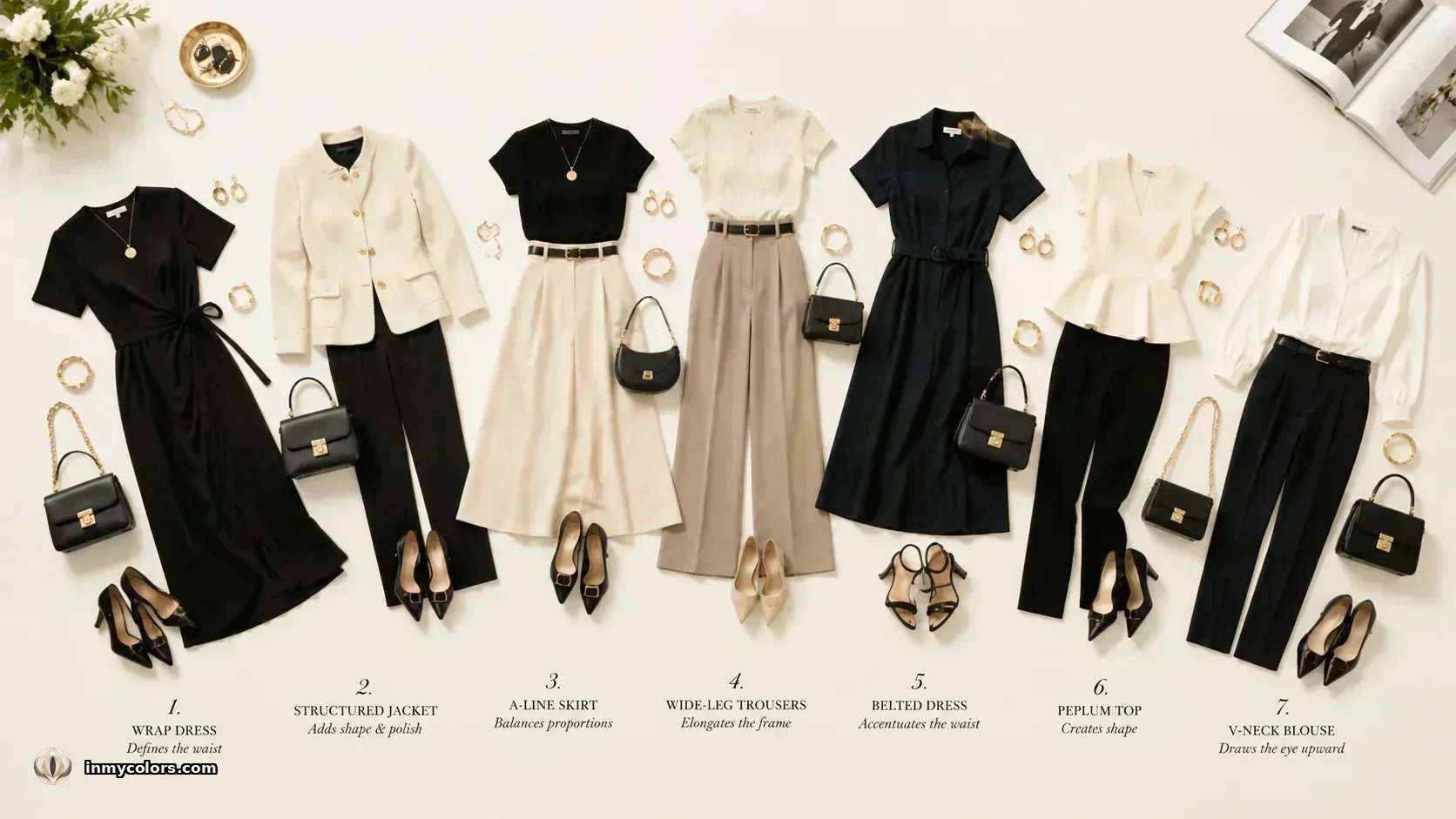
The body is three-dimensional. Clothing is two-dimensional. Dressing for your body shape is the art of managing the two-dimensional signals that clothing sends about the three-dimensional form beneath it.
Colour creates visual weight — dark colours recede, light colours advance. Fabric structure defines or obscures the body — stiff fabrics hold their own shape, soft draped fabrics follow the body's natural line. Cut and silhouette create lines — vertical lines elongate, horizontal lines broaden, diagonal lines create movement. Pattern scale draws the eye — large patterns expand, small patterns diminish.
Body shape dressing uses all of these tools to create the visual impression of a balanced, proportional silhouette — regardless of the actual measurements underneath.
The Seven Body Shapes
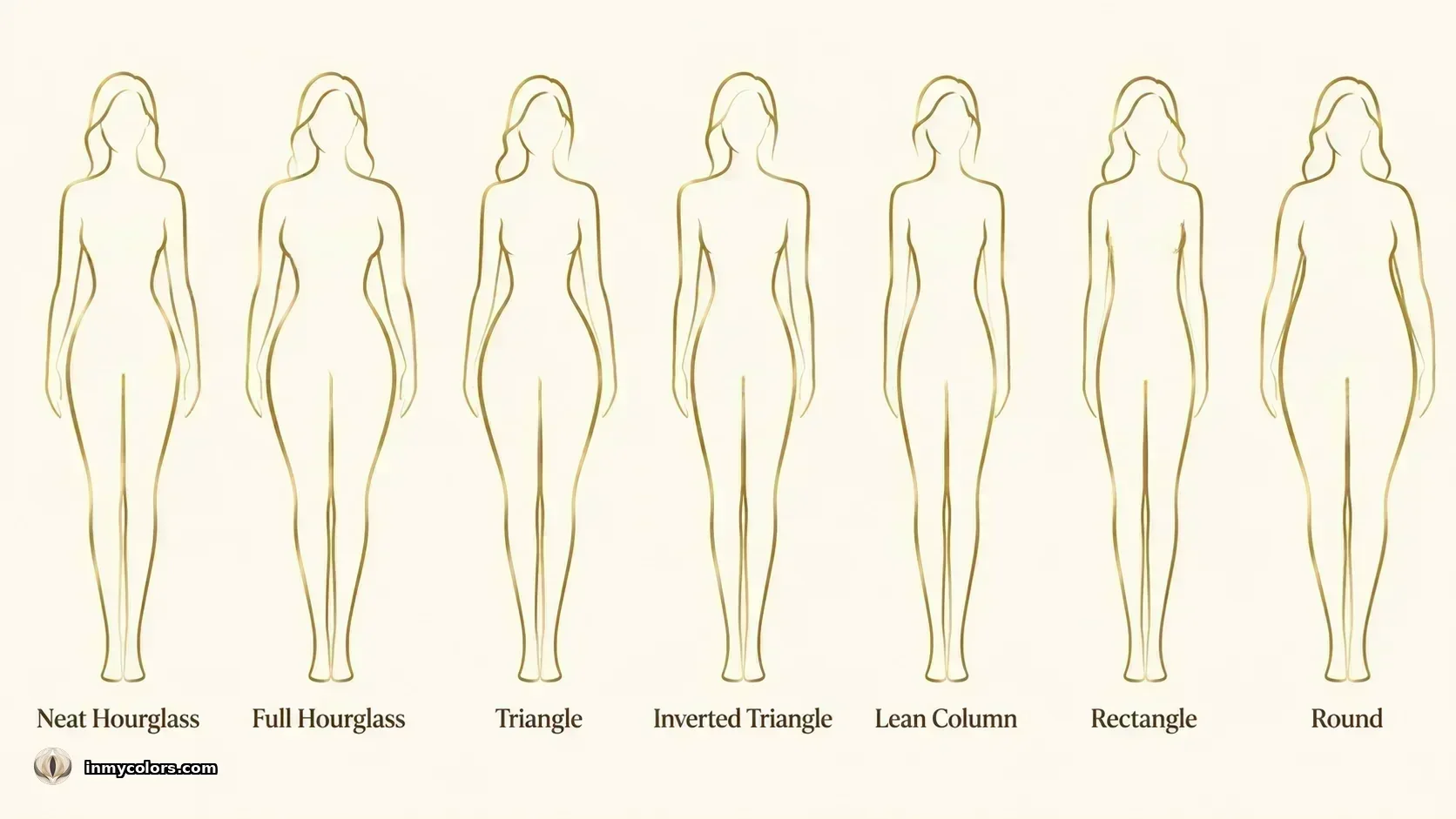
Neat Hourglass
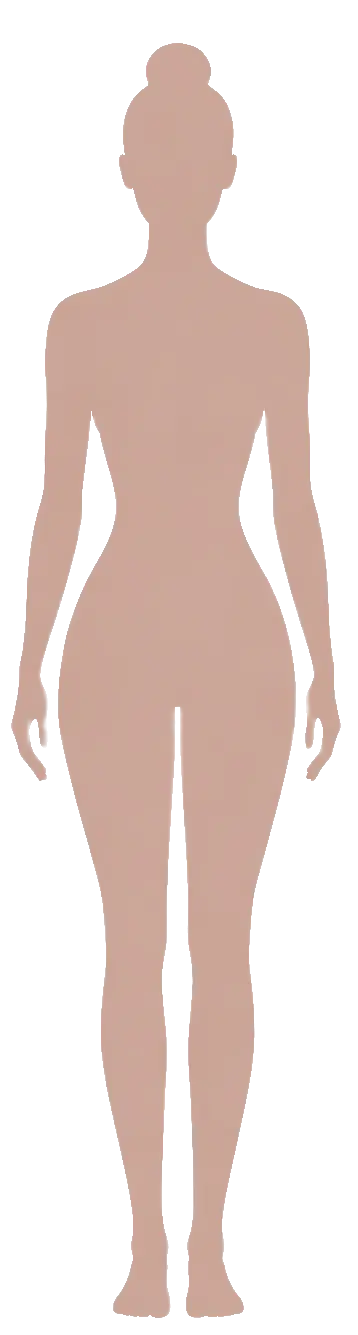
Balanced shoulders and hips, with a clearly defined waist. The most versatile body shape for dressing — the proportions are already balanced, so clothing works with the silhouette rather than needing to create it.
Famous examples: Sophia Loren, Natalie Cole.
What works: Anything that respects and follows the body's natural line. Gently fitted dresses in soft fabric, wrap styles, belted jackets in supple wool or crepe, and trousers in soft draping fabric — silk jersey, soft wool, or washed silk. Coat dresses with a soft sash at the waist. The silhouette does not need to invent a waist — it just needs to let the existing one show.
What to avoid: Boxy or oversized cuts that conceal the waist. These remove the defining feature of the shape and produce an undefined, shapeless silhouette. Stiff fabrics that hold their own shape rather than following yours.
Full Hourglass
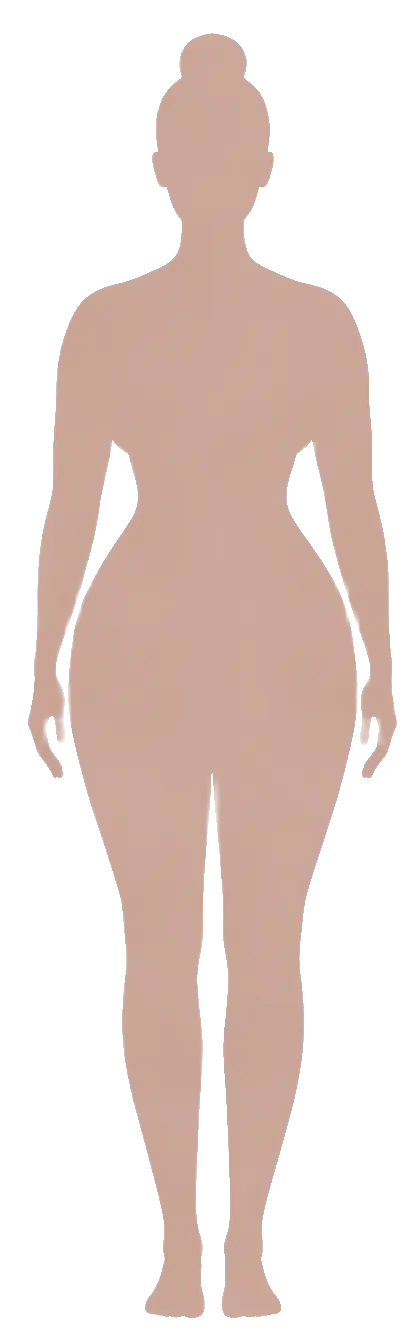
The same balanced shoulder-hip proportions as Neat Hourglass, but with a fuller bust and hips. The waist is defined but the curves are more pronounced.
Famous examples: Oprah Winfrey, Julie Goodyear.
What works: Soft, fluid fabrics that drape rather than strain — jersey, silk crepe, soft wool, washed silk. Wrap-style dresses, gently waisted jackets in supple fabric, sarong-style or softly gathered midi skirts. The goal is for the cut of the clothes to follow the body's contours — not fight them, not cling to them, but drape over them. A coat dress with a back or sash belt at the waist is a reliable choice.
What to avoid: Stiff, constructed fabrics that fight the natural shape and hold the silhouette away from the body. Very boxy cuts that hide the waist. Anything that strains or pulls across the fullest points — if the fabric is working too hard, it is the wrong fabric or the wrong size.
Triangle (Pear)
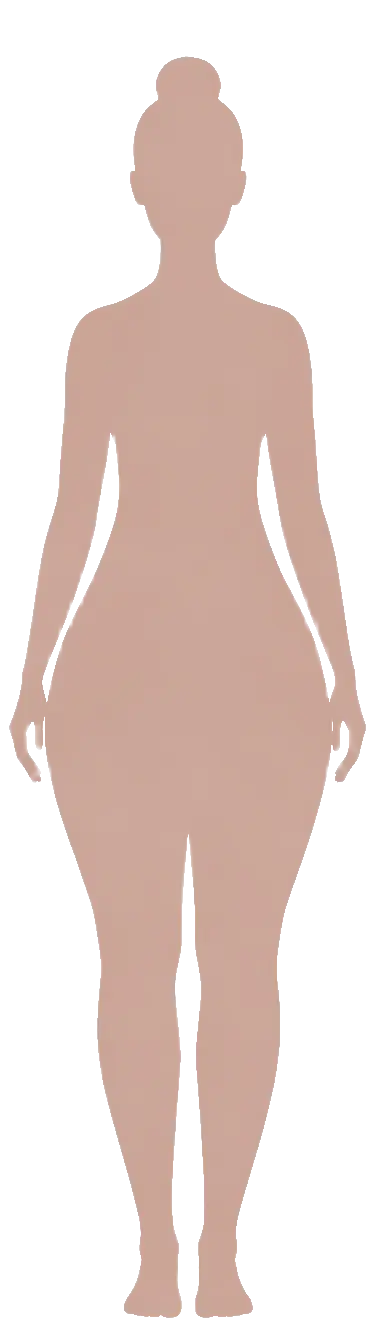
Hips wider than shoulders, with the lower body carrying more visual weight than the upper.
Famous examples: Whoopi Goldberg, Erica Jong, Su Pollard, Penelope Keith.
What works: Balance the silhouette by building interest and volume above the waist. Structured shoulders are the single most important element for this shape — jackets and blouses with defined shoulder structure, or shoulder pads added to existing jackets, broaden the top immediately. Wide, structured collars, bold necklaces, and interesting upper-body patterns reinforce this by drawing the eye upward. Single-breasted, structured jackets ending just below the widest point of the hip are excellent: the shoulder broadens the top and the length elongates the lower half. Below the waist, plain medium-to-dark colours recede the hips. Softly gathered midi skirts or straight-cut trousers with a comfortable waist both work well at the bottom — always worn with a long layer on top (jacket, waistcoat, or open cardigan) rather than a tucked-in blouse alone.
What to avoid: Volume at the hip — A-line skirts that flare from the hip outward, gathered waistbands, or wide-leg trousers with hip pockets. Bold colour, pattern, or horizontal detail below the waist. Double-breasted jackets with large contrasting buttons that end at the hip; the buttons stop the eye exactly where you don't want attention.
Inverted Triangle
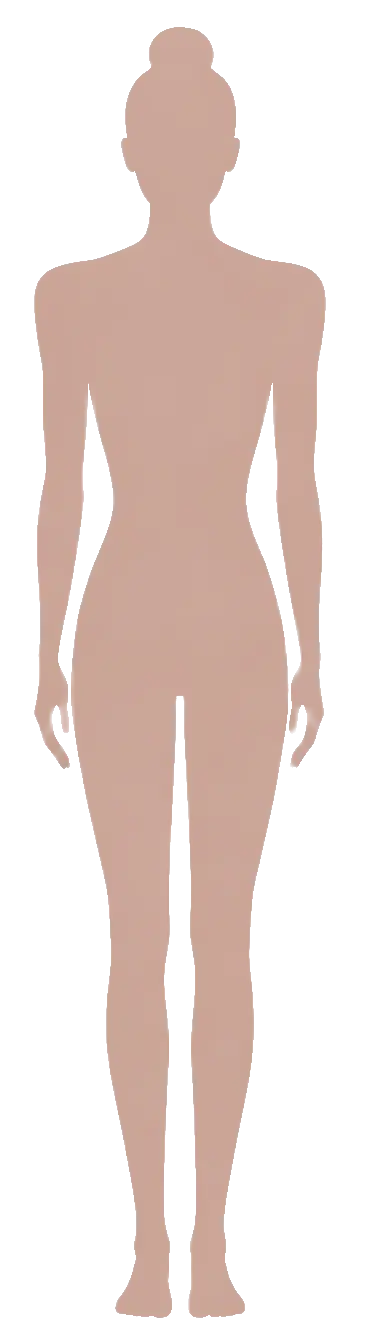
Shoulders wider than hips, with the upper body carrying more visual weight.
Famous examples: Bette Midler, Jennifer Saunders.
What works: Quiet the upper body and add interest below the waist. Wide-leg trousers, palazzo pants, straight or wrap midi skirts, and knife-pleat styles all add volume below the waist and balance the overall silhouette. Tops should be in fluid, draping fabric — raglan sleeves soften the shoulder line better than set-in sleeves. Keep the top long and simple, and let the bottom do the work. Longer jackets ending at or below the hip add visual weight where it is needed.
What to avoid: Anything that broadens the shoulder further — structured shoulder detail, tops with horizontal bulk across the chest, stiff fabrics in the upper body. Strongly waisted or belted styles that emphasise the narrow hip relative to the full bust. Short jackets that end at the waist and leave the narrow lower half entirely exposed.
Lean Column (Rectangle)
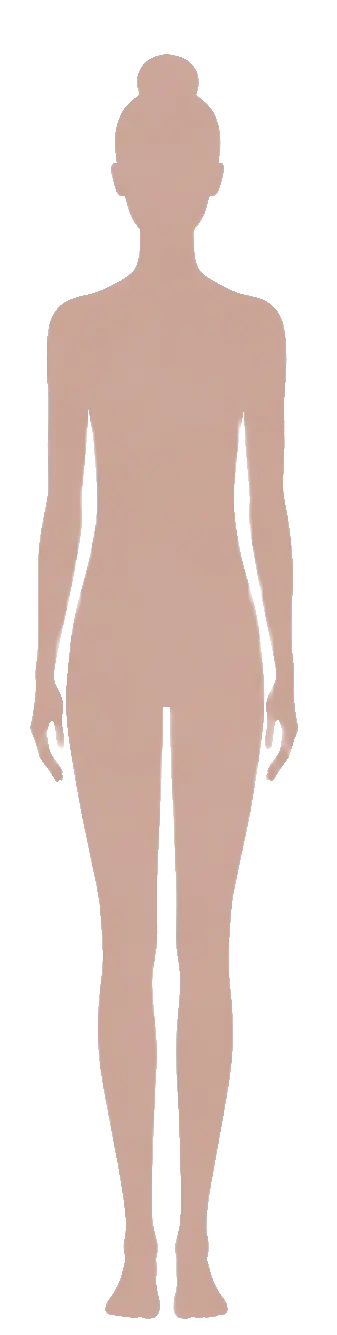
Shoulders and hips roughly equal, with little waist definition. The silhouette is straight and elongated.
Famous examples: Alison Moyet, Claire Rayner.
What works: Create the impression of curves through clever layering and detail placement. A long, open-front cardigan or longline jacket over a blouse and trousers creates a continuous vertical line that is enormously flattering. Belted coat dresses, wrap-style dresses that tie at the waist, and soft blouson styles that define through the midsection all suggest a waist without requiring one. Vertical stripes elongate. Strong colour contrast at the waist draws the eye to where definition is implied rather than structurally present.
What to avoid: Completely shapeless cuts that confirm the straight silhouette with no attempt at waist suggestion. Head-to-toe monochrome with no break or detail — this reads very flat on a lean column shape. Full, gathered skirts that add bulk at the hip without creating the waist to balance them.
Rectangle
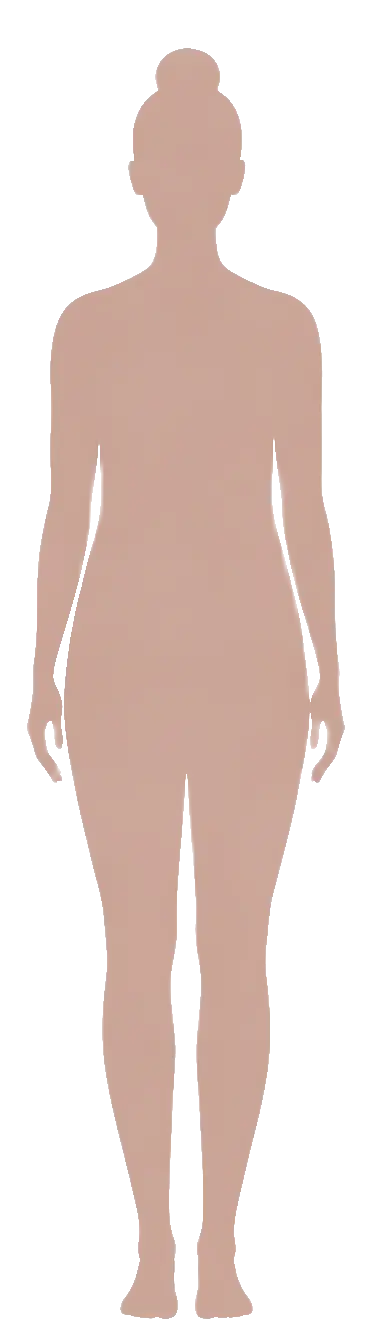
Similar to Lean Column but with a slightly more substantial build — the same straight silhouette and minimal waist definition, but with more presence through the torso.
Famous examples: Barbara Bush, Vanessa Feltz.
What works: Detail at the extremes — interesting necklines, wide collars, statement jewellery near the face, detail at the hem or cuff — draws the eye away from the undefined centre. Fluid, uncomplicated fabrics that drape cleanly — the layering creates the structure, not the material itself. Stiff weaves that hold their own shape away from the body work against this shape, not for it. Straight-cut trousers with a clean front. Layered looks: a blouse, a waistcoat, a long jacket, all in the same tonal range. The layering adds dimension without relying on the body's shape to create it.
What to avoid: Fabrics that cling and reveal the absence of waist definition. Shapeless cuts that add bulk without any structure. Stiff, boxy fabrics that push outward from the body — these add width without adding shape.
Round
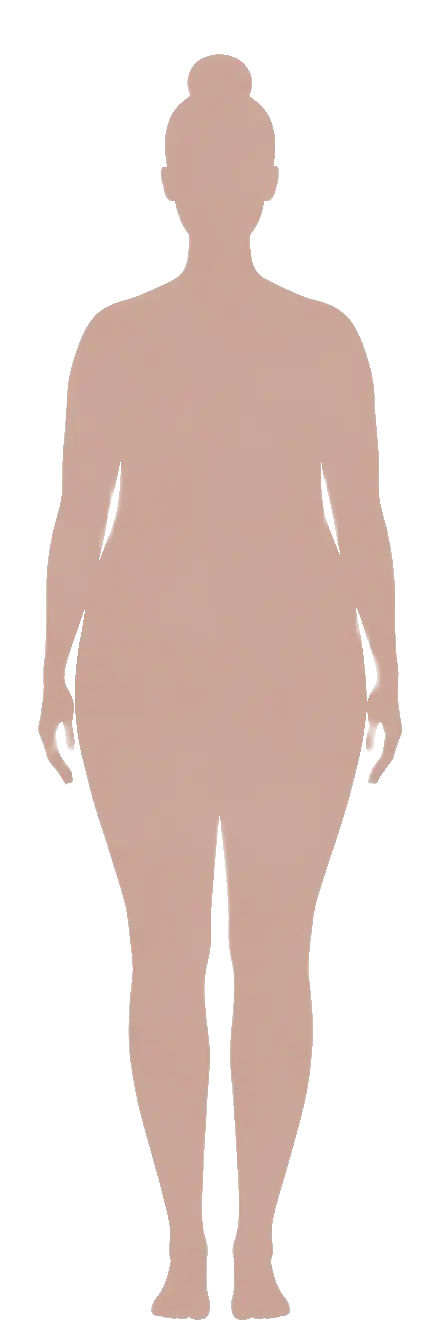
Fuller through the middle, with the waist carrying the most visual weight. The torso tends to be rounded from shoulder to hip, with the legs often being the strongest feature.
Famous examples: Roseanne Barr, Dawn French.
What works: The long, straight, open-front cardigan-style jacket — single-breasted, collarless, ending at or just above the knee — is the most flattering single piece for this shape. Worn over a straight skirt or straight-cut trousers in the same colour, it creates an unbroken vertical line through the body. V-necks and collarless necklines elongate the torso — avoid high, fussy collars that shorten the neck and add visual bulk to the upper body. Keeping top and bottom in the same medium-to-dark colour produces a lean, unified line. Soft draped fabrics — jersey, knits, and silk crepe — flow past the waist rather than stopping at it. Straight-cut skirts in soft fabric at knee length or longer are consistently flattering. If your shoulders are also narrow — fullness concentrated in the middle with narrower shoulders and lower legs — the cardigan-style jacket remains the core piece, but two rules change: prioritise building shoulder width through shoulder pads, wide collars, and peaked lapels; and wear lighter or brighter colours on the top half rather than matching top to bottom — the contrast draws the eye upward and balances the narrower shoulder against the fuller middle.
What to avoid: Stiff, structured fabrics that hold the silhouette out from the body rather than draping past the waist. Full or tiered skirts that add bulk from the waist down. Belted or sharply waisted styles that cut through the fullest point of the torso and draw the eye to it. Contrasting colour at the waist. Anything with horizontal detail or volume at the midsection.
The Piece That Works for Every Shape
There is one garment that flatters every body shape without needing to be fundamentally rethought per silhouette: a long, open-front cardigan or cardigan-style jacket in a soft, draping fabric.
For Neat Hourglass: belted or worn open, it frames the waist. For Full Hourglass: in soft jersey or crepe, it drapes over the curves without straining. For Triangle: with a little shoulder structure, it builds the top while the length covers the hip. For Inverted Triangle: ending at the hip or longer, it adds visual weight below the shoulder line. For Lean Column and Rectangle: worn open, it creates the long vertical line the shape is built for. For Round: in a plain, medium-to-dark colour, it creates the unbroken vertical through the body that is the shape's most flattering option.
The reason it works across every shape is simple — it does not require the body to provide any particular structure. It creates structure around the body and lets the body exist comfortably inside it.
Waist Position
Beyond body shape, where your waist sits on your torso affects how all skirts, trousers, and dresses proportion the body.
Your natural waist is the narrowest point of your torso. But that point may sit high (close to the ribcage), balanced (at the natural mid-torso), or low (close to the hip).
High waist: High-rise trousers and skirts are enormously flattering — they emphasise the length of the torso above the waist. Low-rise styles make the torso appear disproportionately long.
Balanced waist: Most trouser and skirt rises work well. Mid-rise is the reliable default.
Low waist: Mid-rise styles often give better proportions than very high-rise, which can create a long-torso, short-leg effect.
Scale
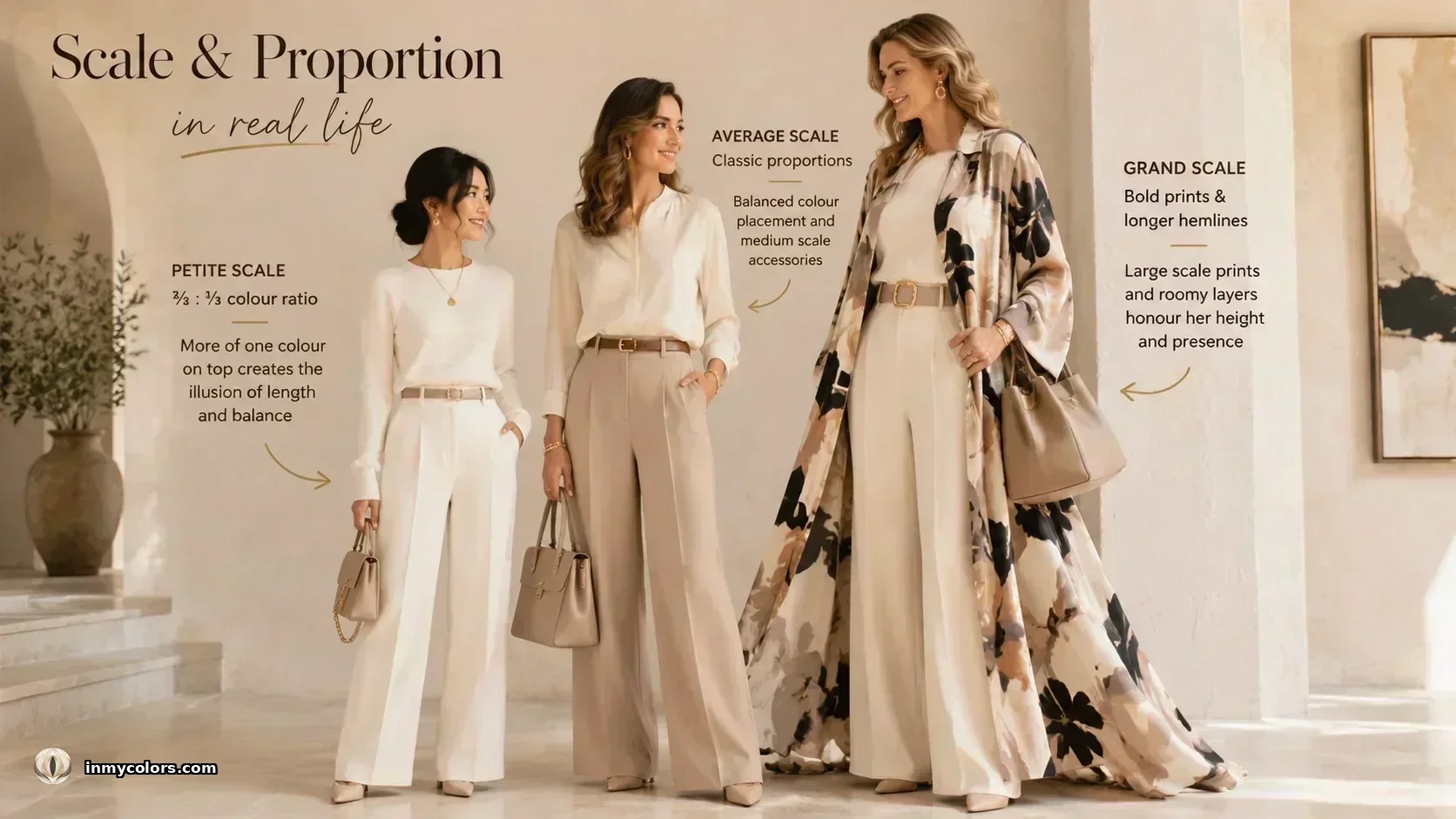
Body shape addresses silhouette. Scale addresses proportion — how large or small your physical frame is relative to the clothing details you wear. It is determined by two things together: height and bone structure.
Petite (5'3" and under, or fine bone structure). More honed, fitted cuts suit this scale best — loose, generous styles swamp a smaller frame rather than draping it. Large patterns overwhelm. Bold accessories overpower. Very long hemlines shorten the leg. The goal is proportion: small-to-medium prints, accessories to scale, hemlines at a flattering point. The two-thirds to one-third colour rule (two-thirds of the outfit in one colour, one-third in a second) elongates without cutting the silhouette.
Average (5'4"–5'6", standard bone structure). The middle ground. Most mainstream clothing is designed for average scale. The main rule is avoiding the extremes — very large or very small — that create an obvious scale mismatch.
Overscale (5'7" and over, with large bone structure). This is where scale advice changes most significantly — and where the biggest mistakes are made. Overscale is not simply being tall. It is the combination of height and a large frame: specifically, a wrist measurement of 6½ in (16 cm) or more at the corresponding height. A tall woman with a fine wrist is not overscale — she just has height.
When both are present, the fit rules shift. Overscale women always look better in a looser fit — or even a size larger than the number they might expect. Neat, close-fitting clothes fight a large frame rather than working with it. More ease, more generous cuts, and more texture all read better at this scale. Small prints disappear. Delicate accessories look undersized. You can carry bolder prints, statement jewellery, and longer hemlines without being overwhelmed by them. One counterintuitive rule: a short jacket with a short skirt creates a stubby silhouette at overscale — always ensure length somewhere in the look.
The practical self-check: measure your wrist. If it is 6½ in (16 cm) or more and you are 5'7" or taller, you are likely overscale — and the overscale guidelines will serve you better than standard sizing advice.
Fabric Is as Important as Cut
A silhouette can be cut exactly right for your shape, but made in the wrong fabric, it will fail. Two rules apply across all shapes:
Soft and draped is usually better than stiff and constructed. Jersey, silk crepe, soft wool, and washed silk follow the body's natural line and drape past areas you want to minimise. Gabardine, heavy denim, linen, and stiff cotton hold their own shape — sometimes creating exactly the silhouette you are trying to avoid.
Fit at the widest point, then tailor. If you need a larger size to fit across the hip or bust, take it and have the other areas adjusted. Off-the-rack sizing is not cut for your proportions, and the cost of a good tailor on a piece that almost fits is always worth it.
Putting It Together
Body shape dressing and colour season knowledge operate on completely different dimensions and reinforce each other. A Triangle shape who is a True Autumn can reach for deep terracotta, warm olive, or rust in a structured, wide-collar blouse — achieving the colour temperature her season needs and the upper-body interest her shape benefits from, at exactly the same time.
The process:
- 1.Identify your body shape.
- 2.Apply the core rule for your shape — where to add and where to subtract visual weight.
- 3.Apply your season palette to the pieces that follow that rule.
- 4.Adjust for your scale — proportion the details to your frame.
The result is clothing that works for your body and your colouring at the same time — not a compromise between the two, but a combination that serves both.
Which one are you?
Four measurements. Thirty seconds. You'll know your shape, your defining proportion, and the exact fit rules that work for your silhouette.
Find my shape →Private by design — your measurements never leave your device.