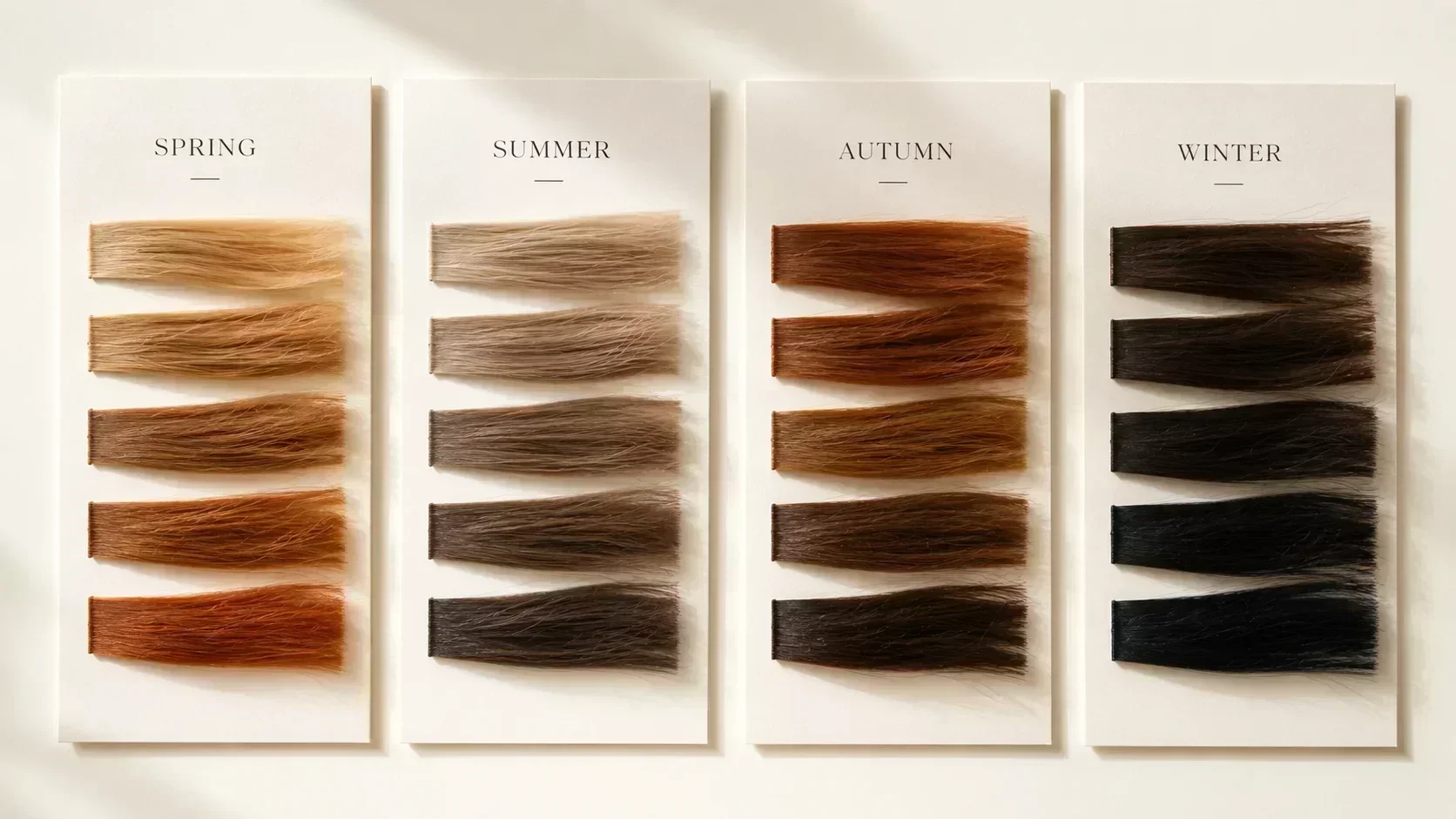
Hair colour is the largest colour element near the face. It frames the face across its entire perimeter. Its temperature, value, and saturation directly affect how the skin looks — amplifying or diminishing the effects of simultaneous contrast in exactly the same way that clothing does.
Getting the hair colour right has a more sustained impact than almost any other colour decision. You wear your hair colour every day, in every context, in every photograph. A slightly wrong hair colour at the wrong temperature accumulates — the small daily impression of slightly flat skin, slightly dull eyes, slightly strained appearance.
The season principle applies to hair colour with the same logic it applies to clothing. The temperature of your hair should match the temperature of your undertone. The value should be appropriate for your season's depth range. The chroma should harmonise with your season's chroma level.
Free tool
Want to see how a shade looks on you?
Upload a photo and try your season's hair colours instantly — warm, cool, ombre. Free, private, and no account needed.
Try hair colourThe Fundamental Rule: Temperature First
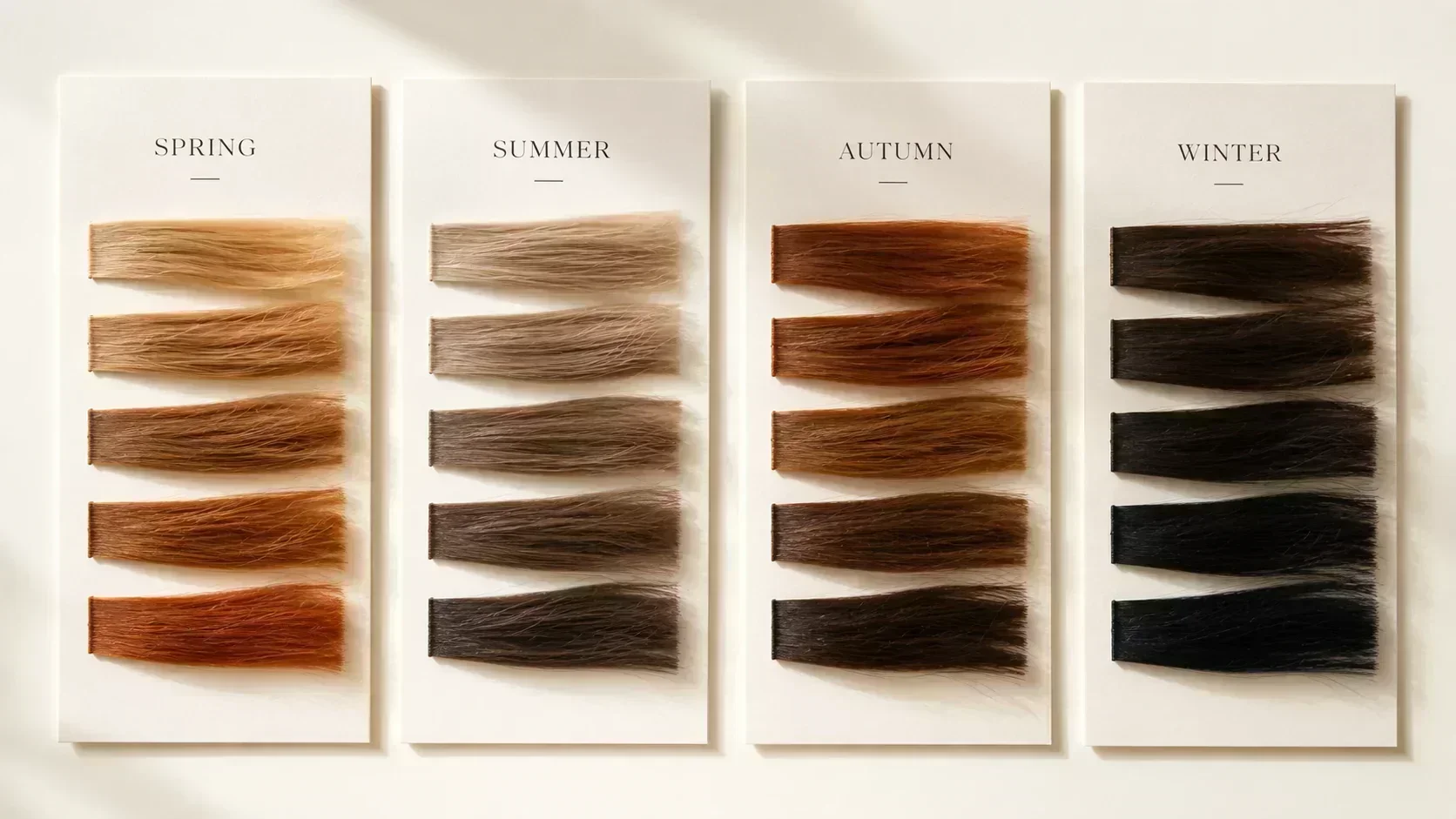
Every hair colour decision — whether you are colouring for the first time, maintaining existing colour, adding highlights, or covering grey — should begin with temperature.
Warm-season hair (Spring and Autumn): all hair colour should have warmth. Golden tones, honey, copper, auburn, warm brown, red-brown. The hair's warmth harmonises with the warm undertone. Any ash or cool tone in the hair fights the warm skin and makes the face look slightly grey.
Cool-season hair (Summer and Winter): all hair colour should be cool or neutral. Ash tones, cool brown, platinum, cool blonde, blue-black, neutral dark brown. Any golden or warm tone in the hair creates a temperature conflict with the cool undertone — the golden hair and the cool skin fight each other, producing a slightly incongruent impression.
This one rule eliminates the most common hair colour error: a warm-undertone person adding ash highlights because they are trendy, or a cool-undertone person adding warm balayage because it looks beautiful on someone else. The highlights look beautiful on the person with the right undertone for them. On the wrong undertone, they produce a persistent low-level visual conflict.
Spring: Hair Colour Guide
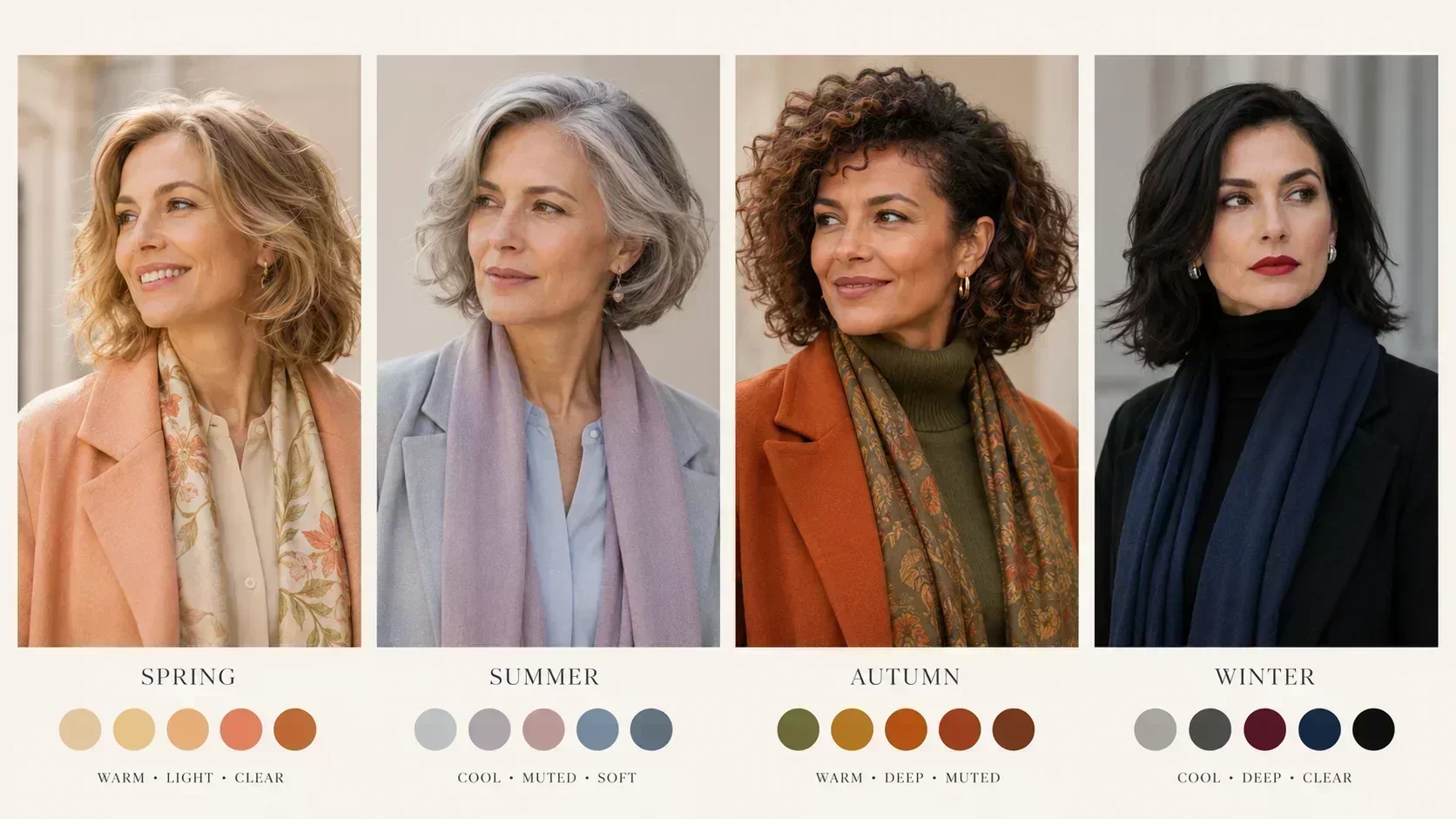
Springs have warm undertone and clear, relatively light chroma. Their hair should stay warm, and the warmth should be relatively clear rather than muted.
Light Spring: golden blonde, warm blonde, honey blonde, strawberry blonde, light warm caramel. The hair should be in the lighter value range — not dark. Very dark hair on a Light Spring creates too much contrast for the season's delicate colouring. Highlights should be warm golden or honey — never ash. If the natural hair is darkening with age, warm honey highlights maintain the season's character.
True Spring: golden blonde, warm honey, warm medium brown, light copper, warm caramel. Can go slightly deeper than Light Spring without problem. Warm red-golden tones work beautifully. Strawberry blonde is often a True Spring natural. Highlights: warm golden or copper.
Bright Spring: can go darker — warm medium-to-dark brown with copper or auburn highlights works for Bright Spring's higher contrast. The hair can be deeper because the season's chroma is higher. Copper, warm auburn, or rich warm chocolate. Never go fully blonde (it can reduce the contrast Bright Spring needs) and never ash.
What all Springs avoid: ash blonde, ash brown, platinum, cool grey coverage, any "smoky" or cool-toned formula. These fight the warm undertone at the hair level — the conflict appears at the hairline where cool hair meets warm skin.
Summer: Hair Colour Guide
Summers have cool undertone and muted, soft chroma. Their hair should be cool and soft — no warmth, and the colour should not be too vivid or contrasting.
Light Summer: ash blonde, platinum blonde, cool pearl, very light ash brown. Light Summers often grey beautifully — the silver or white that comes naturally is entirely in season. If colouring, stay in the lightest ash range. Cool toning on blonde (purple toning shampoos to counteract brassiness) is exactly right for this season. What to avoid: golden blonde, honey, any warm toning.
True Summer: ash blonde to cool medium ash brown. The full cool range of medium-depth hair is available. Cool brunette with no warmth. Ash highlights rather than golden. Some True Summers find that their natural warm-tinged brown hair needs a cool toning treatment to bring it into season — this is correct management.
Soft Summer: cool ash in medium tones, warm enough only in the sense of having some brown depth but still ash-toned. Avoid both extremes: very light blonde (Light Summer territory) and warm dark tones. The Soft Summer sits in a cool medium range.
What all Summers avoid: golden blonde, honey, copper, auburn, warm brown, warm balayage. These create a warm halo around the face that fights the cool undertone. The face looks slightly confused — the hair is warm and the skin is cool, and neither looks its best because of the contrast.
Autumn: Hair Colour Guide
Autumns have warm undertone and muted, earth-toned chroma. Their hair is the richest, warmest, most complex in the system — and the most damaged by ash tones.
Soft Autumn: warm golden highlights blended with light warm brown. Soft, honey-golden tones rather than vivid copper. The lightest, most muted warm-hair range — warm but gentle. Over-brightening into vivid copper or auburn can be too much for the season's subtlety.
True Autumn: the richest Autumn hair range. Golden-brown, copper, auburn, warm red-brown, warm medium chocolate. The classic warm hair season — the hair that comes to mind when "autumn-toned hair" is imagined. Vivid copper highlights on a warm brown base. Deep auburn. Rich red-brown. This hair colour is maximally effective on True Autumn and maximally wrong on Summer and Winter.
Deep Autumn: warm dark brown, warm near-black with a warm (not cool) cast, deep auburn, deep copper-tinted dark brown. The hair can go very dark but must maintain warmth. A warm dark chocolate-brown. Deep Autumns who go very dark should ensure the formula has warmth in it — a "natural black" formula is often too cool (neutral to blue-black); a warm dark brown formula is correct.
What all Autumns avoid: ash brown, cool dark brown, platinum, anything described as "smoky," "cool," "ash," or "neutral" in a way that removes warmth. Grey coverage for Autumns must always be warm-toned — a neutral or ash grey coverage formula will make the Autumn face look flat immediately. Warm copper or warm red-brown grey coverage is the correct approach.
Winter: Hair Colour Guide
Winters have cool undertone and clear, relatively vivid chroma. Their hair should be cool and precise — no warmth, and the darkness of the season makes most Winters work in deeper ranges.
True Winter: cool dark brown, off-black, near-black. The hair can be medium-dark to very dark. Highlights are not generally in season for True Winter — the adding of lighter pieces reduces the cool, precise depth that defines the Winter hair signature. If highlights are desired, cool ash or cool grey streaks rather than golden. Never warm.
Bright Winter: medium to dark ash brown, cool medium-dark brown. Can have slightly lighter hair than True Winter while maintaining coolness. Some Bright Winters wear medium cool-ash brown to near-black. Bold highlights in very specific contexts can work — very cool, very precise — but generally depth without warmth is the correct approach.
Deep Winter: the darkest Winter hair — very dark brown to jet-black or blue-black. This is the season that produces the most striking natural hair colour when left to its own devices: a deep, cool black or very dark brown with no warmth. Grey: Deep Winters who go white or silver naturally often have a stunning result — the stark white hair against cool deep skin is entirely in season.
What all Winters avoid: warm brown, golden highlights, balayage with warm tones, copper, auburn, reddish tones. These create a warm halo that immediately clashes with the cool skin and eyes. The "warm brunette" look is specifically wrong for Winter — the warmth in the hair creates a persistent temperature conflict at the hairline.
Highlights and Balayage by Season
Highlights and balayage are the most common colour techniques and the most commonly applied in the wrong temperature.
Warm-season highlights (Spring, Autumn): golden, honey, copper, caramel, warm amber. The highlights should warm the hair and amplify the warmth in the face. On a True Autumn, copper highlights on a warm brown base create a rich, luminous effect that makes the skin glow. The same copper on a True Summer makes the face look slightly confused.
Cool-season highlights (Summer, Winter): ash, cool blonde, cool silver, cool brunette. The highlights should brighten without warming — adding dimension without changing temperature. On a Light Summer, ash-blonde highlights blend naturally with the cool pale-blonde base. Golden highlights on the same person add warmth where none should be.
The balayage problem: most popular balayage techniques are applied warm — honey, golden, and warm caramel tones that look luminous in magazine images (typically on warm-season subjects). For cool-season clients, the same technique should use cool toning throughout and ash-based formulas. A "cool balayage" or "ash balayage" is the correct approach for Summers and Winters.
Grey Coverage: Temperature Is Everything
Grey hair coverage is the hair colour decision with the highest repeat frequency — most people cover grey every 4–8 weeks for years. Getting the temperature wrong means getting it wrong consistently, with the cumulative effect of persistent mismatch at the hairline.
Spring grey coverage: warm honey, warm golden, warm light brown. Never ash. The grey should be blended with warmth, not neutralised with cool tones.
Summer grey coverage: cool ash blonde or cool ash brown — a formula that matches the season's cool character. Or embrace the natural grey (Summer grey is often beautifully cool and in season).
Autumn grey coverage: warm copper, warm auburn, warm red-brown. The warmest grey coverage of all seasons. Ash or neutral grey coverage on an Autumn is one of the most visible colour mistakes in hair — the face goes immediately flat.
Winter grey coverage: cool dark brown or allow natural greying. True Winters going white or silver naturally often have a more striking result than any covered version. For those who prefer coverage, cool neutral dark brown — no warmth.
When Natural Hair Changes
Hair naturally darkens through childhood and lightens through ageing and greying. Both changes shift the colour picture, but not the underlying season.
A Light Spring whose hair has darkened from golden blonde to warm medium-brown has not become a True Autumn. The undertone is unchanged; the hair value has shifted. The correct response is to keep the hair in the lighter, warmer range appropriate for the season — warm highlights that bring it back toward the natural Spring range — rather than accepting the darker hair as definitive.
A True Winter whose hair is going silver has not become a Summer. The cool undertone is unchanged; the value has lightened. The silver hair is in season for the Winter (cool) — a natural evolution rather than a problem to solve.
The season is stable. The hair colour management should keep pace with the season rather than drifting away from it as the natural colour changes.
See it on your hair.
Upload a photo and try any shade from your season's palette — or any colour you want. Blonde, copper, auburn, ash. See it live on your face, instantly.
Try hair colour →Private by design — your photo never leaves your device.