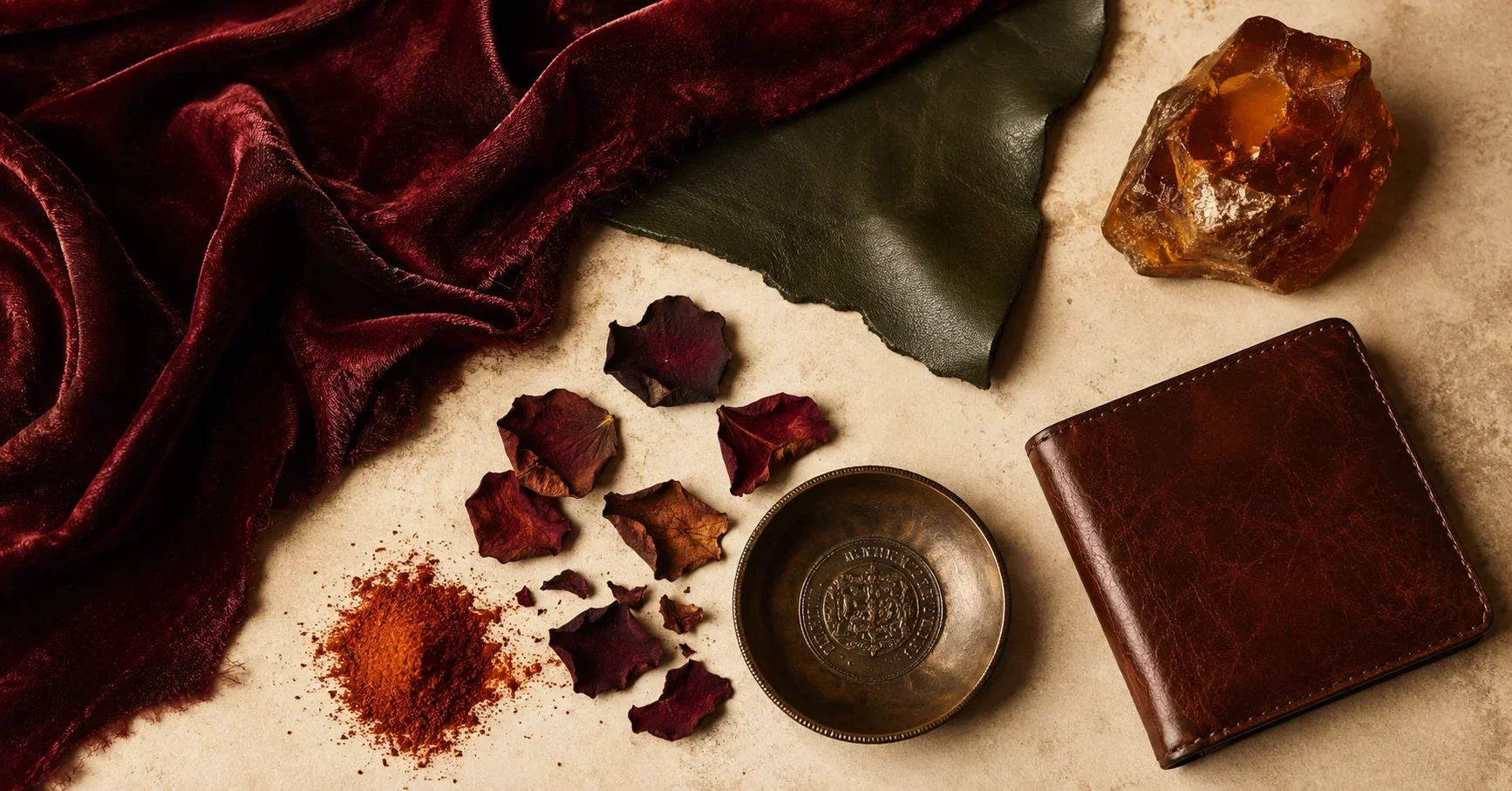
When someone presents with very deep colouring — dark hair that is near-black, dark eyes, and medium-deep to deep skin — the assumption in most colour analysis circles is that they must be Winter. Winter is deep. Winter is dramatic. And deep colouring must mean Winter.
This assumption is wrong, and it misclassifies a large number of people.
Depth and temperature are independent axes. A person can be very deep in value and definitively warm in temperature. That combination produces a season that sits between Autumn and Winter in the twelve-season system — rich, earthy, dense, and genuinely warm. It is called Deep Autumn — also known as Dark Autumn — and it is one of the most frequently misclassified seasons in the twelve-season system.
What Makes a Deep Autumn
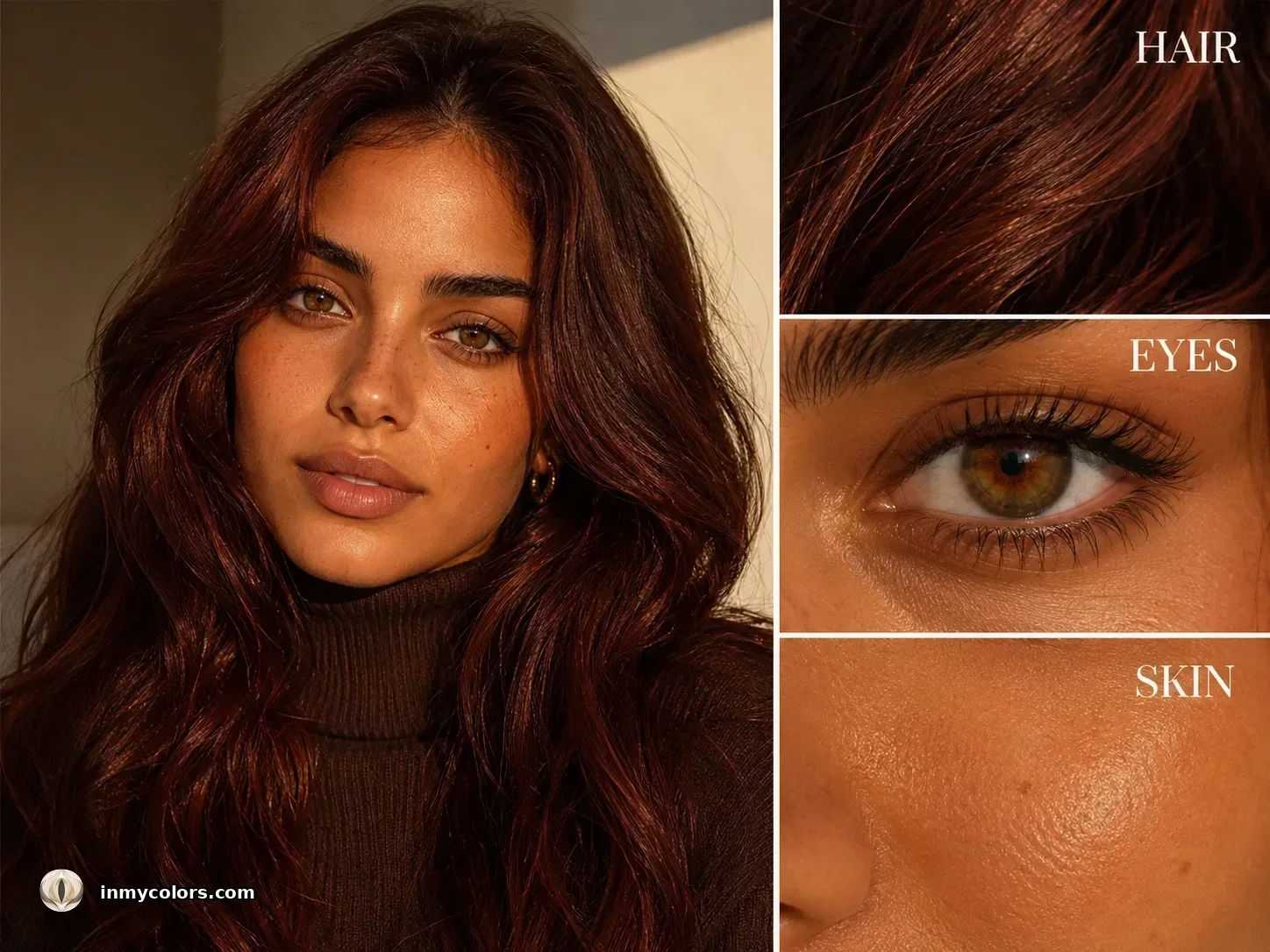
Temperature, value, and chroma. Deep Autumn is warm on temperature, deep on value, and moderate on chroma — muted enough to be clearly distinct from Winter's clarity, but denser and richer than the moderate-chroma ranges of True Autumn and Soft Autumn.
Skin in Deep Autumn ranges from medium-deep to deep, with a definitively warm undertone. The specific qualities of this undertone vary — golden-brown, warm mahogany, amber-brown, bronze, rich warm sienna — but the warmth is always present and visible. This is not neutral-dark, and it is not cool-dark. It is warm-dark: skin where gold looks harmonious and silver looks wrong.
Hair is very dark — often near-black or very dark warm brown. The key quality is the cast in light: Deep Autumn hair has a warm or reddish quality in sunlight or warm artificial light. It does not have a blue or cool cast. This distinction — warm near-black versus cool blue-black — is one of the primary diagnostics between Deep Autumn and Dark Winter.
Eyes are deep and dark: very dark brown, near-black with a warm quality, rich warm dark brown. Contrast within the Deep Autumn face is high — the deep hair against medium-deep to deep skin creates definition. But unlike Dark Winter, where that contrast has a cool or neutral quality, Deep Autumn's contrast is warm. The overall effect is one of warm depth and earthy richness.
A note on misclassification. The analysis of darker skin tones has historically been distorted by training bias in both professional and AI-based colour analysis. Systems trained predominantly on lighter complexions often default to Winter for any deep-skinned person. Skin depth is a value characteristic; skin warmth is a temperature characteristic. They are not the same thing, and one does not predict the other.
The Deep Autumn Colour Palette
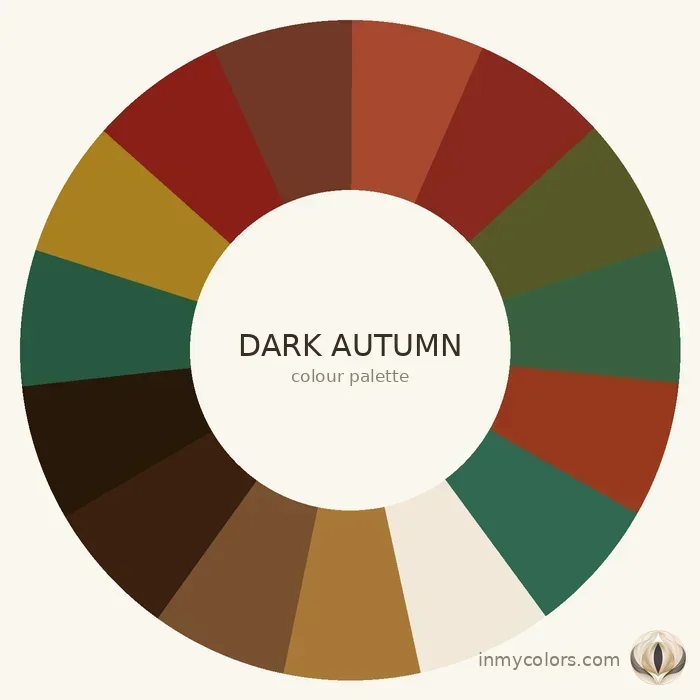
The palette is warm, earthy, and dense. Every colour sits in the same temperature register — warm — and the same chroma register — muted, rich rather than vivid. The value register reaches deeper than in True or Soft Autumn.
Foundation neutrals anchor the wardrobe in warm ivory, dark cognac-camel, warm brown, near-black warm espresso, and deepest warm brown. These neutrals are richer and darker than in any other autumn season, appropriate for the depth of the colouring.
Core colours include deep rust, warm burgundy, dark olive, forest green, deep terracotta, and dark warm teal. Each is a deep, muted, warm colour — the Autumn palette at full depth. Nothing vivid, nothing icy, nothing with a cool cast.
Accent colours are deep warm teal, muted warm gold, deep warm red, and warm dark plum — providing warmth and richness without disrupting the palette's muted quality.
What to avoid. Cool tones of all kinds — cool pink, icy blue, cool lavender, and black (too cool and too stark against warm deep skin). Pastels sit at the wrong value and generally the wrong temperature. Vivid, clear colours — saturated cobalt, bright red, vivid emerald — belong to Winter and will overpower Deep Autumn's muted register.
Deep Autumn in the Wardrobe
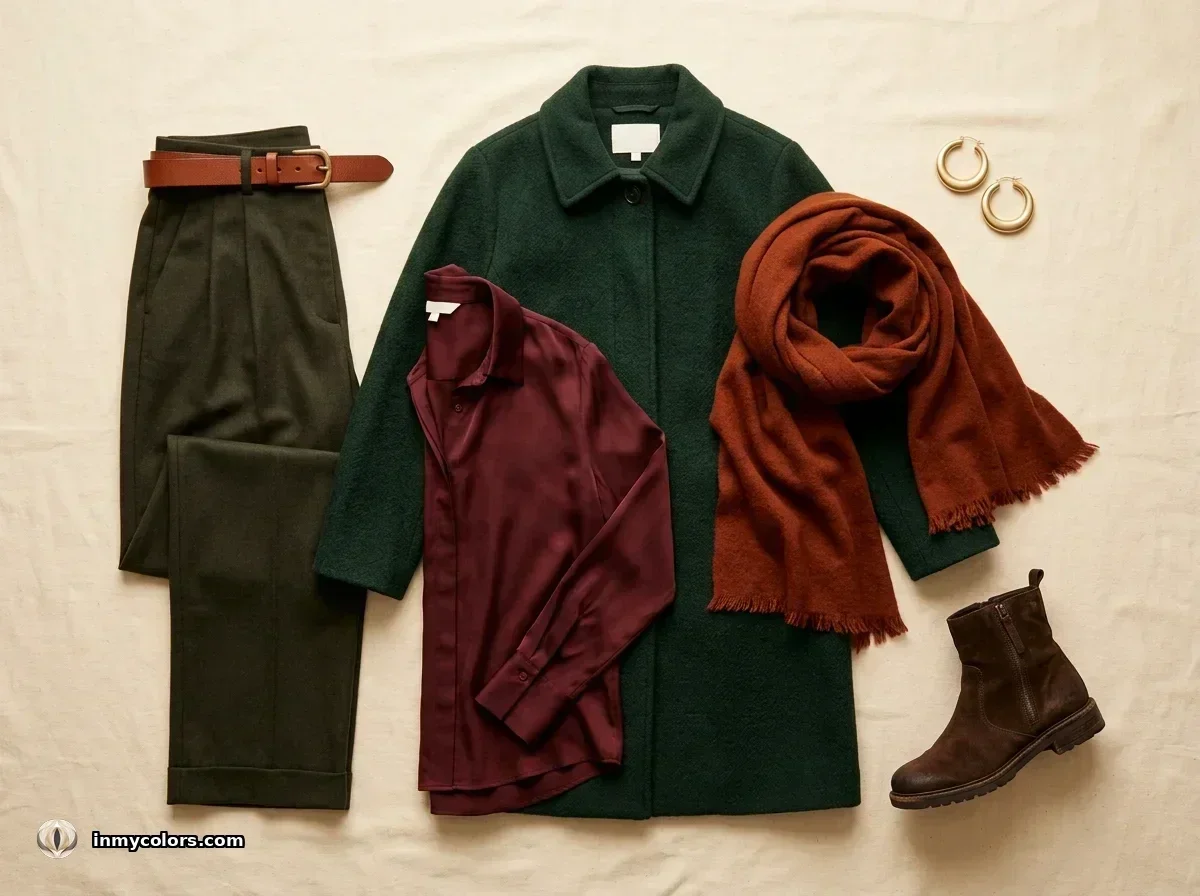
The Deep Autumn wardrobe is the most dramatic of the three autumn seasons, because the palette is deepest. This season can wear dark, richly layered clothing with genuine authority — not because it is forced or constructed, but because the colouring itself has that depth.
The core wardrobe is built around deep neutrals: dark cognac, dark warm brown, deep olive, warm near-black. From there, richly coloured pieces in the core palette provide variety. Deep rust and forest green work as statement colours. Warm dark teal and deep warm burgundy work as elevated alternatives to navy and black.
The formal wardrobe deserves particular attention. Black is the reflexive choice for formal occasions, but it is not the best choice for Deep Autumn. A deep cognac, a warm dark teal, or a rich warm burgundy in a structured formal cut will do more for this colouring than black. These are not compromise choices — they are the stronger ones.
Pattern should be warm and substantial: richly coloured paisleys in warm deep tones, animal prints with warm contrast, botanical prints in forest green and deep rust. High-contrast patterns in black and white belong to Winter.
Metals. Bronze is the primary metallic — warm, matte, and earthy. Warm gold also works. Silver and platinum belong to cool seasons and will look disconnected against warm deep skin.
Deep Autumn Makeup
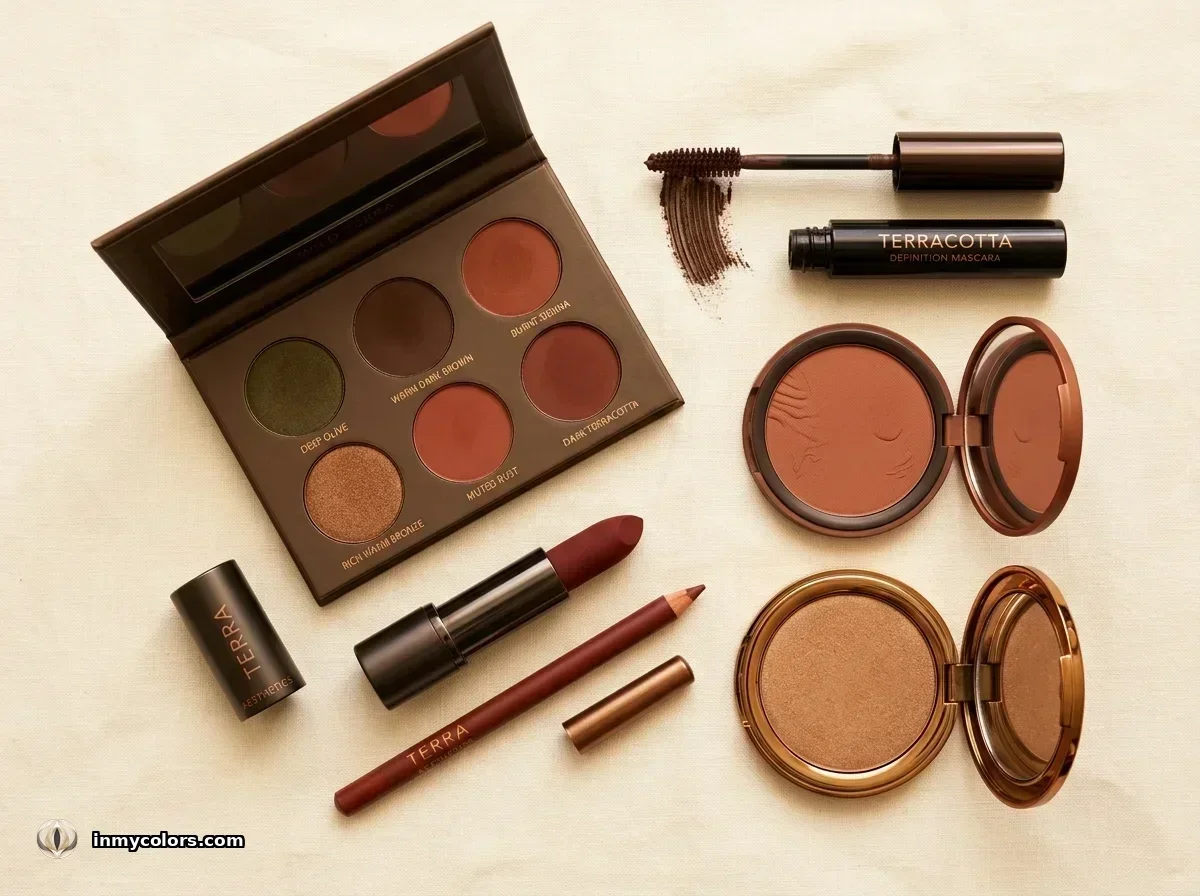
The deep value of this season's colouring supports a more dramatic makeup range than the other autumn seasons — depth reads well against depth. The constraint is always temperature: everything stays warm.
Foundation needs a golden-warm to warm-deep undertone. Neutral or cool foundations will sit incorrectly against golden-mahogany skin — the wrong undertone makes the skin look grey or ashy. The right one disappears into the skin seamlessly.
Blush is warm bronze-blush, deep terracotta, or a warm-toned bronzer used as blush. A cool-pink or berry blush will read as colour placed on top of the skin rather than as part of it.
Lips offer the most range of any autumn season — the depth of the colouring can carry a more powerful lip. Deep warm burgundy, cognac, deep warm terracotta, and warm dark nude are all natural homes. Even a deep warm plum (with a warm rather than cool cast) can work for evening.
Eyes are best in bronze, deep olive, warm dark brown, and rich warm copper. The depth of the season supports smoky eye looks well, provided the tones used are warm rather than cool. A warm dark brown or warm charcoal smoke is distinct from a cool grey or cool black smoke. The former enhances; the latter fights.
Deep Autumn Hair
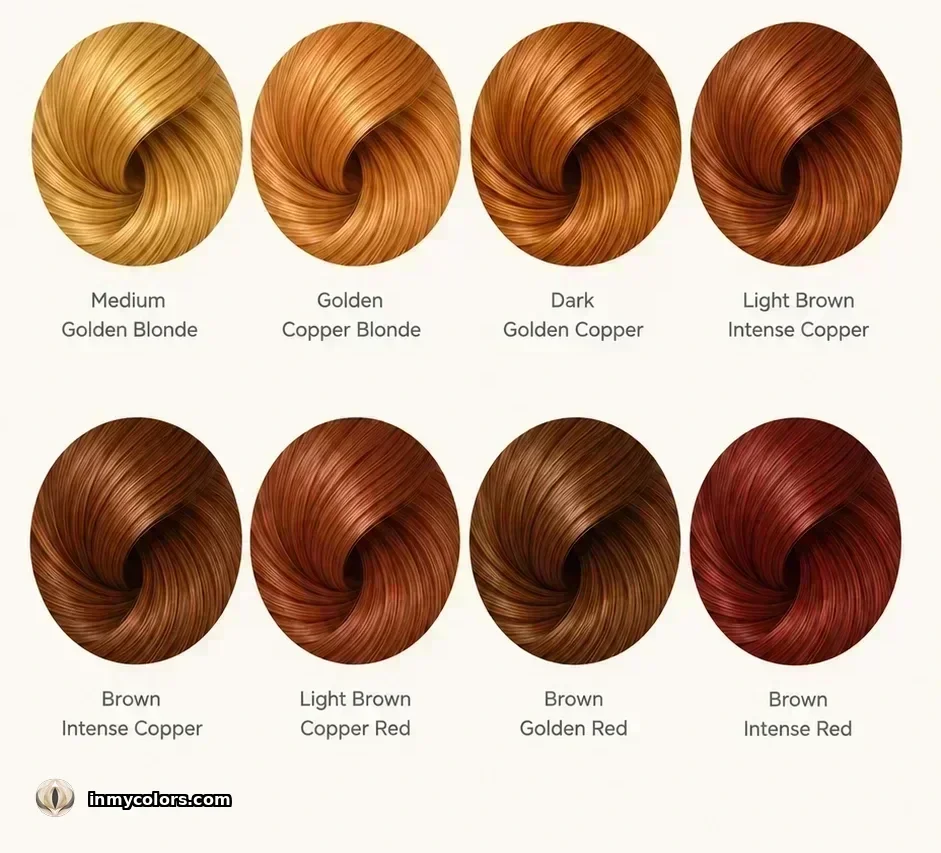
Deep Autumn hair is naturally very dark with a warm quality — and this quality should be protected. Natural shades of very dark warm brown or near-black with a warm, reddish, or golden cast in light are already exactly right.
If colour is wanted, maintain the natural darkness, or add subtle warm-dark highlights — deep auburn, dark copper, a rich warm burgundy gloss. The goal is to enhance the warmth that is already present, not to reduce the depth.
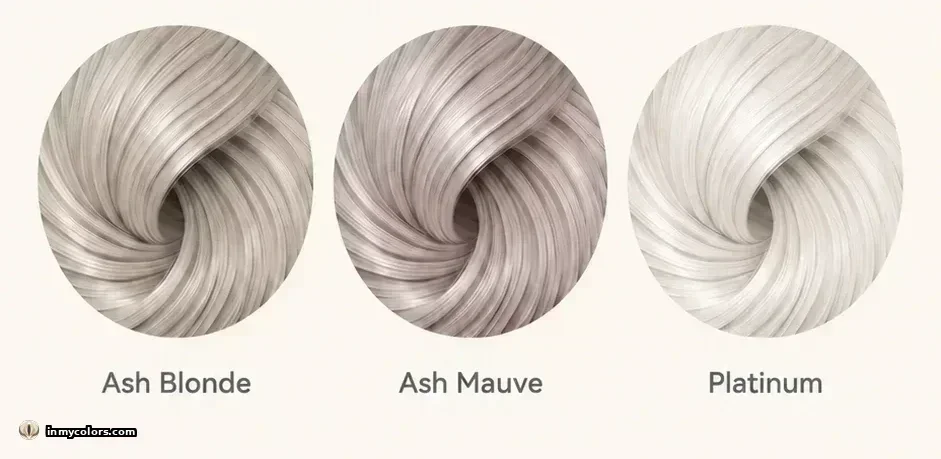
Ash tones fight the warm undertone and produce an ashy, disconnected look. Blue-black — the quintessential Dark Winter hair colour — will cool the appearance and tip the balance toward the wrong season. Platinum and bleached shades remove the warmth entirely.
Deep Autumn Celebrities
A note on celebrity examples: these assignments are educated guesses — celebrity photos are professionally edited, lighting varies, and makeup is always applied. These names are commonly cited examples, not verified classifications. Use them as a rough visual reference, not a confirmation of your own season. The only reliable way to find your season is an objective analysis of your actual colouring — not a comparison to someone else's. Find yours at inmycolors.com.

Eva Longoria is one of the most frequently cited Deep Autumn references: dark warm brown hair, warm medium-deep olive skin, and dark warm brown eyes. Her colouring has the rich, earthy depth and warmth that define this season — at her most luminous in forest green, burgundy, and deep warm earth tones.

Penélope Cruz is a classic Deep Autumn example. Her dark warm brown hair, warm olive skin, and dark warm eyes represent the Mediterranean warm-olive colouring that sits squarely in this season.
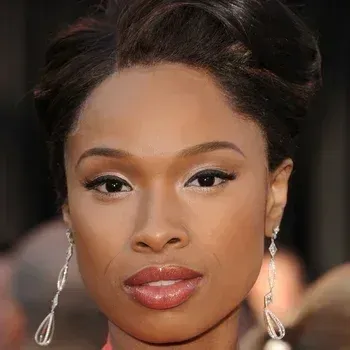
Jennifer Hudson demonstrates Deep Autumn at a deeper skin value: deep warm skin with a rich golden undertone, dark near-black hair, and dark warm brown eyes — the season's intensity at its fullest expression.
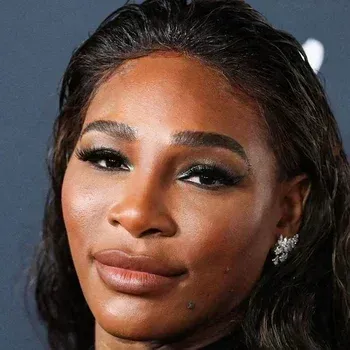
Serena Williams shows Deep Autumn colouring with deep warm skin with a golden undertone, very dark hair, and dark warm eyes. Her colouring carries the richness and depth this season is known for.
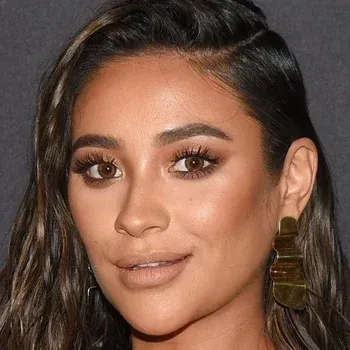
Shay Mitchell demonstrates Deep Autumn with dark warm brown hair, warm medium-deep olive skin, and dark warm brown eyes — the warm-olive depth characteristic of this season.
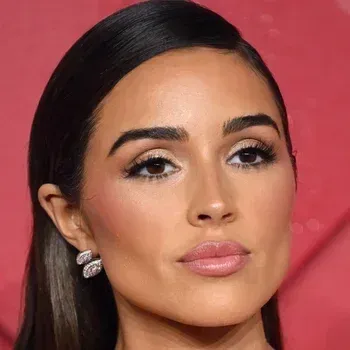
Olivia Culpo presents very dark near-black hair, warm olive skin with a golden undertone, and dark warm brown eyes — warm and deep, with the earthy richness of this season.

Zendaya is widely cited as a Deep Autumn example: warm medium-deep skin with a golden undertone, dark warm brown hair, and warm brown eyes. Most colour analysis sources place her in the Deep Autumn category based on the visible golden warmth and overall depth of her colouring.
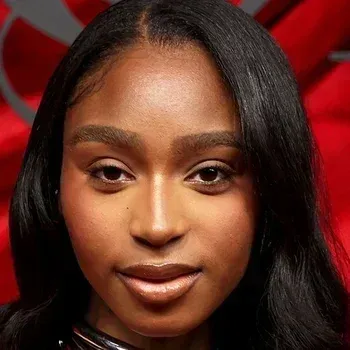
Normani demonstrates Deep Autumn with deep warm skin with a golden-bronze quality, very dark near-black hair, and warm dark brown eyes — a rich, contemporary Deep Autumn example.
Common Misclassifications
Deep Autumn vs. Dark Winter is the most consequential distinction. Both are deep; the difference is temperature. Dark Winter has a cool, neutral-dark, or blue-ebony skin quality — silver jewellery looks natural, cool greys harmonise. Deep Autumn has a golden-mahogany, warm-brown, or amber-brown skin quality — gold jewellery looks natural, cool greys disconnect. The practical test: which metallic reads as part of the skin in neutral daylight, and which reads as separate from it? One answer indicates Deep Autumn; the other indicates Dark Winter.
Deep Autumn vs. True Autumn is a value question. Deep Autumn is notably deeper — near-black or very dark warm hair, deeper skin, denser overall colouring. True Autumn sits at moderate-to-deep value. The palette difference reflects this: Deep Autumn's core colours are darker and denser versions of the same warm earthy tones.
Getting Your Season
Deep Autumn is one of the most commonly misclassified seasons in the twelve-season system — not because it is inherently difficult to identify, but because the assumption that depth equals Winter is so widespread. Correcting this assumption is the first step.
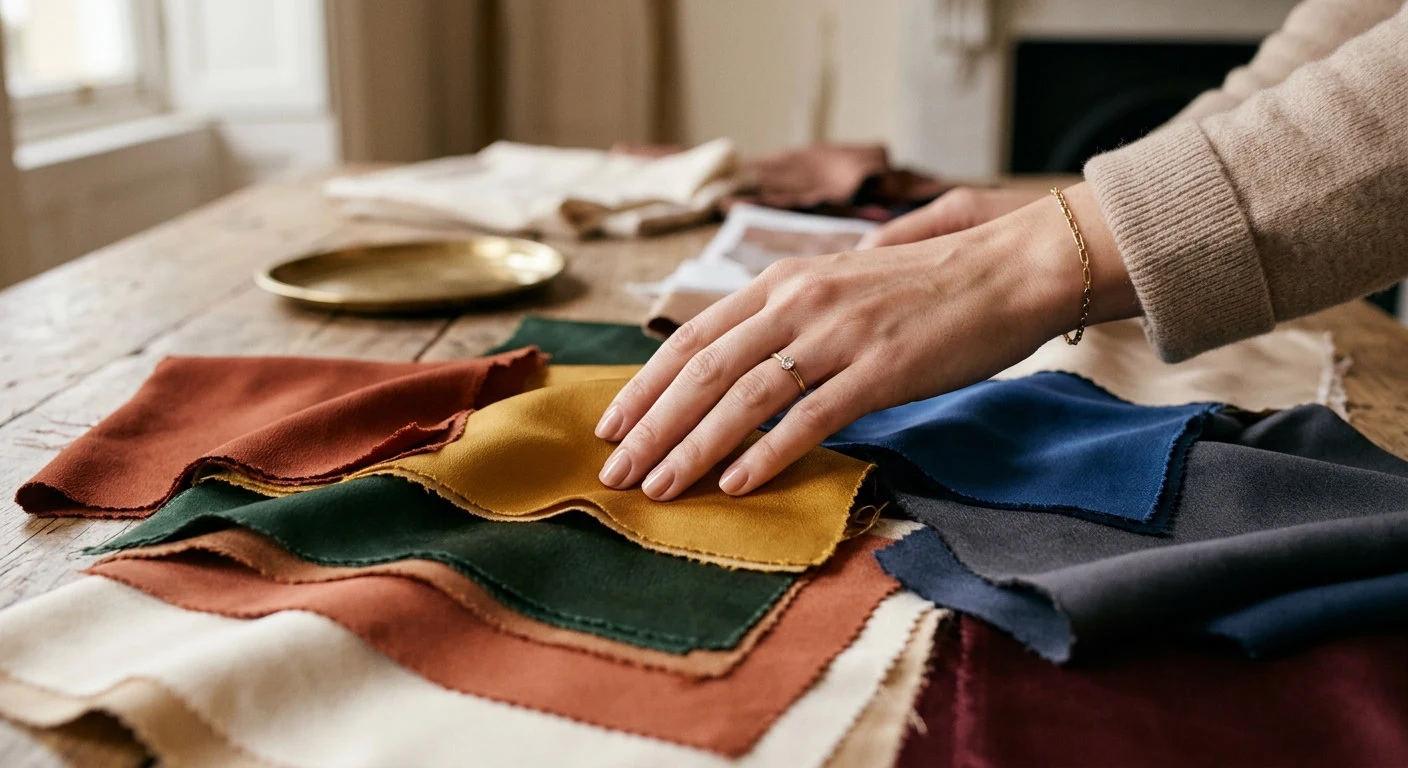
The method is straightforward. Drape a rich cognac, a warm terracotta, a forest green in neutral daylight and observe the skin's response. Then drape a cool grey, a silver, an icy blue. The contrast in response is almost always immediate and unmistakable. Warm colours settle into the skin; cool colours create a disconnect.
That response — warm harmonises, cool clashes — is Deep Autumn. Not Dark Winter, despite the depth. Not True Autumn, despite the warmth. The specific combination of warmth and depth at this intensity produces a palette that is distinctive, powerful, and nothing like what most dark-complexioned people are told to wear.
Find your season at inmycolors.com.