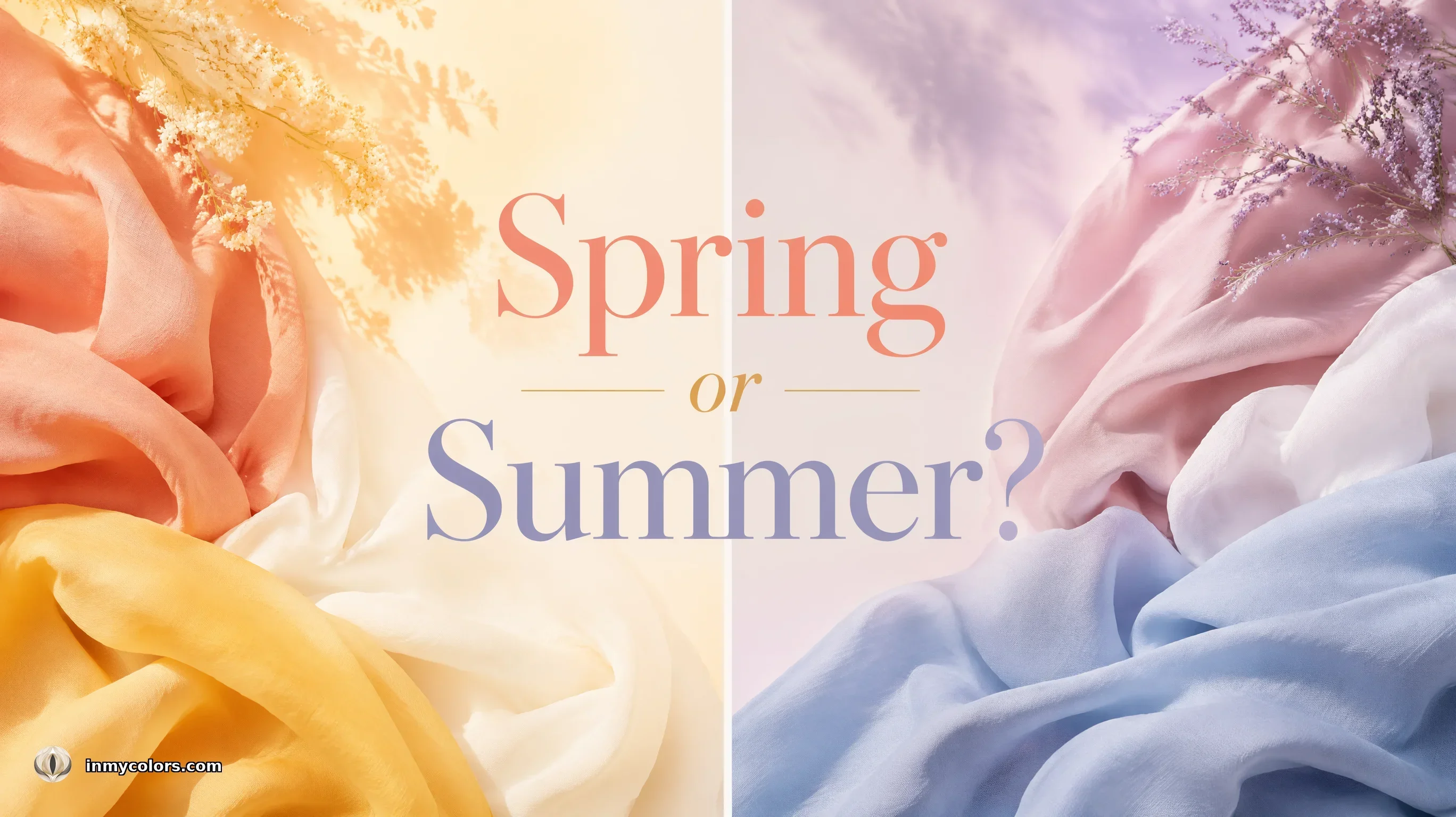
Of all the boundary cases in colour analysis, Spring versus Summer is one of the most commonly confused. Both seasons can produce fair skin. Both can yield light eyes — blue, grey, even green. Both seasons can have light blonde or ashy-looking hair. If you've been going back and forth between the two, you're not imagining the similarity. But there is exactly one question that settles this: are you warm or cool?
That single axis — temperature — is the only thing that separates Spring from Summer. Every Spring season is warm. Every Summer season is cool. Get that right, and the rest follows.
Why Spring and Summer Look So Similar


The confusion is understandable. Both seasons sit on the lighter, softer end of the spectrum compared to Winter or Deep Autumn. A Light Spring and a Light Summer can both have:
- ✦Very fair, almost porcelain skin
- ✦Light eyes in blue, grey-blue, grey-green or soft green
- ✦Light hair — blonde, light brown, even ashy tones after sun or highlights
The internet compounds the problem by describing Spring as "the bright one" and Summer as "the soft one," which is true for True Spring and True Summer but misleading for the full picture. A Light Spring is not particularly bright — it's delicate and warm. A Light Summer is not dramatically muted — it's soft and cool. When you're comparing Light Spring to Light Summer, you're looking at two gentle, fair colour palettes that sit very close to each other.
The only way through is undertone.
The One Diagnostic: Warm vs Cool Undertone
Your skin's undertone is not the same as your skin tone (fair, medium, deep). Undertone is the subtle cast beneath the surface:
- ✦Warm undertone: peachy, golden, golden-beige, yellowish — you are Spring
- ✦Cool undertone: pink, rosy, bluish, ashy — you are Summer
The challenge is that undertone is genuinely subtle in some people. Here's how to identify it with confidence.
Test 1 — The Vein Test
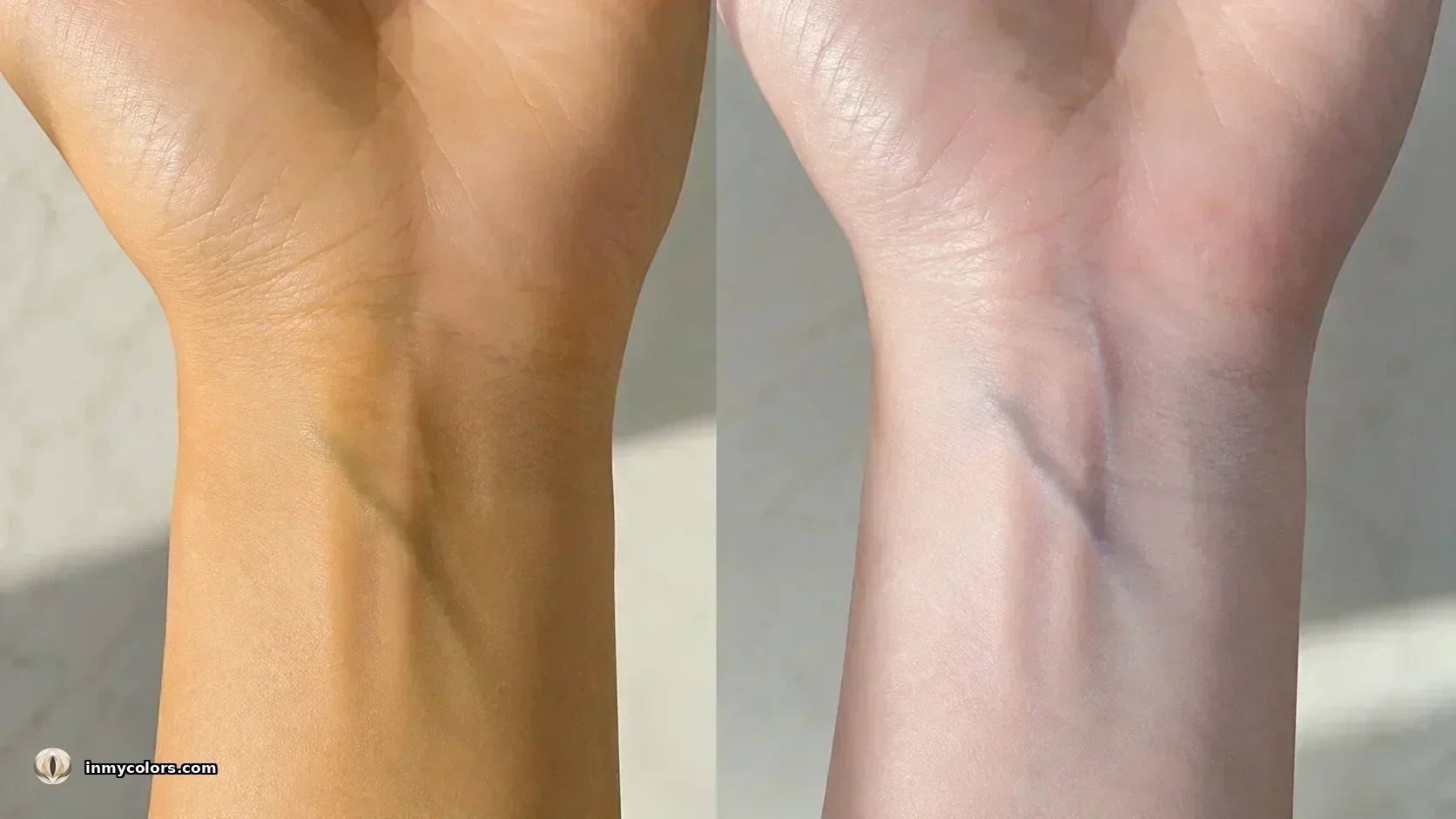
Look at the underside of your wrist in natural daylight (not artificial light, which is too warm).
- ✦Veins appear greenish: the yellow in your skin is tinting them — you're warm. Spring.
- ✦Veins appear blue or purple: no yellow to counteract the blue — you're cool. Summer.
- ✦Can't tell — they look teal or blue-green: you may be closer to neutral-warm or neutral-cool. Look for other signals.
Test 2 — The Metal Test
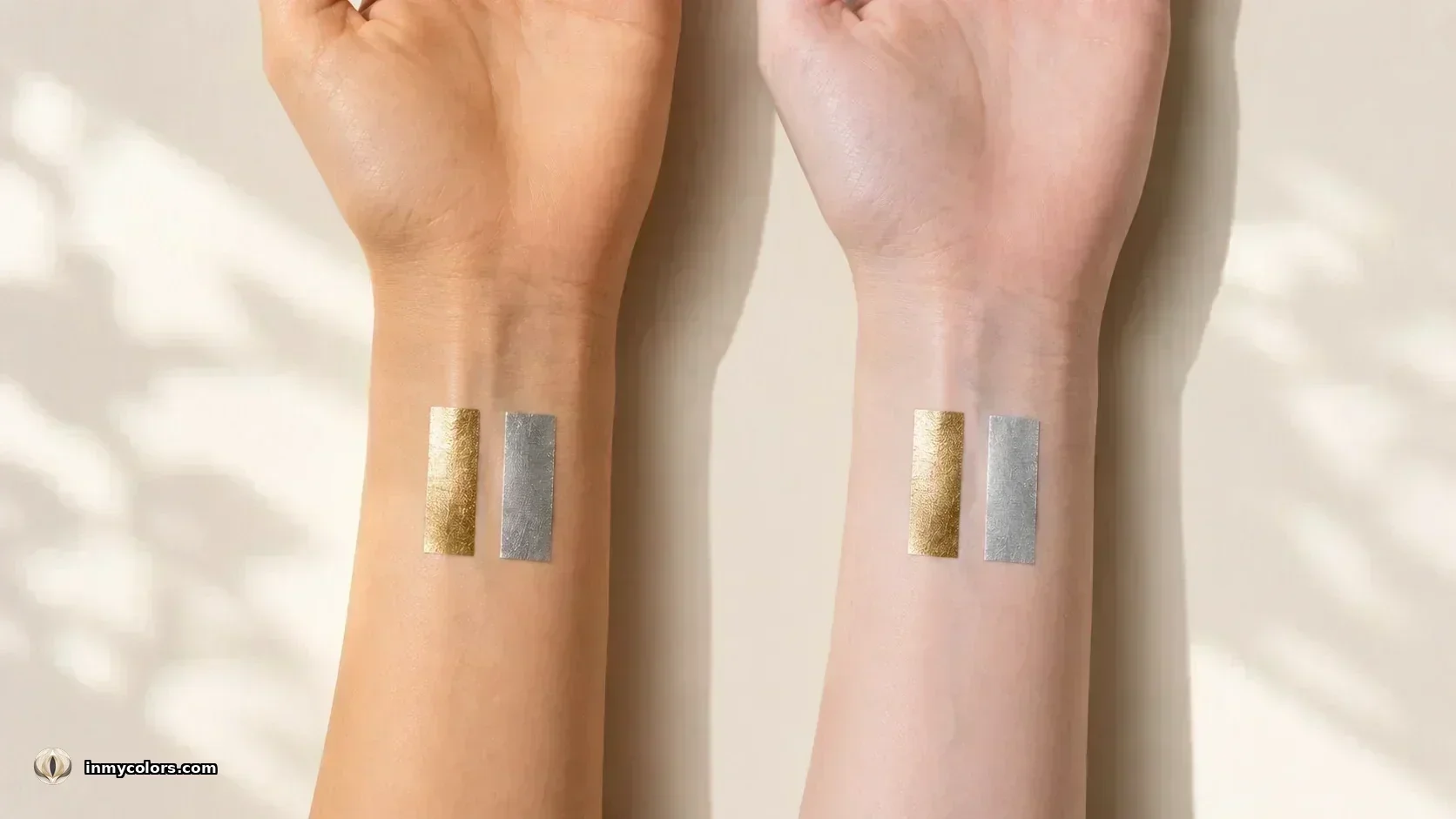
Hold a piece of gold jewellery and a piece of silver jewellery against your bare face in natural light. Ask which looks more like it belongs.
- ✦Gold looks warmer, richer, healthier next to your face: Spring
- ✦Silver looks cleaner, brighter, more polished next to your face: Summer
This test is intuitive once you do it — there's usually a clear winner, even if you've been wearing both for years.
Test 3 — The Drape Test

Hold up a warm ivory fabric and a cool (blueish) white fabric to your face.
- ✦Warm ivory looks better: your skin glows, your face is harmonious — Spring
- ✦Cool white looks better: you look fresher and clearer against pure white — Summer
Then try coral versus dusty rose:
- ✦Coral flatters you: warm, Spring
- ✦Dusty rose flatters you: cool, Summer
If you can get access to actual fabric swatches or draping material, this test is the most definitive.
The "Blue Eyes = Summer" Mistake
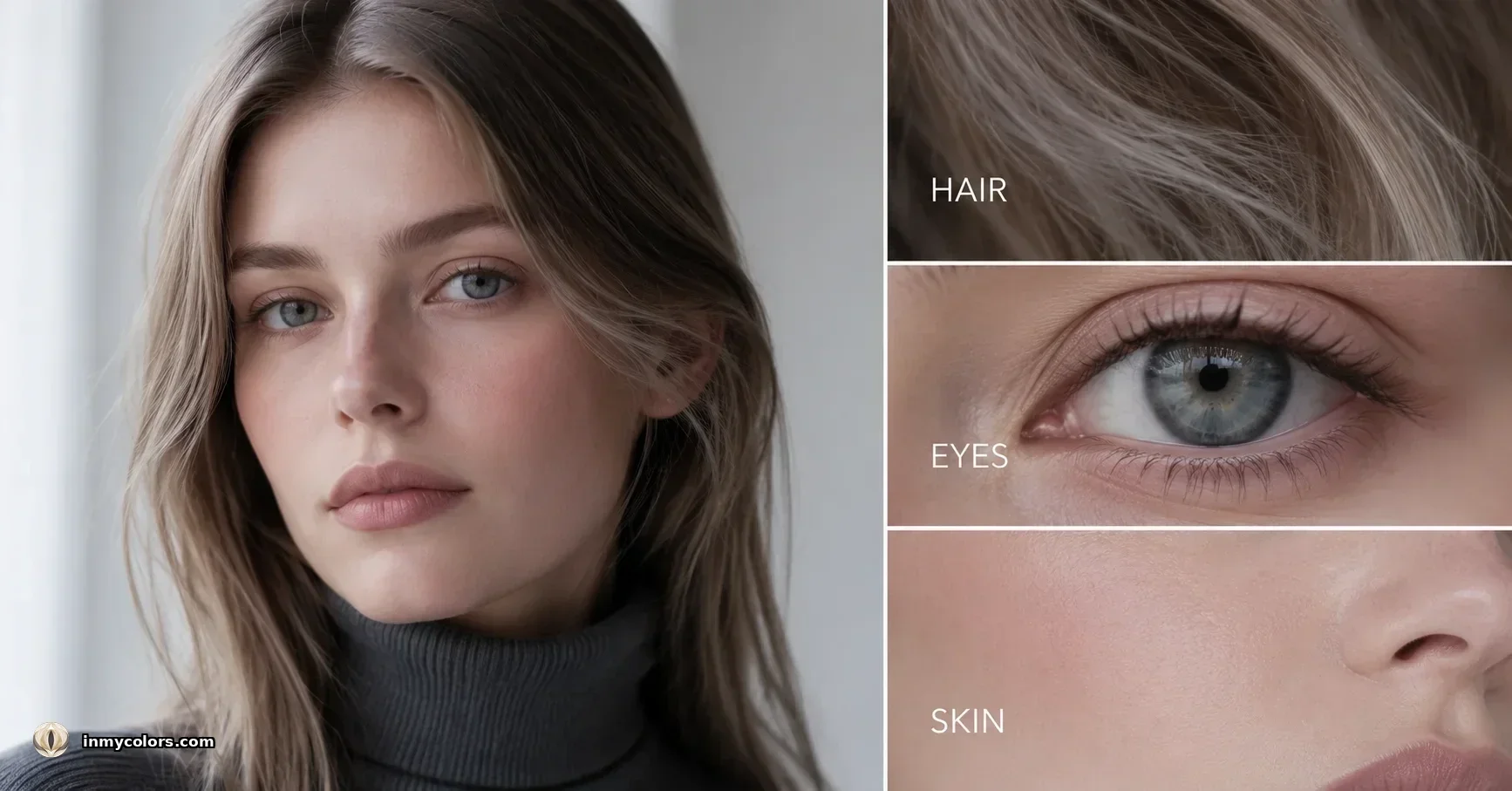
One of the most persistent myths in colour analysis is that blue eyes mean Summer. This is incorrect. Blue eyes are common in both Spring and Summer — and are actually the hallmark eye colour of Light Spring. True Spring also frequently has warm blue or blue-green eyes with golden flecks. The difference is not the colour of the eye but the quality of the eye:
- ✦Spring blue eyes often have golden or yellow flecks, a warm turquoise quality, or a warm grey-blue tone
- ✦Summer blue eyes tend to be cooler, softer, more grey-blue or slate blue without warm flecks
Eye colour alone cannot diagnose your season. Use the full picture.
Comparing the Three Spring/Summer Pairs
Light Spring vs Light Summer
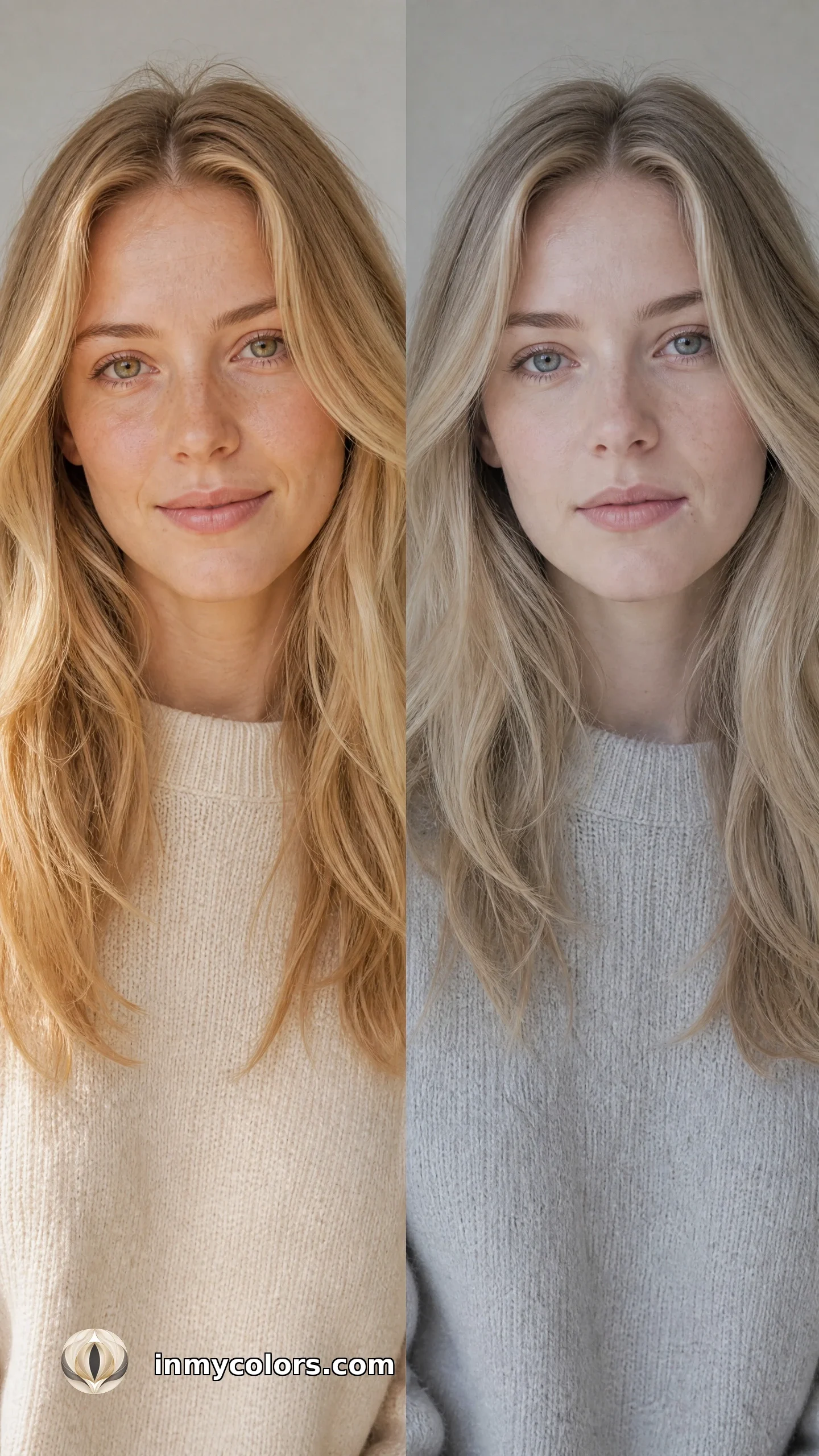
Light Spring has the lightest, most delicate warm palette in the entire system — think warm peach, golden ivory, warm coral. Light Summer is equally delicate but cool — think soft lavender, dusty pink, cool beige. If you are very fair and unsure, the vein test is your most reliable tool.
True Spring vs True Summer

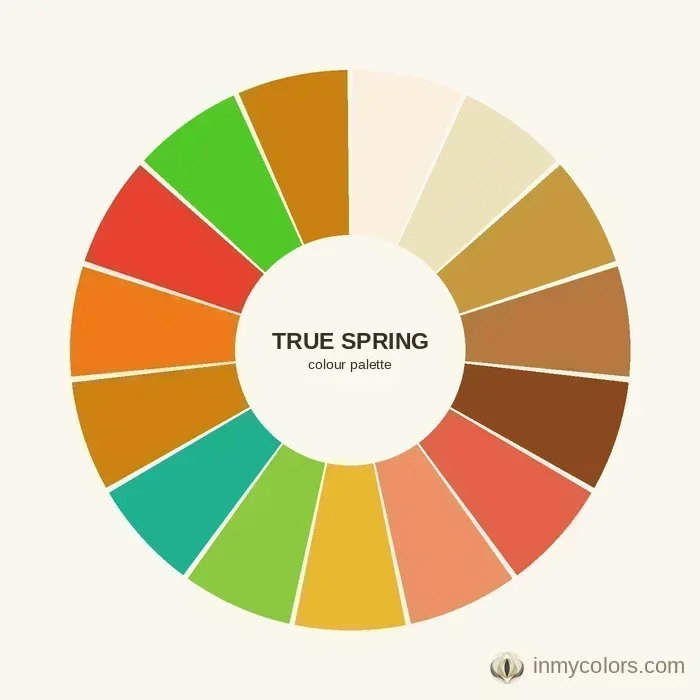
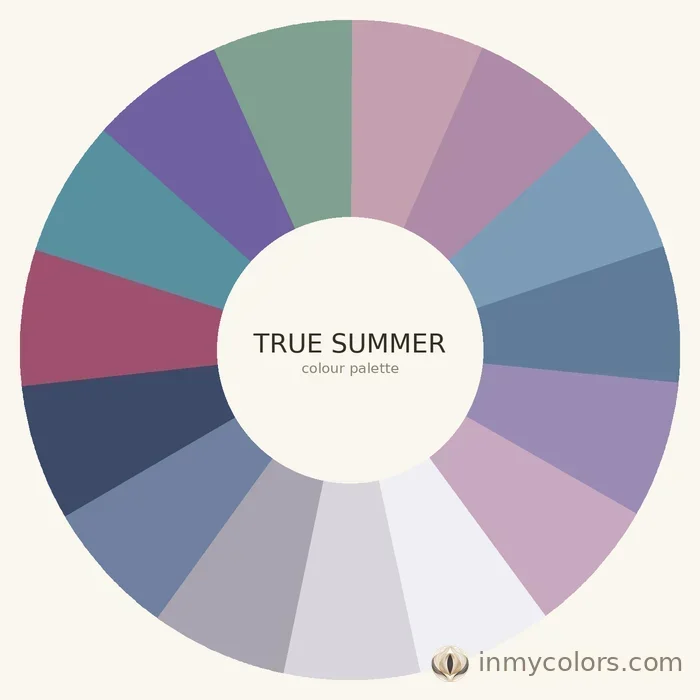
True Spring is warm, clear, and relatively saturated — think coral, warm turquoise, golden yellow. True Summer is cool and muted — think raspberry, lavender, cool blue-grey. These two are less easily confused than Light Spring/Light Summer because True Spring is noticeably warmer and brighter.
Bright Spring vs True Summer

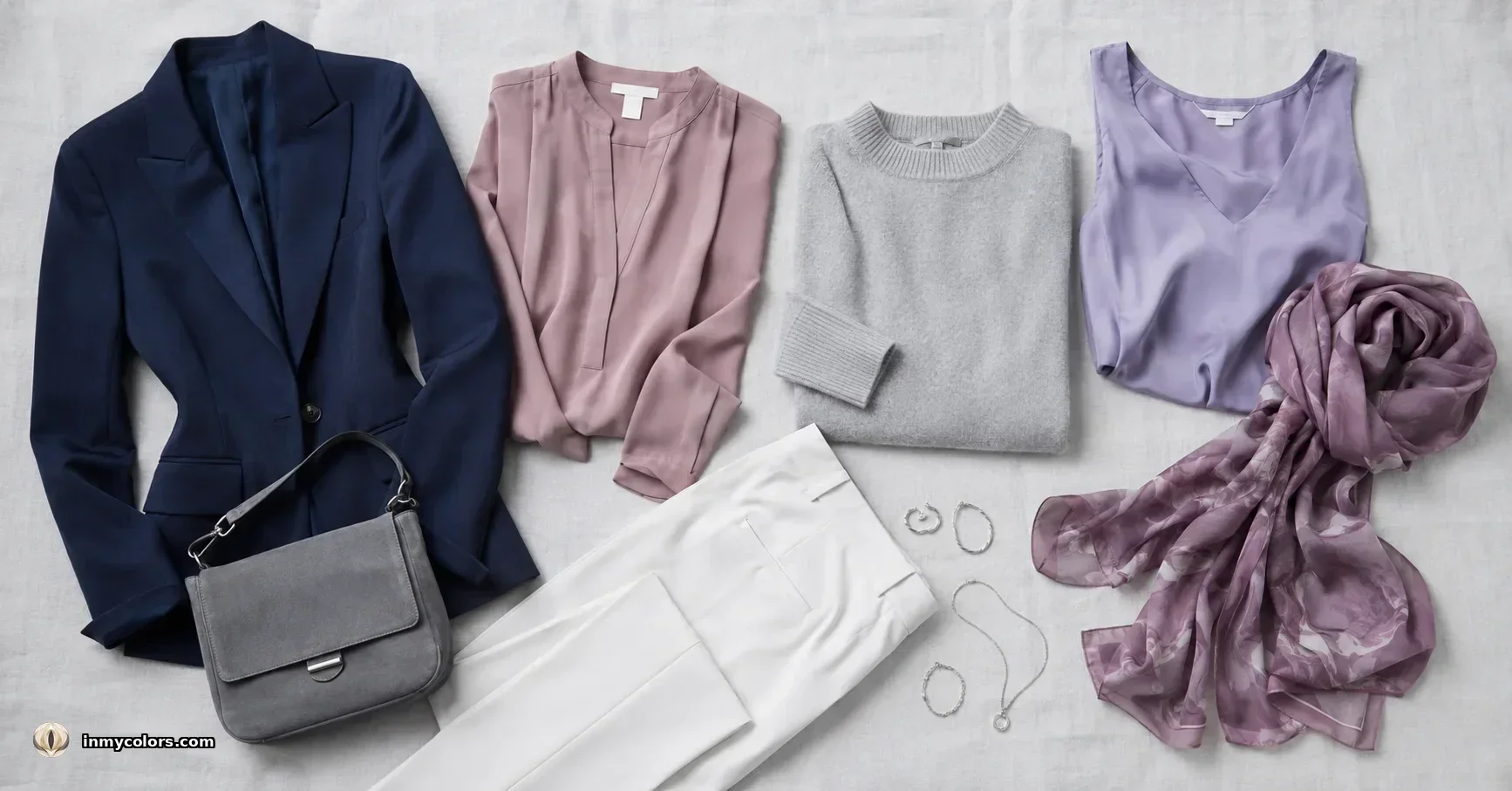
This pairing trips people up because Bright Spring can look cool when wearing its higher-chroma, clear colours. But Bright Spring is still warm — look for that golden or peachy undertone and the ability to carry vivid, clear warm colours. True Summer cannot carry vivid colours at all — they overwhelm and age the complexion.
What Happens When You Wear the Wrong Temperature

If you're a Spring wearing Summer colours — dusty rose instead of coral, cool grey instead of warm taupe — the effect is subtle but consistent. Your face looks a little flat, a little drained, possibly slightly sallow. The colour doesn't "pop" against your skin the way it should.
If you're a Summer wearing Spring colours — warm orange, golden yellow, peach — the effect is also consistent but different. You may look flushed, the colour appears to fight with your skin rather than harmonise, and your features lose some clarity. Warm colours literally pull out pinkness in cool skin, making redness more visible.
How to Check Your Existing Wardrobe

A quick diagnostic you can do right now: pull out your most-complimented outfits and your least-favourite photos of yourself. Is there a pattern? If you look consistently better in peachy, golden, coral-adjacent tones — Spring. If you look consistently better in dusty pink, soft blue, lavender, cool grey — Summer.
If your most-complimented items are neutral (white, grey, navy), check which version of each. Warm white and cool bright white look different. Warm grey has yellow; cool grey has blue. These distinctions tell you a lot.
Not sure whether a shade in your wardrobe is warm or cool? Our colour tools can help — check your season at In My Colors.
Getting Your Answer

The Spring/Summer boundary is entirely a temperature question. Do the vein test, the metal test, and the drape test — all three — and note which way the majority point. If two or three point warm, you're Spring. If two or three point cool, you're Summer. From there, your sub-season (Light, True, or Bright for Spring; Light, True, or Soft for Summer) depends on your contrast level and chroma.
You don't have to guess. Find your season at inmycolors.com.