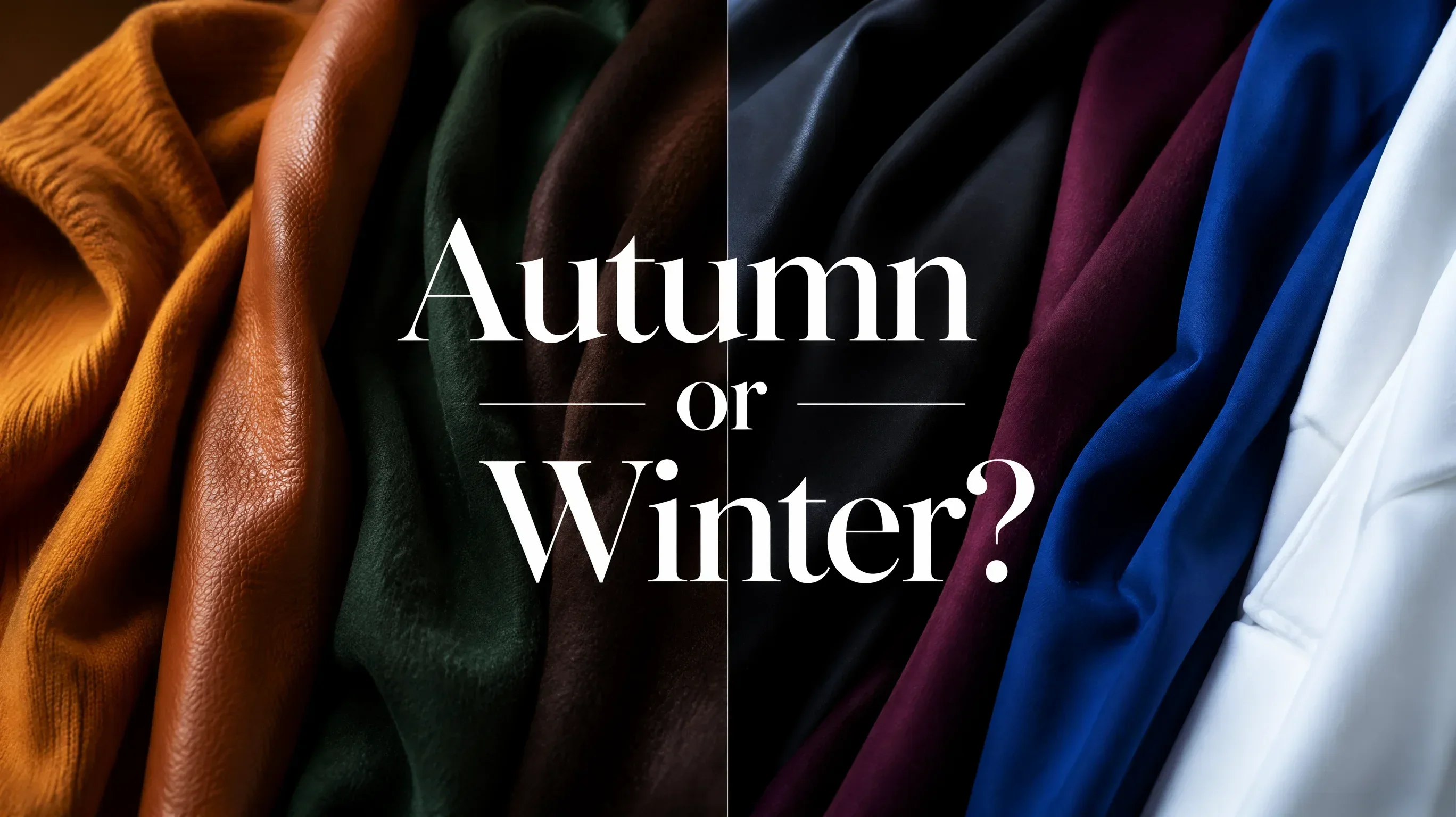
Deep colouring — very dark hair, dark eyes, rich or deep skin — is a feature that cuts across multiple seasons. And yet, a significant portion of colour analysis content online defaults to labelling anyone with very dark colouring as Winter. This is wrong, and it does people a real disservice. Deep Autumn is a large, underrepresented season, and wearing cool Winter colours when you're a warm Autumn creates a specific kind of visual flatness that no amount of styling will fix.
The diagnostic between Autumn and Winter is, again, temperature. Both seasons can be deep. Both can carry dramatic colouring. The question is always: warm or cool?
The Overlapping Traits That Cause Confusion
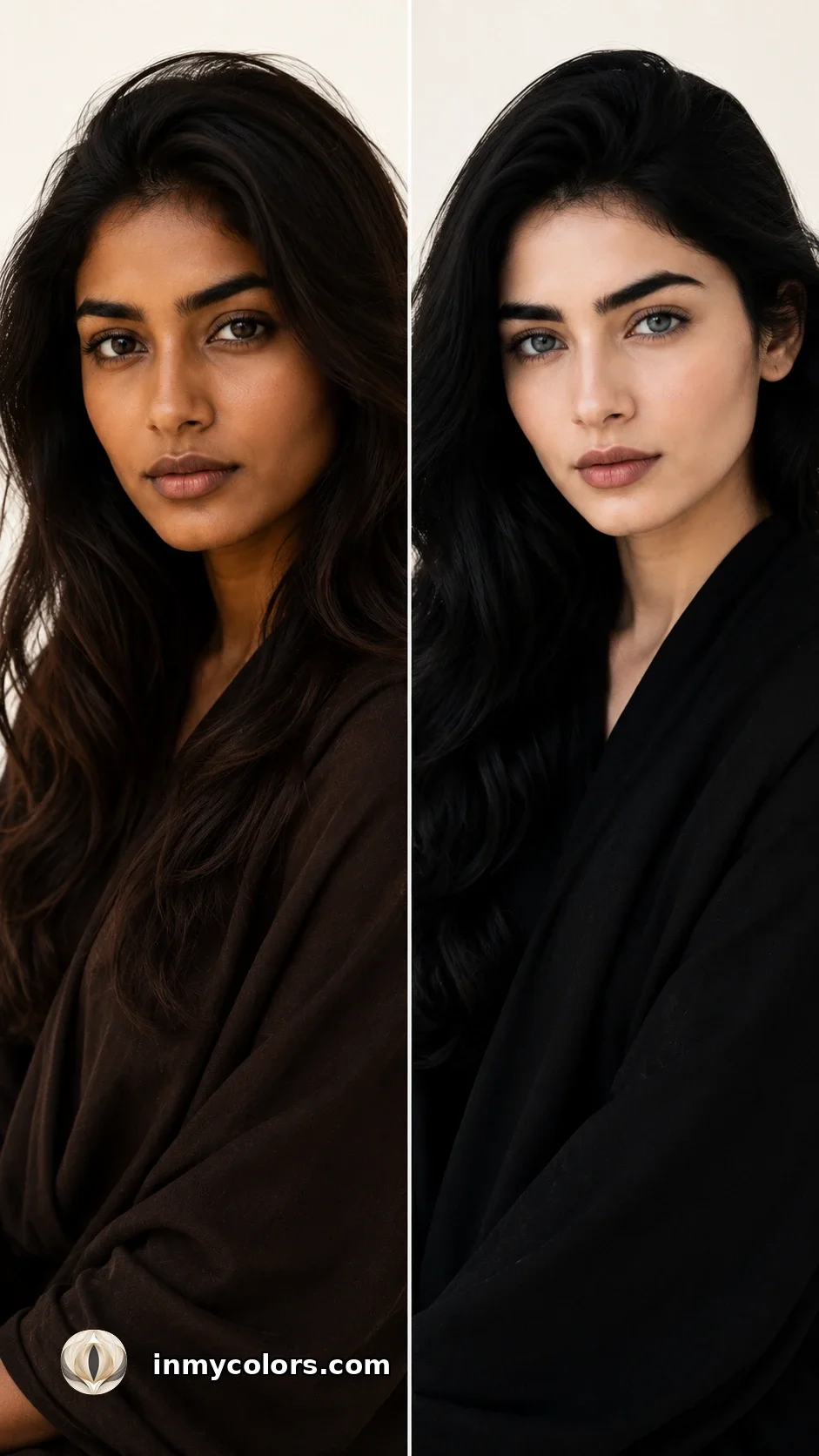
Autumn and Winter share several characteristics that make the boundary genuinely hard to identify from trait lists alone:
- ✦Both can have very dark brown or black hair
- ✦Both can have dark brown or dark hazel eyes
- ✦Both can have medium-deep to deep skin
- ✦Both convey a sense of depth and richness in their overall appearance
The confusion is sharpest at the border of Deep Autumn and Dark (Deep) Winter — two seasons that both occupy the deepest, darkest territory in the entire 12-season system. In between them sits a thin but real diagnostic: the temperature of the undertone.
The Undertone Diagnostic
Autumn undertone is warm: golden, mahogany, bronze, amber, olive-warm, caramel. There is yellow in the skin, even if the skin itself is very dark. The overall impression is richness, warmth, earthiness.
Winter undertone is cool: blue-ebony, neutral-dark, taupe, olive-cool, sometimes a distinct ashiness. There is no yellow — or if olive, the olive reads as cool rather than warm. The overall impression is clarity, sharpness, a slightly blue-black quality to very dark skin.
This distinction is visible once you train your eye, but it requires looking carefully at the skin's quality, not just its depth.
Test 1 — The Vein Test
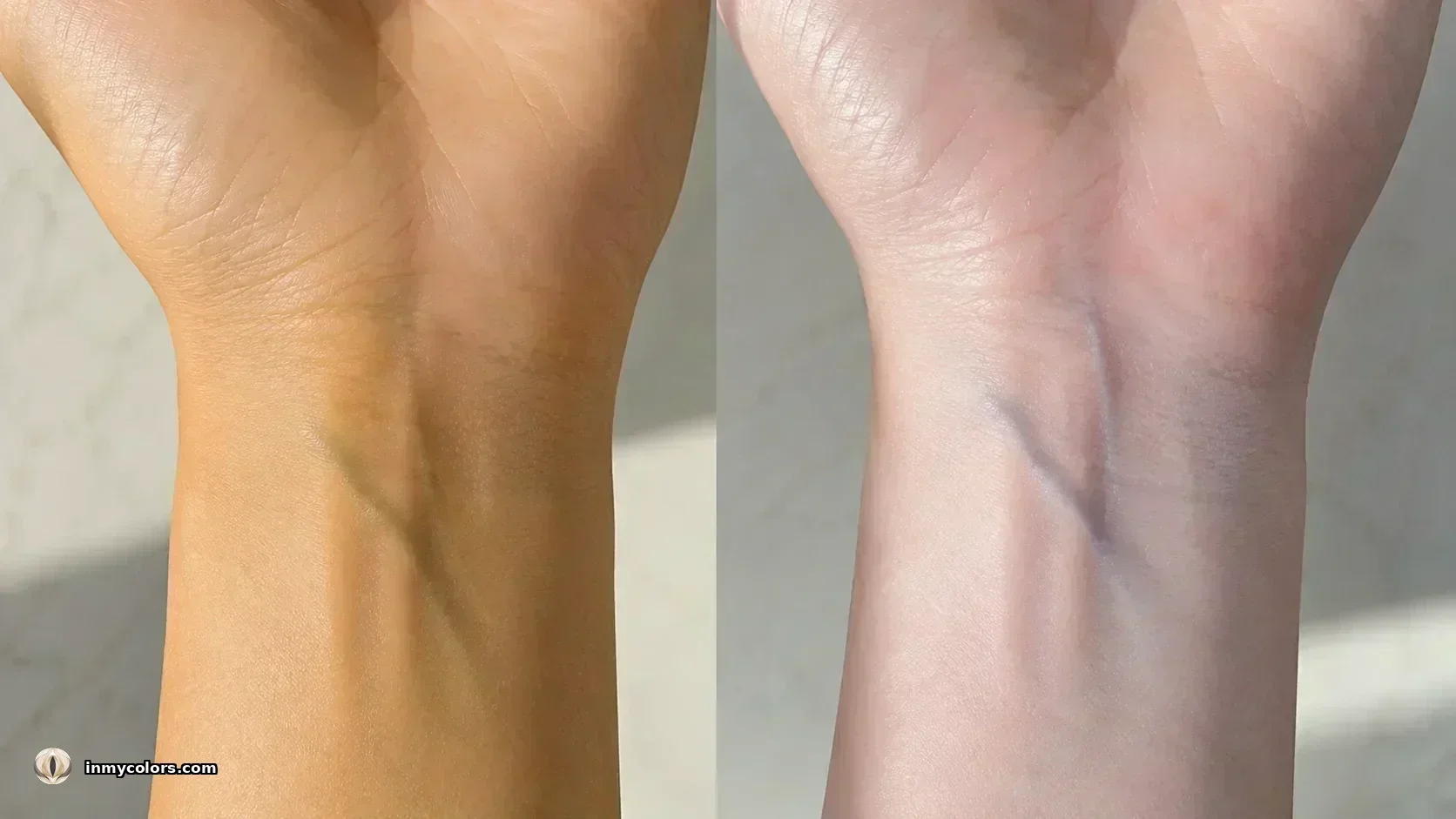
Check the underside of your wrist in natural daylight:
- ✦Greenish veins: yellow in the skin = warm. Autumn.
- ✦Blue or purple veins: no yellowing = cool. Winter.
This test is slightly less dramatic on very dark skin, but still detectable. Look for the quality of the vein colour, not just which colour is "more" there.
Test 2 — The Metal Test
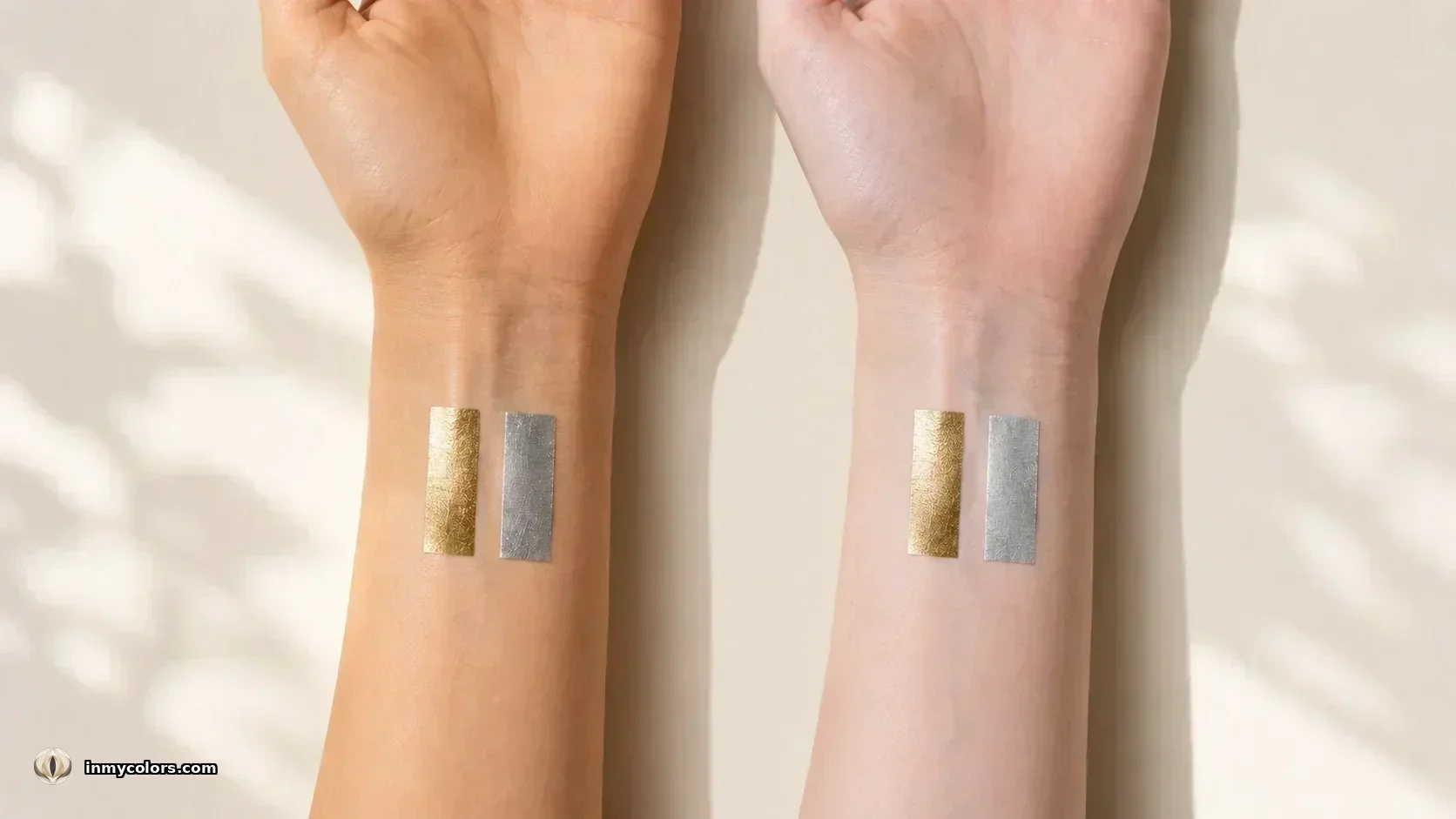
Gold versus silver held to the bare face:
- ✦Gold looks richer, more regal, more harmonious: Autumn
- ✦Silver looks cleaner, sharper, more powerful: Winter
This test is often highly diagnostic for deep colouring. Gold on a Winter can look muddy and dim. Gold on an Autumn genuinely glows.
Test 3 — The Drape Test
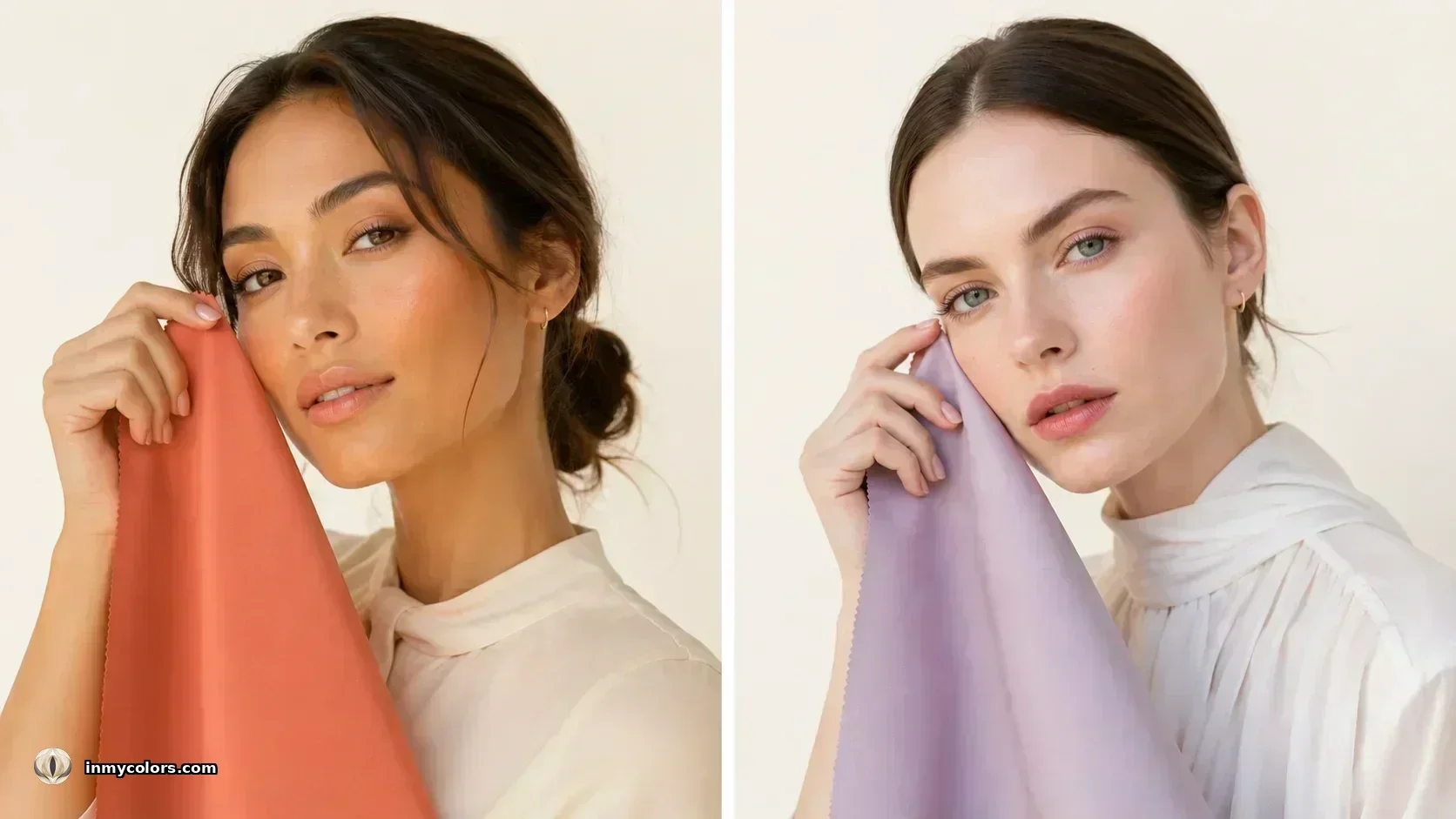
Try cognac/warm caramel versus cool burgundy.
- ✦Warm cognac harmonises with your skin, adds luminosity: Autumn
- ✦Cool, blue-based burgundy is more flattering: Winter
Also try warm olive versus cool grey. Autumn will look richer against warm olive. Winter will look cleaner and more defined against cool grey.
The Hardest Case: Deep Autumn vs Dark Winter
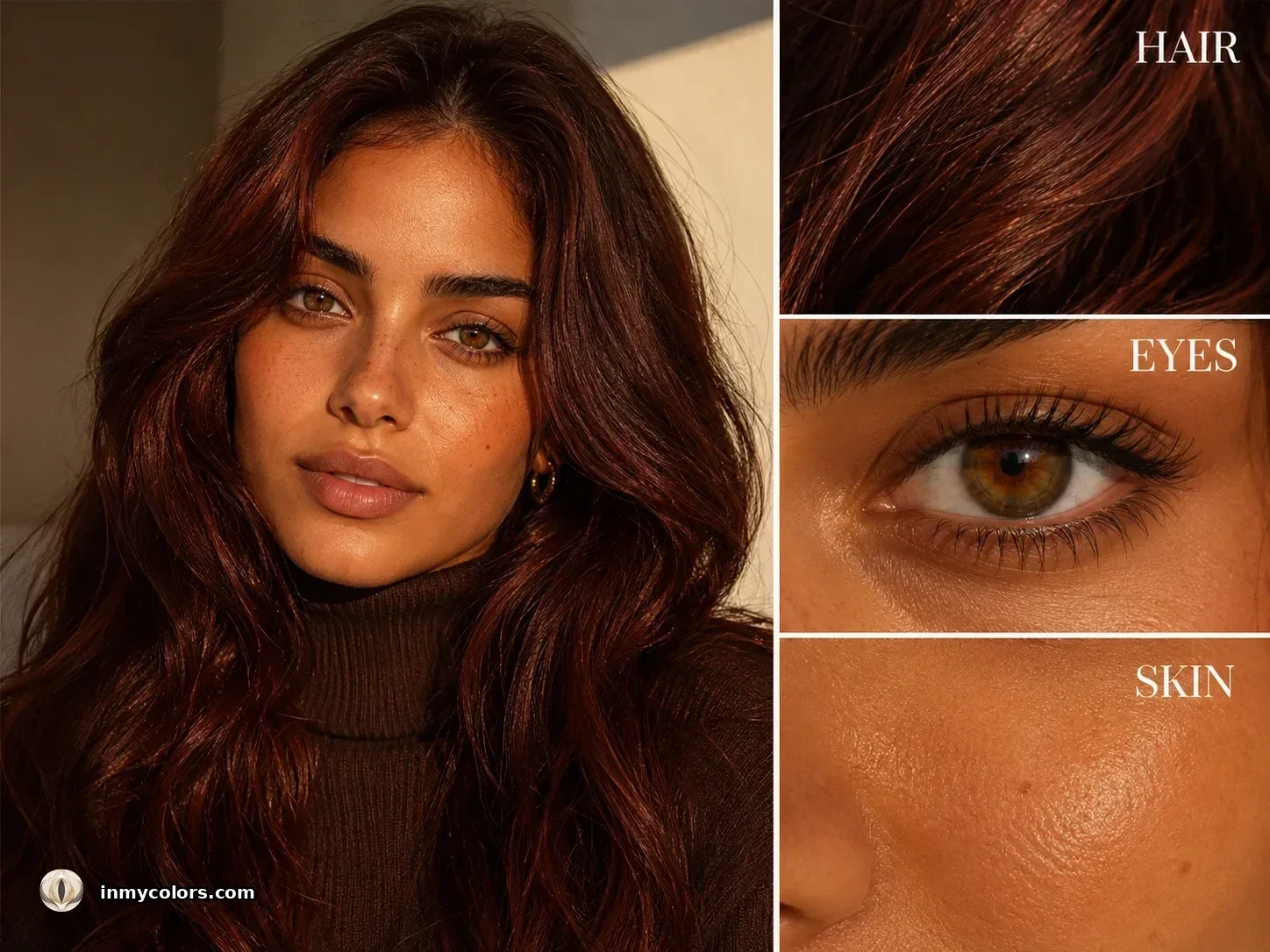
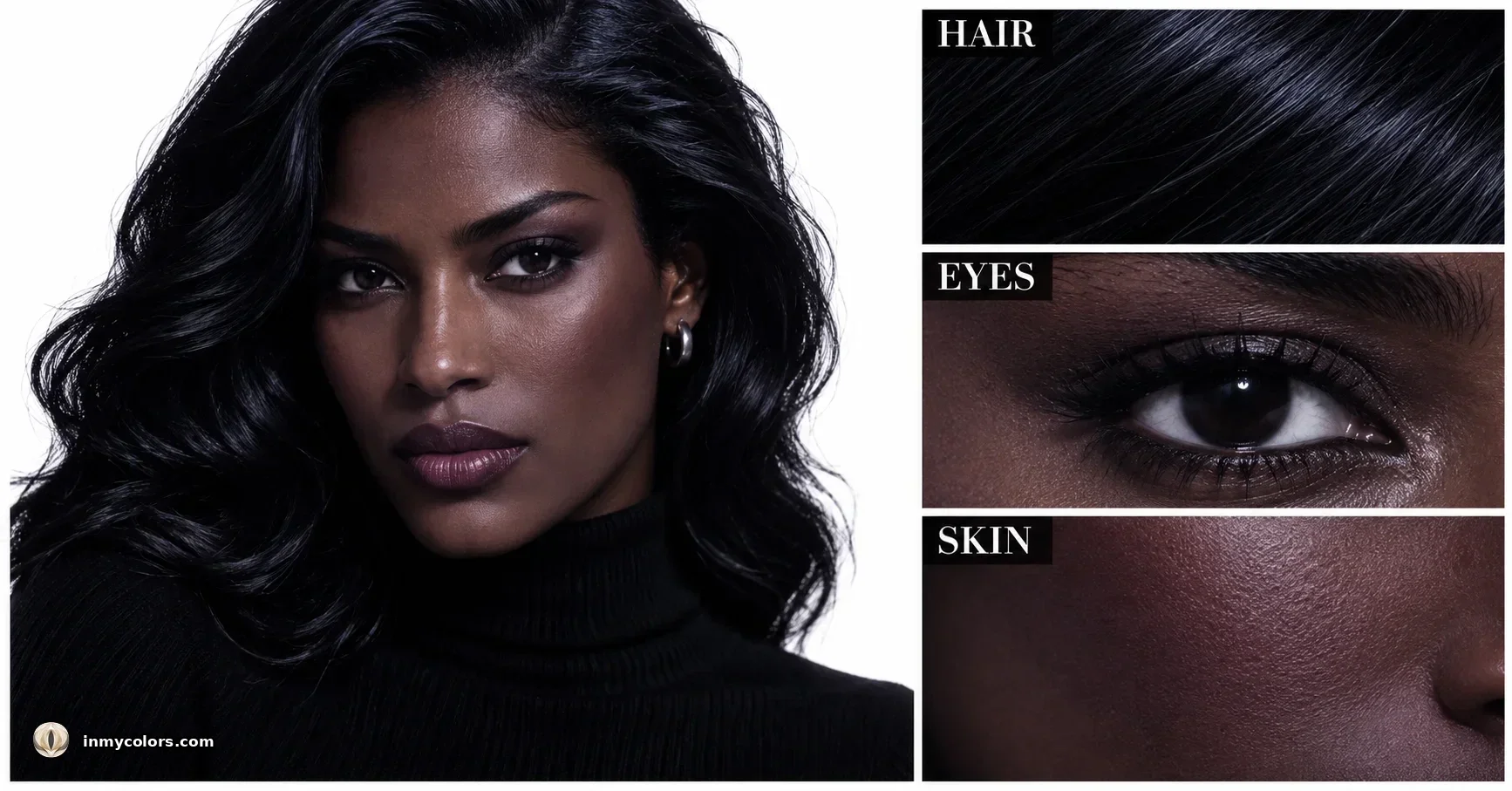
This is genuinely the hardest boundary in the entire 12-season system. Both Deep Autumn and Dark Winter are:
- ✦Very deep in value
- ✦Capable of wearing very rich, dramatic colour
- ✦Often dark-eyed and dark-haired
- ✦Frequently confused in online analyses
The specific diagnostic here is the quality of darkness. Deep Autumn's darkness has warmth embedded in it — a mahogany quality, a richness that catches light warmly. Dark Winter's darkness is cool — a blue-black or neutral-dark quality, a sharpness that reads as almost monochromatic.
Why Deep Skin Is So Often Mislabelled as Winter
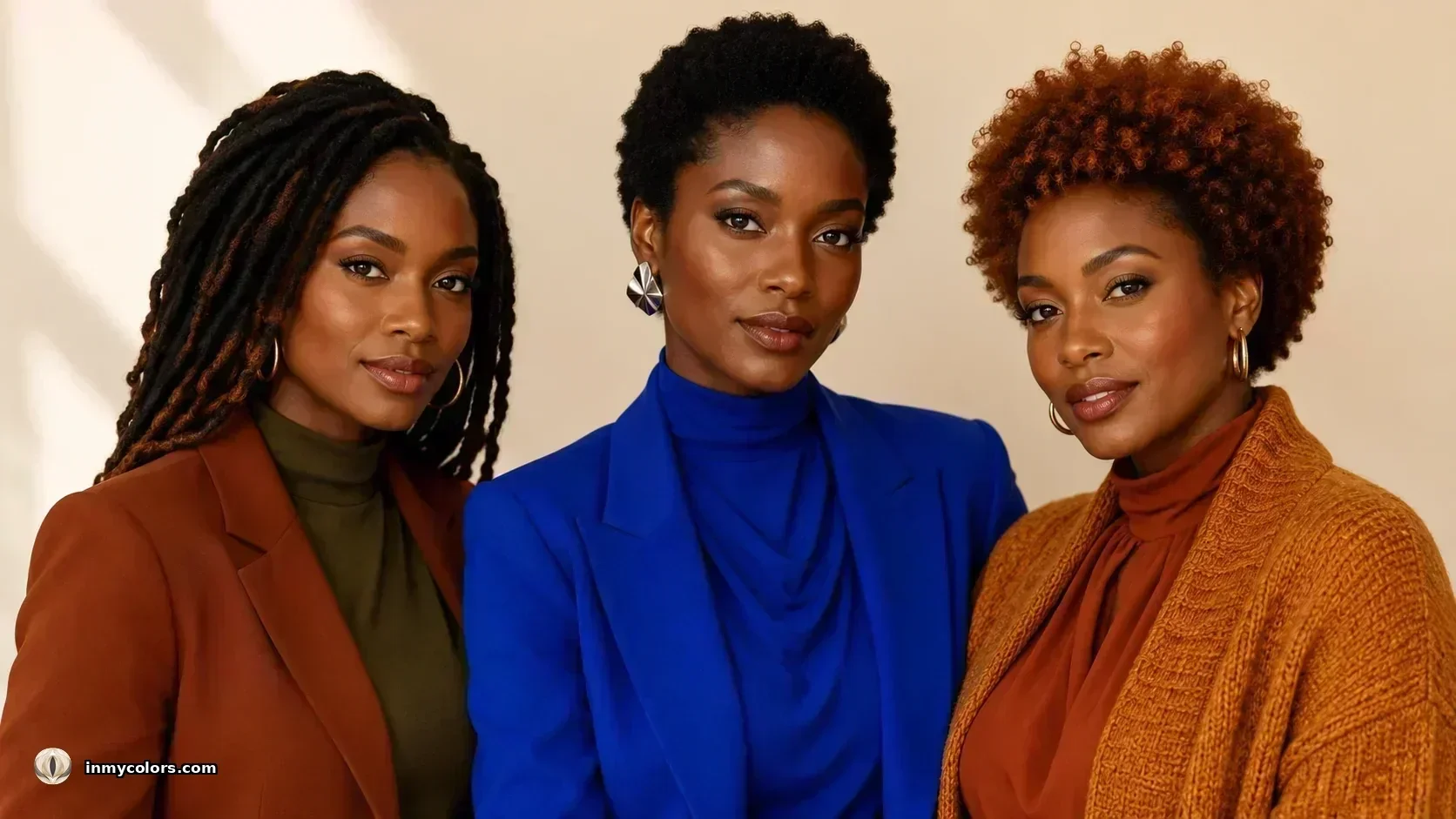
The internet's equation of dark skin with Winter stems from a surface-level reading: dark = dramatic = Winter. But Winter is about cool temperature and high chroma, not depth alone. Autumn is equally capable of depth — it's just warm and earthy rather than cool and clear.
The practical consequences are real. When a Deep Autumn wears Winter's cool, vivid colours — cobalt, fuchsia, icy lilac, stark white — the skin can look ashy, the face loses warmth, and the overall effect feels disconnected, as if the clothing belongs to someone else. When the same person wears Deep Autumn colours — warm bronze, forest green, cognac, deep tomato red — the skin glows, the eyes deepen, and the whole face seems to come forward.
What Warm and Cool Deep Palettes Actually Look Like
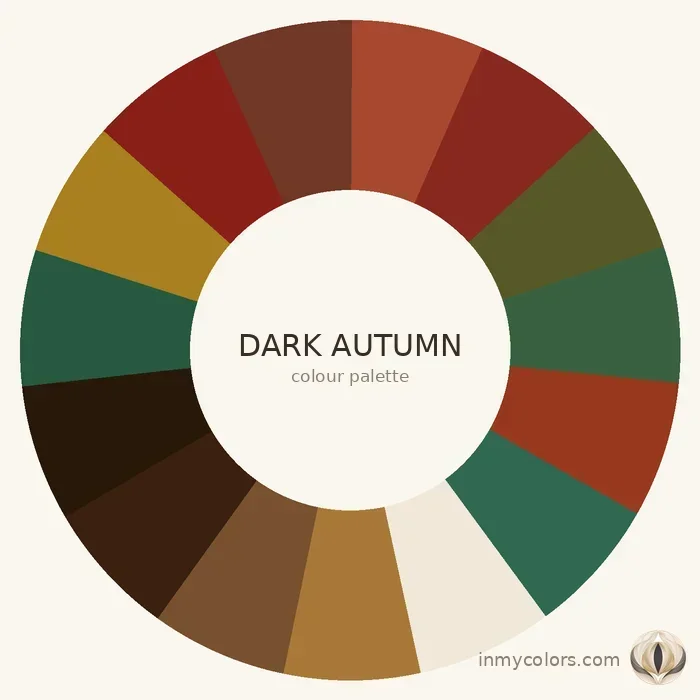
Deep Autumn palette: Cognac, dark chocolate, forest green, warm olive, burnt orange, terracotta, deep tomato red, warm teal, camel, mahogany. Every colour has warmth embedded in it. No true greys, no cool blues, no sharp whites.
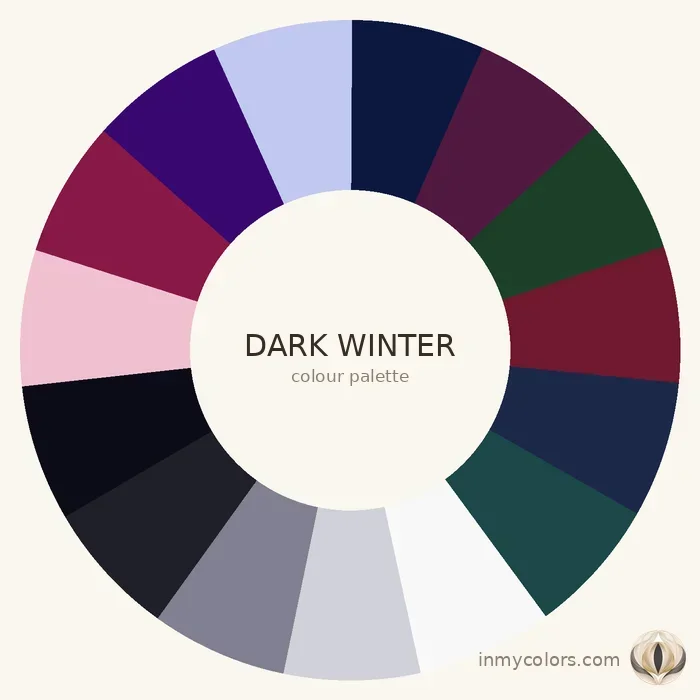
Dark Winter palette: True black, charcoal, cool burgundy, cobalt blue, deep emerald (cool-leaning), plum, deep fuchsia, taupe, ice white. High contrast, clear, cool. Black is not just acceptable — it is flattering.
If you put these two palettes side by side, the difference is perceptible even without context. One is earthy and golden; the other is cool and architectural.
Getting Your Answer
If you are deep-featured and unsure whether you're Autumn or Winter, do all three tests — vein, metal, drape — and weight them equally. If at least two point warm, you're almost certainly a Deep Autumn (or possibly True or Soft Autumn, depending on your contrast and chroma). If two or three point cool, Winter.
The single most reliable test for deep colouring is the metal test with gold versus silver directly against the face. The difference is usually unmistakeable.
Find your season at inmycolors.com.